Abe V Rotor
Living with Nature - School on Blog
Lesson: Kindness to animals. Pets deserved our greatest love and care, more so when they are infirmed, such as this dog-on-wheels.
Paralyzed from waist down since birth one would simply bestow quick mercy and final end to a dachshund, bereft of all that is expected of the breed as pet and member of the family and household.
Would you do that to a child? she said. I fell silent. Then she assembled a two-wheeled cart and mounted her infirmed pet, now half-dog and half-machine, a moving scene that held the clouds floating, slowed feet hurrying, and time ticking that morning on the grounds of UST, the country's oldest university.
The beagle struggled at first, got the momentum, then smoothly glided on the pavement on its own with the well-oiled cart virtually without effort, but a sense of comfort and joy instead. And master followed, she now the pet for she followed all things that made her dog a most loving creature.
In life we cease to be masters when we love, when we care, specially the poor, the helpless, the homeless, the doomed. ~
Wednesday, March 30, 2011
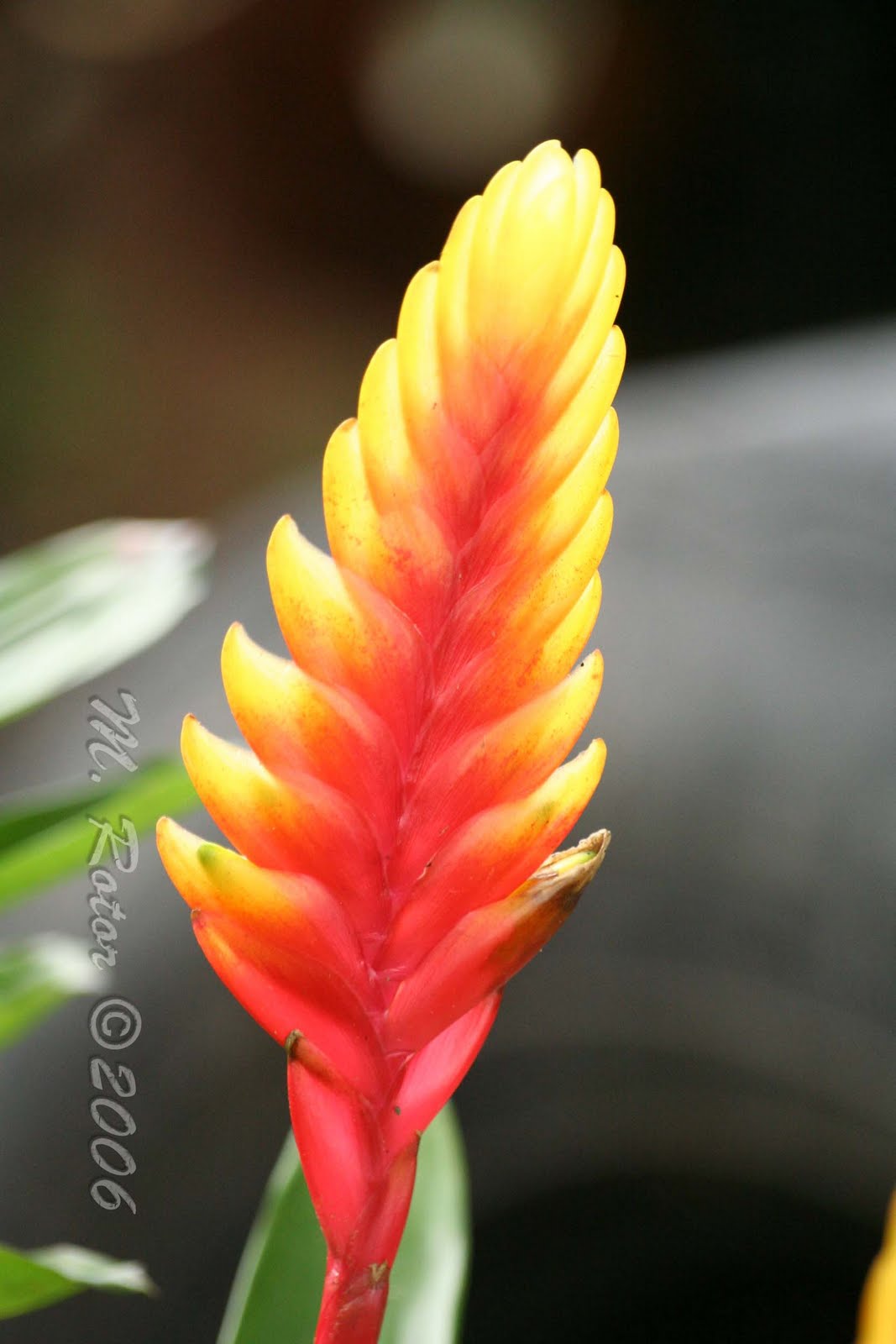
Pineapple is the only edible Bromeliads
Fuel from Non-Food Plants
Abe V Rotor
Living with Nature - School on Blog
Lesson: Alternative fuel from plants that grow wild and don't complete with food source. Coconut, corn and sugarcane are too expensive as alternative sources of fuel for our cars, home and industry. Besides, converting food into fuel will aggravate poverty condition specially in developing countries where millions of people are hungry and malnourished.
These examples of non-food plants for fuel open the avenue of discovering more in different countries. Why don't you add to our list?
Palomaria or bitaog (Ilk) (Calophylum inophylum)
contains 60 percent oil in its seed, excellent for motor oil.
Its wood makes excellent furniture. UST Botanical Garden
Talahib (Saccharum spontaneum), relative of sugar
cane produces ethanol for fuel and industrial uses.
Madre de cacao or kakawati (foreground) is the
most popular firewood in the Philippines and the
tropics. Its branches are periodically pruned for
firewood. The tree lives for twenty to fifty years.
It thrives in arid wasteland. Lake Tikob, Tiaong,
Laguna
Living with Nature, AVR
Living with Nature - School on Blog
Lesson: Alternative fuel from plants that grow wild and don't complete with food source. Coconut, corn and sugarcane are too expensive as alternative sources of fuel for our cars, home and industry. Besides, converting food into fuel will aggravate poverty condition specially in developing countries where millions of people are hungry and malnourished.
These examples of non-food plants for fuel open the avenue of discovering more in different countries. Why don't you add to our list?
Palomaria or bitaog (Ilk) (Calophylum inophylum)contains 60 percent oil in its seed, excellent for motor oil.
Its wood makes excellent furniture. UST Botanical Garden
Talahib (Saccharum spontaneum), relative of sugar cane produces ethanol for fuel and industrial uses.
Madre de cacao or kakawati (foreground) is the most popular firewood in the Philippines and the
tropics. Its branches are periodically pruned for
firewood. The tree lives for twenty to fifty years.
It thrives in arid wasteland. Lake Tikob, Tiaong,
Laguna
Living with Nature, AVR
Tuesday, March 29, 2011
Taming the clouds
Abe V Rotor
Giant mushrooms rise with the breeze
And I in Lilliput, they make of me
Cowering under the coconut trees
Lining the shore, leaning to sea.
Faces I see, angels and wild beasts
Changing shapes with the sun;
Doves and eagles flying to their nests,
Until all of them are gone.
The sky falls into shower, erases
And breaks the mirror of Narcissus
Into one thousand and one faces,
Of memories only time knows.
The clouds grow angry as they pass by,
Until a rainbow forms a shawl
Over the old sunken pier, and l
Once more find a Gulliver in my soul. ~
Living with Nature, AVR
Giant mushrooms rise with the breeze
And I in Lilliput, they make of me
Cowering under the coconut trees
Lining the shore, leaning to sea.
Faces I see, angels and wild beasts
Changing shapes with the sun;
Doves and eagles flying to their nests,
Until all of them are gone.
The sky falls into shower, erases
And breaks the mirror of Narcissus
Into one thousand and one faces,
Of memories only time knows.
The clouds grow angry as they pass by,
Until a rainbow forms a shawl
Over the old sunken pier, and l
Once more find a Gulliver in my soul. ~
Living with Nature, AVR
Monday, March 28, 2011
Reviving the Do-it-Yourself Culture - A Framework Guide
"If you want a job done right, do it."
Dr Abe Rotor
Advantages, benefits of do-it-yourself culture
1. Wholesome hobby and pastime
2. Teaching children the culture of do-it-yourself
3. Hones talents, creativity
4. Savings
5. Earning and profits
6. Aesthetics and ergonomics
7. Safety and convenience
8. Health and exercise
9. Recycling, repair, restore
10. “Skill is a lifetime, a heritage too.”
A. Parts and fixtures of the house most often require fixing.
1. Lights
2. Roof
3. Door knob and locks
4. Bookshelves and Cabinets ,
5. Gate and doors
6. Wall and table clock
7. Wall
8. Window
9. Fence
10. Garage
11. Chair, bench and table
12. Playground fixtures
13. Working area
14. Façade, frontage
15. Garden
16. Sidewalk and path walk
17. Doghouse
18. Glass pane, skylight
19. Floor
20. Stairs
B. Major causes of damage or need to renovate
1. Termite and fungus
2. Typhoon
3. Heat and cold
4. Obsolesce
5. Wear and tear
6. Defective make or construction
7. Poor/substandard materials
8. Expanding family/Children have grown up
9. Business/office
10. Retirement home
11. Kids’ home (children and grandchildren)
12. Refurbish, remodel, decorate
13. Accident caused/accident prevention
14. Energy conservation
15. Simplify
16. Healthier environment
17. Global warming, pollution
18. Laws and regulation
19. Taste, aesthetics
20. Modernize
C. Common Tools and Equipment to use
1. Handy tools: saw, hammer, chisel, plumb bob. try square, lever, crowbar, cutter, tacker, puncher, file, lagaring bakal,
2. Cutting tools: bolos and knives, saw,
3. Metal shear, scissor, sinsil, cutters, plier, cutter pliers
4. Plumbing tools
5. Car and garage tools
6. Kitchen tools
7. Grinder and sharpener
8. Soldering, glue gun,
9. Riveting
10. Gardening tools
11. Welding
12. Electrical
13. Electronic tools
14. Mechanized tool: drill, planer, sander
15. Finishing: air compressor and painting
16. Sewing machine
17. Crowbar, spade, rake, spading fork
18. Wheel burrow, portable cart
19. Ladder
20. Measuring tools: meter. Tape, nibel
Accessories
1. Tool cabinet
2. Working bench
3. Working table
4. Tool bag/box
5. Safety Devices
6. Fire extinguisher
7. First Aid
8. Exhaust fan
9. Organizer
10. Computer
D. Skills and Training
1. Vocational Courses
2. Elementary Industrial Arts
3. Deep interest/hobby
4. Entrepreneurial
5. Books and Catalogues
6. Shows and exhibits
7. Malls and hardware
8. Growing up with tools
9. Getting an expert – be the “piyon”
10. Apprenticeship
11. Clubs and associations
12. Modeling (sand table, school project)
13. Lecture-Workshops
14. Self-study and practice; practice makes perfect
15. Internet
Reference Living with Nature Handbook, A V Rotor;
Acknowledgement: Internet
Advantages, benefits of do-it-yourself culture
1. Wholesome hobby and pastime
2. Teaching children the culture of do-it-yourself
3. Hones talents, creativity
4. Savings
5. Earning and profits
6. Aesthetics and ergonomics
7. Safety and convenience
8. Health and exercise
9. Recycling, repair, restore
10. “Skill is a lifetime, a heritage too.”
A. Parts and fixtures of the house most often require fixing.
1. Lights
2. Roof
3. Door knob and locks
4. Bookshelves and Cabinets ,
5. Gate and doors
6. Wall and table clock
7. Wall
8. Window
9. Fence
10. Garage
11. Chair, bench and table
12. Playground fixtures
13. Working area
14. Façade, frontage
15. Garden
16. Sidewalk and path walk
17. Doghouse
18. Glass pane, skylight
19. Floor
20. Stairs
B. Major causes of damage or need to renovate
1. Termite and fungus
2. Typhoon
3. Heat and cold
4. Obsolesce
5. Wear and tear
6. Defective make or construction
7. Poor/substandard materials
8. Expanding family/Children have grown up
9. Business/office
10. Retirement home
11. Kids’ home (children and grandchildren)
12. Refurbish, remodel, decorate
13. Accident caused/accident prevention
14. Energy conservation
15. Simplify
16. Healthier environment
17. Global warming, pollution
18. Laws and regulation
19. Taste, aesthetics
20. Modernize
C. Common Tools and Equipment to use
1. Handy tools: saw, hammer, chisel, plumb bob. try square, lever, crowbar, cutter, tacker, puncher, file, lagaring bakal,
2. Cutting tools: bolos and knives, saw,
3. Metal shear, scissor, sinsil, cutters, plier, cutter pliers
4. Plumbing tools
5. Car and garage tools
6. Kitchen tools
7. Grinder and sharpener
8. Soldering, glue gun,
9. Riveting
10. Gardening tools
11. Welding
12. Electrical
13. Electronic tools
14. Mechanized tool: drill, planer, sander
15. Finishing: air compressor and painting
16. Sewing machine
17. Crowbar, spade, rake, spading fork
18. Wheel burrow, portable cart
19. Ladder
20. Measuring tools: meter. Tape, nibel
Accessories
1. Tool cabinet
2. Working bench
3. Working table
4. Tool bag/box
5. Safety Devices
6. Fire extinguisher
7. First Aid
8. Exhaust fan
9. Organizer
10. Computer
D. Skills and Training
1. Vocational Courses
2. Elementary Industrial Arts
3. Deep interest/hobby
4. Entrepreneurial
5. Books and Catalogues
6. Shows and exhibits
7. Malls and hardware
8. Growing up with tools
9. Getting an expert – be the “piyon”
10. Apprenticeship
11. Clubs and associations
12. Modeling (sand table, school project)
13. Lecture-Workshops
14. Self-study and practice; practice makes perfect
15. Internet
Reference Living with Nature Handbook, A V Rotor;
Acknowledgement: Internet
Latex paint is preferred over oil for beginners
Abe V Rotor
What kind of paint shall I use?
Well, use water-based acrylic. In hardware stores, it is called latex paint. It is multipurpose and the most popular paint today - from art and house paint. I prefer latex paint to oil for art painting - especially for children. These are the reasons.
1. Latex is less toxic than oil paint. Both however, contain materials not good to health, like lead, hydrocarbon and dioxide compounds. By the way, there is no paint that is completely safe to health and the environment. The most hazardous is lacquer paint - the one in canister or used on automobile. It is among the CFC materials that destroy the ozone layer.
2. Latex is much cheaper and it does not entail additional costs for solvents like turpentine, linseed oil and kerosene as thinner, spreader and cleaner, and in the case of lacquer, volatile solvents.
3. Latex is easy and convenient to use. Because it is water-based, paintbrush is easy to clean and it will last longer. Stains can be easily removed, especially when paint is still fresh.
Latex paint dries in minutes, oil in hours or days.
4. Waste from latex paint is easier to dispose. Generally let the paint dry first before it is disposed just like any garbage, except of course, when dealing with large quantities. Wash paintbrush in sink, don't wash on waterways and open areas.
5. Latex is versatile and has wider application. It comes in different colors, primary or mixed. It is sold in your nearest hardware stores in different brands and sizes. You can use rollers, paintbrush or palette - or in combination, specially in art painting. It is used on any surface - canvas, wood, concrete - and even metal after a suitable primer is made.
Living with Nature 3, AVR
What kind of paint shall I use?
Well, use water-based acrylic. In hardware stores, it is called latex paint. It is multipurpose and the most popular paint today - from art and house paint. I prefer latex paint to oil for art painting - especially for children. These are the reasons.
1. Latex is less toxic than oil paint. Both however, contain materials not good to health, like lead, hydrocarbon and dioxide compounds. By the way, there is no paint that is completely safe to health and the environment. The most hazardous is lacquer paint - the one in canister or used on automobile. It is among the CFC materials that destroy the ozone layer.
2. Latex is much cheaper and it does not entail additional costs for solvents like turpentine, linseed oil and kerosene as thinner, spreader and cleaner, and in the case of lacquer, volatile solvents.
3. Latex is easy and convenient to use. Because it is water-based, paintbrush is easy to clean and it will last longer. Stains can be easily removed, especially when paint is still fresh.
Latex paint dries in minutes, oil in hours or days.
4. Waste from latex paint is easier to dispose. Generally let the paint dry first before it is disposed just like any garbage, except of course, when dealing with large quantities. Wash paintbrush in sink, don't wash on waterways and open areas.
5. Latex is versatile and has wider application. It comes in different colors, primary or mixed. It is sold in your nearest hardware stores in different brands and sizes. You can use rollers, paintbrush or palette - or in combination, specially in art painting. It is used on any surface - canvas, wood, concrete - and even metal after a suitable primer is made.
Living with Nature 3, AVR
Sunday, March 27, 2011
40 Ways to make the best of Summer
Dr Abe V Rotor
Lesson: Spend summer wisely, leisurely; make it a real vacation. Give yourself a break. Cancel or postpone appointments in favor of yourself and your family. Nothing beats summer better than making it a season for vacation. Learn from what others say.
1. Going on vacation to the province, pay respects to old folks. It is reunion with family and relatives, and friends - and having new acquaintances.
2. Going abroad, staying with relatives and friends there, seeing places, meeting people. To be in other countries expand our consciousness about different cultures, and discovering how beautiful our country is. It can make one really feel homesick.
3. Homecoming with former classmates. It is attending to a friend's wedding, or seeing one before leaving to live in another place, welcoming new neighbors and members of your organization.
4. Putting on cool clothes, comfortable field shoes, accessories against sun.
5.Enrolling in back subjects – “survival classes.”
6. Having a digital camera and taking photos and arranging them in an album, or in the computer.
7. Not wasting the season watching TV and playing with the computer every day.
8. Getting into some classes in craft, art, sports, dance, driving, and the like.
9. Working on your body at a local gym, play badminton, volleyball, pingpong, other sports.
10. A walk in the park, on the beach, walk with nature – nature trail.
11. Learning to market, to cook and prepare the table – specially for girls.
12. Renting a beach house for the whole family and building a campfire.
13. Having an inflatable swimming pool on the garden, for kids - and adults, too.
14. Planting tree seedlings at the onset of rain, and preparing the home garden as well.
15. Putting up a lemonade stand and going into business. Selling halo-halo, gulaman, buko juice,
16. Relaxing at the beach watching the ocean – meditating and recharging energy.
17. Creative writing – poetry, short story, essay, feature.
18. Writing in your journal – The Story of my Life
19. Giving more chance for the body to recovery faster from ailment and infirmity.
20. Seeing the family doctor, scheduling a thorough checkup – and getting a clean bill of health.
21. Making a family video of an occasion, better still a documentary. It is organizing family photos, report cards, birthday cards, artwork, concert programs and other keepsakes from the past year into a scrapbook.
22. Remembering the departed, offering candles and prayers in their memory; above all a whisper or act of gratitude for all the goodness they did for us.
23. Bonding with pets, making them happy and healthy - and teaching your dog new tricks.
24. Learning a new language. The best way is to go to a place where the language you wish to learn is the only language.
25. Improving your English - speaking and writing. And reviving the art of handwriting.
26. Learning to play a musical instrument. Music enhances the mind in many ways. Studies have shown that children who study music at an early age do better in school than those who don’t. Aside from that, it is also just plain fun.
27. Learning to sew, making and mending clothes. Older and more skilled children can even make their own clothes for the coming school year.
28. Taking a special computer class - but make it fun. Learn to type properly, use a spreadsheet or database, design websites, make presentations, etc. Most jobs these days involve computer use, so knowing as much as you can about computers might help you get a higher salary.
29. Sorting through your stuff . Go through your clothes and things and prune out those you no longer want or need. You could donate the things you no longer need or hold a garage or yard sale and make some money to put into your college or retirement savings.
30. Getting a summer job, “earning to learn,” specially for working students.
31. Indexing your books, other references, documents with the computer or the conventional way.
32. Cleaning out your computer. If there are programs you don’t use, uninstall them. If there are files that you no longer need, delete them. Keeping your hard drive from getting too full will extend its life.
33. Mall Walking - Walking in an indoor, air-conditioned mall is a great way to get exercise away from the heat and smog, and you can also save on sunscreen. You can even window-shop during your walks, but if you think you might get too tempted, leave your money and credit card at home.
34. Learning to swim. Swimming is another low-impact exercise (safer than running) which increases endurance, muscle and cardiovascular strength. Try to swim in an indoor pool whenever possible or wait until early evening to avoid sunburn.
35. Joining prayer rallies, healthy religious activities, bible studies.
36. Making sweet, jams, jellies, for hobby and money. Summer is fruit season.
37. Joining community projects like Clean and Green, supporting environmental campaign such as beach cleaning, prevention of brush fire.
38. Reviving traditional games like kite flying, sipa, spinning top, yoyo – make, don’t buy.
39. Repair, repair, repair. Name it and it needs repair (toys, house, figurine, kitchen wares, china, garden tools, books, etc)
40. Fiestas, celebrations, festivities. It is also a time of retreat and reflection.
From these responses, it is good to keep always in mind this guide.
- Be frugal and simple,
- Be productive,
- Have fun, and
- Share with others.
Tree Surgery
A new lease of life for this sampaloc tree (Tamarindus indica), thanks to tree surgery. Its damaged trunk was restored with cement cast which the tree later adopted it as it were its own limb. Note the cambium layer slowly enveloping the cement cast. Grand Palace grounds, Bangkok 2009
Friday, March 25, 2011
Anxiety, Phobia and Depression
Abe V Rotor
Welcome to Living with Nature - School on Blog
1,774th post with 92,000 pageviews todate
Exercise on Anxiety, Phoba and Depression
I posted the answers for you to examine each item why it is true or false. This is a reverse test which is an alternative method of learning.
1. All of us are invariably victims of anxiety. Our aging parents, retirement benefits, sex life, health – name it, real or imaginary – and you have it, irrespective of sex, age, domicile, profession, work, race, creed, etc. (T)
2. There is something mysterious about anxiety, its dualism. It is a normal response to physical danger so that it can be a useful tool for focusing the mind where there’s a deadline looming. But anxiety can become a problem when it persists to long beyond the immediate threat, which leads to depression. (T)
3. While we worry for certain things and situations, other people simply don’t - they simply don’t care. (T)
4. People who are mediocre – more so if they did not reach higher education – are more subject to anxiety than intelligent and highly learned people. (F)
5. Uneasiness, lightheadedness, clumsiness are the first signs of anxiety. (T)
6. Nausea, panic, fears of losing control or dying are advanced signs and symptoms of anxiety. (T)
7. Sweaty and cold palms and feet may be due to nervousness which is a natural reaction. (T)
8. Dizziness, blurred vision, chest pain are some psychosomatic symptoms. (T)
9. Many of the things we worry about are baseless, if not nonsense. (T)
10. Animals appear to feel anxiety – an instinctive response necessary for survival. (T)
11. Rats and chicken freeze in place momentarily when subjected to sudden fear stimulus. The opossum feigns dead which is actually an involuntary fear response. (T)
12. Anxiety helped in human evolution. Records of anxiety show how humans shared the planet with saber-toothed tigers. Without it few of us would have survive, if at all. (T)
13. Mass anxiety humans suffered during the two world wars was revived by terrorism which attacked the Twin Towers of New York. (T)
14. Anxiety disorder affects 19 million Americans, 25% not having any medical treatment. It is steadily rising in all countries where Western influence is getting stronger.
(T)
15. Mental illnesses account for 5 of the 10 leading causes of disability in Asia (T)
16. In Cambodia an estimated 75% of adults who lived through the Kmer Rouge era suffer from extreme stress or post traumatic stress disorder. (T)
17. Highest rate of suicide: Sri Lanka per 100,000 – 55; followed bt Japan (25.2; S Korea – 19.1; China 17-20; Singapore, India, Thailand, Australia, US and Britain (T)
18. Schizophrenia is a psychotic disorder that severely alters the way a person actually thinks and behaves 9hallucinations, delusions, confusion, withdrawal, agitation, emotional numbness – about 100 percent of patient can expect a full and lasting recovery (F 50% only)
19. According to Sigmund Freud, One is more biological in nature and the other is more dependent on psychological factors. (T)
20. Fear – any external stimulus from threatening words to a gunshot, that the brain interprets as dangerous. (F Stress)
21. Stress – The short-term physiological response produced by both the brain and the body in response to stress.(F Fear)
22. Depression – A sense of apprehension that shares many of the same symptoms as fear but builds more slowly and lingers longer.(F Anxiety)
23. Anxiety – Prolonged sadness that results in a blunting of emotions and sense of futility; often more serious when accompanied by an anxiety disorder. (F Depression)
24. Panic disorder – This is recurrent, unexpected attacks of acute anxiety, peaking within 10 minutes. One finds himself in a situation such as in a crowded elevator. If extreme anxiety symptoms appear, the person may be suffering of anxiety disorder that needs medical consultation, even if this is occasionally experienced. (T)
25. Specific Phobia – This is characterized by consuming fear of a specific object or situation, often accompanied by mild to extreme anxiety symptoms. It may just be plain hate, or fear, say heights. Behavioral therapy – gradual introduction of the cause, until enough courage is built; and cognitive therapy – re-orientation of perception or behavior, may be needed independently or jointly. (T)
26. Post-Traumatic Stress Disorder - a preoccupation with specific thoughts, images or impulses, accompanied by elaborate and sometimes bizarre rituals. Even if they are irrational thoughts, repetitive ritual (e.g. hand washing, prayer), time consuming – researchers are certain whether of not OCD is genuine anxiety. Whatever it is, it does respond to treatment.(F) Obsessive-Compulsive Disorder
27. Obsessive-Compulsive Disorder – repeated, anxious reliving of a horrifying event over an extended period of time. It is not anxiety if the experience fades away steadily, but if it may persist, and sometimes PTSD will not appear until six months after the event. This is caused by recurrent recollection or dream of the event, feeling the even to be still occurring, experience reminding you of the event, and difficulty in avoiding thought associated with it. (F) Post-Traumatic Stress Disorder
28. Generalized Anxiety Disorder – Excessive anxiety or worry for days or months, but does not affect quality of life. Characterized by restlessness, difficulty concentrating or sleeping, irritability, fatigue, muscle tension. Have three or more of these symptoms confirm a person is suffering of GAD. (T)
29. Anxiety is inherited, thus children suffering of anxiety are most likely candidates of depression. Some people seem to be born worriers. Some anxiety disorders are known to run in the family. If the genes involved are reinforced by environment, the expression become more distinct. (T Nature-nurture)
30. Identical twins are more likely show stronger tendency to suffer from generalized anxiety disorder. However, even one with low genetic vulnerability could develop a fear of something that may even be greater than one with high genetic vulnerability. (T)
31. Many kids outgrow their anxiety disorder to become well-adjusted adults. Anxiety and depression have similar underlying biology. Anxiety may surface early in life and depression later. But researchers are divided in this observation. (T or F)
32. Anatomy of anxiety as explained to the ordinary citizen goes like this - The senses pick up a threat – a scary sight, a loud noise, a creepy feeling – the information takes two different routes through the brain – but it takes the shortcut – the brains automatically engages an emergency hot line to the fear center – the amygdala (T)
33. FFF (Fight, Flight, Fright) - Adrenaline shoots into the muscles preparing the body to do the appropriate action. (T)
34. Digestion Shutdown – Brains stops thinking about things that bring pleasure, conserve energy otherwise wasted on digestion, hence vomiting, defecation, urination may occur. (T)
35. Cognitive therapy – Best for phobias, obsessive-compulsive disorder. Panic disorder is to expose patients to a tiny bit of the very thing that causes them anxiety. (F Behavioral therapy)
36. Behavioral therapy– rethinking, behavior modification through proper advice. (F Cognitive therapy)
37. Minor tranquilizers – Prozac, Paxil, Zoloft are best known among the antidepressant drugs The newest group is norepinephrine which control emotion and stabilize mood, thus there is no need of doctors’ prescription. (F these are antidepressant drugs)
38. In Western countries, it is the woman who normally initiate divorce; in Asia it is
the man (F)
39. Lifestyle Changes which include cut back or eliminate the use of sugar, caffeine, alcohol, and recreational drugs, are helpful in overcoming anxiety. (T)
40. The most practical therapy is exercise – talk therapy, simple exercise (at least 30 minutes), brisk walk Exercise releases natural opiates called endorphins, (T)
Reference: The Science of Anxiety Time 39 to 47 pp July 8, 2002; Lost Lives Time November 10, 2003; What Scares you? Phobias Time April 2, 2001
Abe V Rotor
Welcome to Living with Nature - School on Blog
1,774th post with 92,000 pageviews todate
Exercise on Anxiety, Phoba and Depression
I posted the answers for you to examine each item why it is true or false. This is a reverse test which is an alternative method of learning.
1. All of us are invariably victims of anxiety. Our aging parents, retirement benefits, sex life, health – name it, real or imaginary – and you have it, irrespective of sex, age, domicile, profession, work, race, creed, etc. (T)
2. There is something mysterious about anxiety, its dualism. It is a normal response to physical danger so that it can be a useful tool for focusing the mind where there’s a deadline looming. But anxiety can become a problem when it persists to long beyond the immediate threat, which leads to depression. (T)
3. While we worry for certain things and situations, other people simply don’t - they simply don’t care. (T)
4. People who are mediocre – more so if they did not reach higher education – are more subject to anxiety than intelligent and highly learned people. (F)
5. Uneasiness, lightheadedness, clumsiness are the first signs of anxiety. (T)
6. Nausea, panic, fears of losing control or dying are advanced signs and symptoms of anxiety. (T)
7. Sweaty and cold palms and feet may be due to nervousness which is a natural reaction. (T)
8. Dizziness, blurred vision, chest pain are some psychosomatic symptoms. (T)
9. Many of the things we worry about are baseless, if not nonsense. (T)
10. Animals appear to feel anxiety – an instinctive response necessary for survival. (T)
11. Rats and chicken freeze in place momentarily when subjected to sudden fear stimulus. The opossum feigns dead which is actually an involuntary fear response. (T)
12. Anxiety helped in human evolution. Records of anxiety show how humans shared the planet with saber-toothed tigers. Without it few of us would have survive, if at all. (T)
13. Mass anxiety humans suffered during the two world wars was revived by terrorism which attacked the Twin Towers of New York. (T)
14. Anxiety disorder affects 19 million Americans, 25% not having any medical treatment. It is steadily rising in all countries where Western influence is getting stronger.
(T)
15. Mental illnesses account for 5 of the 10 leading causes of disability in Asia (T)
16. In Cambodia an estimated 75% of adults who lived through the Kmer Rouge era suffer from extreme stress or post traumatic stress disorder. (T)
17. Highest rate of suicide: Sri Lanka per 100,000 – 55; followed bt Japan (25.2; S Korea – 19.1; China 17-20; Singapore, India, Thailand, Australia, US and Britain (T)
18. Schizophrenia is a psychotic disorder that severely alters the way a person actually thinks and behaves 9hallucinations, delusions, confusion, withdrawal, agitation, emotional numbness – about 100 percent of patient can expect a full and lasting recovery (F 50% only)
19. According to Sigmund Freud, One is more biological in nature and the other is more dependent on psychological factors. (T)
20. Fear – any external stimulus from threatening words to a gunshot, that the brain interprets as dangerous. (F Stress)
21. Stress – The short-term physiological response produced by both the brain and the body in response to stress.(F Fear)
22. Depression – A sense of apprehension that shares many of the same symptoms as fear but builds more slowly and lingers longer.(F Anxiety)
23. Anxiety – Prolonged sadness that results in a blunting of emotions and sense of futility; often more serious when accompanied by an anxiety disorder. (F Depression)
24. Panic disorder – This is recurrent, unexpected attacks of acute anxiety, peaking within 10 minutes. One finds himself in a situation such as in a crowded elevator. If extreme anxiety symptoms appear, the person may be suffering of anxiety disorder that needs medical consultation, even if this is occasionally experienced. (T)
25. Specific Phobia – This is characterized by consuming fear of a specific object or situation, often accompanied by mild to extreme anxiety symptoms. It may just be plain hate, or fear, say heights. Behavioral therapy – gradual introduction of the cause, until enough courage is built; and cognitive therapy – re-orientation of perception or behavior, may be needed independently or jointly. (T)
26. Post-Traumatic Stress Disorder - a preoccupation with specific thoughts, images or impulses, accompanied by elaborate and sometimes bizarre rituals. Even if they are irrational thoughts, repetitive ritual (e.g. hand washing, prayer), time consuming – researchers are certain whether of not OCD is genuine anxiety. Whatever it is, it does respond to treatment.(F) Obsessive-Compulsive Disorder
27. Obsessive-Compulsive Disorder – repeated, anxious reliving of a horrifying event over an extended period of time. It is not anxiety if the experience fades away steadily, but if it may persist, and sometimes PTSD will not appear until six months after the event. This is caused by recurrent recollection or dream of the event, feeling the even to be still occurring, experience reminding you of the event, and difficulty in avoiding thought associated with it. (F) Post-Traumatic Stress Disorder
28. Generalized Anxiety Disorder – Excessive anxiety or worry for days or months, but does not affect quality of life. Characterized by restlessness, difficulty concentrating or sleeping, irritability, fatigue, muscle tension. Have three or more of these symptoms confirm a person is suffering of GAD. (T)
29. Anxiety is inherited, thus children suffering of anxiety are most likely candidates of depression. Some people seem to be born worriers. Some anxiety disorders are known to run in the family. If the genes involved are reinforced by environment, the expression become more distinct. (T Nature-nurture)
30. Identical twins are more likely show stronger tendency to suffer from generalized anxiety disorder. However, even one with low genetic vulnerability could develop a fear of something that may even be greater than one with high genetic vulnerability. (T)
31. Many kids outgrow their anxiety disorder to become well-adjusted adults. Anxiety and depression have similar underlying biology. Anxiety may surface early in life and depression later. But researchers are divided in this observation. (T or F)
32. Anatomy of anxiety as explained to the ordinary citizen goes like this - The senses pick up a threat – a scary sight, a loud noise, a creepy feeling – the information takes two different routes through the brain – but it takes the shortcut – the brains automatically engages an emergency hot line to the fear center – the amygdala (T)
33. FFF (Fight, Flight, Fright) - Adrenaline shoots into the muscles preparing the body to do the appropriate action. (T)
34. Digestion Shutdown – Brains stops thinking about things that bring pleasure, conserve energy otherwise wasted on digestion, hence vomiting, defecation, urination may occur. (T)
35. Cognitive therapy – Best for phobias, obsessive-compulsive disorder. Panic disorder is to expose patients to a tiny bit of the very thing that causes them anxiety. (F Behavioral therapy)
36. Behavioral therapy– rethinking, behavior modification through proper advice. (F Cognitive therapy)
37. Minor tranquilizers – Prozac, Paxil, Zoloft are best known among the antidepressant drugs The newest group is norepinephrine which control emotion and stabilize mood, thus there is no need of doctors’ prescription. (F these are antidepressant drugs)
38. In Western countries, it is the woman who normally initiate divorce; in Asia it is
the man (F)
39. Lifestyle Changes which include cut back or eliminate the use of sugar, caffeine, alcohol, and recreational drugs, are helpful in overcoming anxiety. (T)
40. The most practical therapy is exercise – talk therapy, simple exercise (at least 30 minutes), brisk walk Exercise releases natural opiates called endorphins, (T)
Reference: The Science of Anxiety Time 39 to 47 pp July 8, 2002; Lost Lives Time November 10, 2003; What Scares you? Phobias Time April 2, 2001
Part 3: Common Cases of Allergy
Abe V Rotor
Let me present some cases of allergy that are commonly encountered. These were gathered from our radio listeners on Paaralang Bayan sa Himpapawid. (People's School-on-Air)
1. Smoking. Drivers, office workers, mechanics, farmers, writers, teachers, name it, and the habit is widespread. I know one whose only bisyo is paninigarillo. He didn’t live long.
2. “Canned entertainment” such as parties in fastfoods predisposes kids to various ailments and psychological trauma, and to certain kinds of allergy. It is devoid of the natural environment that builds resistance to allergy as the children grow up.
3. Some common allergens are pollen from flowers of trees and annuals - kasoy, kupkupyes, macopa, and tapilan. Lipang Kalabao, a very itchy plant that grows into a tree. The sap of aldelfa and yellow bell may cause paralysis of the pharynx leading to asphyxiation.
5. Mushroom Allergy. There are spores of fungi like Auricularia or “tainga ng daga” and wild tree mushroom even when they have dried up.
6. Fowls and wild birds are common causes of allergy, from their feathers and parasites, to their droppings. The filthiest bird second to the vulture is the crow carries vermin from carcasses of animals and garbage. Allergy from reptiles – from skin casting to vermin attracted by their food and droppings.
7. Don’t play with spiders. Spiders cause allergy with the hair coverings of their body, and web or silk of certain species. The Black Widow is one of the few poisonous species.
8. Allergic to trees like Ipil-ipil? It’s due to “plant lice” like Psylla, a minute insect pest that wiped out ipil-ipil plantations in the seventies and eighties. They build dense colonies on a single tree, sapping its vitality until it dies.
9. Mealybugs and scale insects (Order Homoptera) produce waxy covering layer for protection and camouflage, as well as casing of their eggs and young. Cottony mealybug (Pseudococcos) on guava leaf; the insect without waxy covering.
10. Pesticide Residue in fruits. Fruits may carry pesticide residues of dangerous chemicals like Folidol, BHC and Malathion. Pesticide residues on vegetables, particularly on crucifers – cabbage, lettuce, pechay, cauliflower – register above allowable levels. Lack of monitoring may predispose consumers to the effects of pesticides.
12. Kapok or Cotton Tree (Ceiba pentandra L) releases seeds covered with lint from the mature pod The fiber is gathered mainly for pillow. It is cool and preferred over synthetic fills. Dehiscence period is towards the end of the year.
13. Fire Tree (Delonix regia) Both flowers and caterpillars attacking the tree may cause allergy. Higad or the hairy caterpillar of Tussock moth causes irritation of the skin which may last for days. A common remedy is to apply vinegar on the affected skin. If the sharp hairs are imbedded, apply candle drops and allow to solidify. Then peel off with the encased hair. Mosses, algae, ferns and short growing annuals may cause allergy, including their substrates that undergo transformation by weathering.
14. Allergic to Termites? It may be the termite or the mushroom in farms in its chamber - or both - that cause the allergy. Termites work with lignin-breaking fungi that soften the wood. Inside their guts are protozoa that break up cellulose, aiding digestion – a classical case of symbiosis.
-------------------------------------------------------------------------------------------------------------
Global Warming and Climate Change increase incidence of Asthma and Allergy cases around the world.
-------------------------------------------------------------------------------------------------------------
15. Pesticide Residues. Poisonous hydrocarbon and phosphate compounds find their way through the food chain – in the case of frog from sprayed insects that serve as its prey. Pesticide residues accumulate in its tissues and transferred to the its predators, including man.
16. Are you allergic to native delicacies? Sinanglaw (left) is a favorite Ilocano dish from internal organs of carabao or cattle cooked in slow fire and heavily spiced with hot pepper, paminta and ginger. Pinapaitan and kilawin prepared from goat’s meat are a native delicacy in many parts of the country. Other delicacies include kaldereta and soup “number 5.”
18. Tulingan or Tanggigi is a common cause of allergy to many people. It is a practice to drain the blood by cutting the tail, and carefully removing the entrails before the fish is cut and served raw or cooked. The danger worsens when the fish is no longer fresh. There People who are also allergic to tuna.
19. Shellfish – tahong, talaba and halaan may harbor the red tide dinoflagellate is large quantity that may lead to Paralytic Shellfish Poison (PSP) in man. PSP symptoms may first appear as allergy, and may be lethal if not treated immediately.
21. Allergy is caused by insects Banana and mabolo (left) attacked by fruit fly (Dacus dorsalis/cucurbitae). It attacks dozens of popular fruits and vegetables, including mango, citrus, guava, macopa, cucumber, ampalaya.
23. The domesticated honeybee (Apis melifera) normally does not sting unless provoked, unlike the notorious African honeybee which threatens the US honeybee industry today. There are as many deaths due to bee sting as snake bites. People vary in reaction to bee sting, from swelling to difficulty in breathing.
24. Millipedes (Class Diplopods) exude Cyanide gas to stun their prey as well as repel their predators. Thus children should warned not to play with the “diken-diken,” playing possum by curling its body into a tight ring.
25. Skin repellants. Avoid obnoxious and annoying insects - all kinds of bugs, plant lice, aggressive Insects such as wasp and hantik ant. Hemipterans- the bugs – exude an obnoxious odor which is caustic to the skin and eyes, a chemical offensive that wards off would-be predators attracted by their brilliant colors and attractive designs.
26. Perfectly camouflaged, these insects lie surreptitious to their prey and predator and people may be unwary of them. Lepidopterans – butterflies, moths and skippers – are covered with scales of of chitin, a very resistant cellulose-like compound. The practice of releasing butterflies in place of throwing rice on a newly married couple has been discouraged because of the danger the chitinous scales cause such as irritation of the skin and eyes.
27. There are various allergic reactions to fowls and birds, not only for their feathers, but mites and lice belonging to two Orders Anoplura (sucling lice) and Mallophaga (chewing lice) - that reside in their bodies and nests.
28. Ngarasangas is a very small bivalve that occurs in colonies in estuaries. The shells are gathered for food and for ducks in raising balot. Allergy cases have been reported by eating this favorite soup of the Ilocanos. Below, increasing lead pollution has forced the shutdown of many salt beds in the country. Salt made near cities and industrial sites may pose danger to health.
29. Does radiation cause allergy? Radiation emitted by radio transmitters have been found t
to be the cause of a number of ailments from insomnia to sterility. It is also associated
with cancer, abnormal blood levels and heart conditions which may be related to allergy
or allergy symptoms.
30. Danger lurks in murky water – diseases, vermin, etc. Heavily polluted waterways such as the Pasig River contain high levels of Hydrogen Sulfide, Ammonia, Methane, other gases, and toxic metals.
31. Allergy to plastics and other synthetic materials. Stuffed toys may cause allergy, so with many things put into the mouth.
32. Aflatoxin in peanut, corn and others go unnoticed with the preserved food.
33. Believe it or not – kapre lives in old balete tree. Naan-annongan (Ilk) is different from nakasagsagid (Ilk), but the symptoms are quite similar - profuse sweating and feeling of general weakness.
34. Allergy from yeast and young wine.
35. Are you allergic to fireworks, and on New Year’s Eve?
To what extent does nature provide immunity? Fortunately as children grow to maturity, particularly so under natural environment, they acquire the defense the body systems need against a host of health problems from allergy to physiologic and pathological diseases, albeit adaptation to emotional and psychological stress.
Homogenization is likened to Globalization – one economy, one media, one culture, one car, one MRT, one computer, one bank. There’s one thing we are missing – the environment. In fact we are missing Nature in our lives. Our children are now spending more and more waking hours with the computer as if it were man’s best friend.
Come to think of the computer as the root of allergy and many ailments. Spending more time with the computer deprives millions especially children of participating in health promoting games and resistance-building exposure to nature.
It is a scenario that we see everywhere, a scenario of our own making. And yet, like artists before the canvas we have the power to create one that is beautiful and conducive to our well being. But we do not or we refuse to do so, although we are aware that a healthy environment is primordial to good health and a happy life.
Ever wonder what it means to enjoy childhood outside of the confines of air conditioned room? Many children look forward to the first rain in May. Boy scouts and girl scouts do. To the athlete, the naturalist. And many boys and girls wishing to play outdoor.
But our children are no longer children of nature; they are captives of education and media, of malls and cafes. They like to think that the mind is like the computer, that the more information it acquires the better of is the individual. This is not so. Not when it pertains to health, not with the ability to arrive at correct decisions, not when and where survival is the name of the game. And not when it comes to matters of love.
Which reminds me a story of a young man who was in love. So he asked the computer, What love is.
Whereupon, came a prompt answer – not one or two, but in many definitions, technical and literary.
“How does it feel to be in love?” the young man continued.
This time the computer did not respond. He entered his query once more, and again, but still there was no response. After several attempts, the computer finally gave up. “I cannot feel.”
And here are our children spending most of their waking hours with an “intelligent” thing in the shape of a box, a thing that has no feeling at all! Even when the computer can tell us of all kinds of the sickness in the world, it cannot comfort you. Because a robot has no feeling. ~
Living with Nature, AVR

Let me present some cases of allergy that are commonly encountered. These were gathered from our radio listeners on Paaralang Bayan sa Himpapawid. (People's School-on-Air)
1. Smoking. Drivers, office workers, mechanics, farmers, writers, teachers, name it, and the habit is widespread. I know one whose only bisyo is paninigarillo. He didn’t live long.
2. “Canned entertainment” such as parties in fastfoods predisposes kids to various ailments and psychological trauma, and to certain kinds of allergy. It is devoid of the natural environment that builds resistance to allergy as the children grow up.
3. Some common allergens are pollen from flowers of trees and annuals - kasoy, kupkupyes, macopa, and tapilan. Lipang Kalabao, a very itchy plant that grows into a tree. The sap of aldelfa and yellow bell may cause paralysis of the pharynx leading to asphyxiation.
5. Mushroom Allergy. There are spores of fungi like Auricularia or “tainga ng daga” and wild tree mushroom even when they have dried up.
6. Fowls and wild birds are common causes of allergy, from their feathers and parasites, to their droppings. The filthiest bird second to the vulture is the crow carries vermin from carcasses of animals and garbage. Allergy from reptiles – from skin casting to vermin attracted by their food and droppings.
7. Don’t play with spiders. Spiders cause allergy with the hair coverings of their body, and web or silk of certain species. The Black Widow is one of the few poisonous species.
8. Allergic to trees like Ipil-ipil? It’s due to “plant lice” like Psylla, a minute insect pest that wiped out ipil-ipil plantations in the seventies and eighties. They build dense colonies on a single tree, sapping its vitality until it dies.
9. Mealybugs and scale insects (Order Homoptera) produce waxy covering layer for protection and camouflage, as well as casing of their eggs and young. Cottony mealybug (Pseudococcos) on guava leaf; the insect without waxy covering.
10. Pesticide Residue in fruits. Fruits may carry pesticide residues of dangerous chemicals like Folidol, BHC and Malathion. Pesticide residues on vegetables, particularly on crucifers – cabbage, lettuce, pechay, cauliflower – register above allowable levels. Lack of monitoring may predispose consumers to the effects of pesticides.
12. Kapok or Cotton Tree (Ceiba pentandra L) releases seeds covered with lint from the mature pod The fiber is gathered mainly for pillow. It is cool and preferred over synthetic fills. Dehiscence period is towards the end of the year.
13. Fire Tree (Delonix regia) Both flowers and caterpillars attacking the tree may cause allergy. Higad or the hairy caterpillar of Tussock moth causes irritation of the skin which may last for days. A common remedy is to apply vinegar on the affected skin. If the sharp hairs are imbedded, apply candle drops and allow to solidify. Then peel off with the encased hair. Mosses, algae, ferns and short growing annuals may cause allergy, including their substrates that undergo transformation by weathering.
14. Allergic to Termites? It may be the termite or the mushroom in farms in its chamber - or both - that cause the allergy. Termites work with lignin-breaking fungi that soften the wood. Inside their guts are protozoa that break up cellulose, aiding digestion – a classical case of symbiosis.
-------------------------------------------------------------------------------------------------------------
Global Warming and Climate Change increase incidence of Asthma and Allergy cases around the world.
-------------------------------------------------------------------------------------------------------------
15. Pesticide Residues. Poisonous hydrocarbon and phosphate compounds find their way through the food chain – in the case of frog from sprayed insects that serve as its prey. Pesticide residues accumulate in its tissues and transferred to the its predators, including man.
16. Are you allergic to native delicacies? Sinanglaw (left) is a favorite Ilocano dish from internal organs of carabao or cattle cooked in slow fire and heavily spiced with hot pepper, paminta and ginger. Pinapaitan and kilawin prepared from goat’s meat are a native delicacy in many parts of the country. Other delicacies include kaldereta and soup “number 5.”
18. Tulingan or Tanggigi is a common cause of allergy to many people. It is a practice to drain the blood by cutting the tail, and carefully removing the entrails before the fish is cut and served raw or cooked. The danger worsens when the fish is no longer fresh. There People who are also allergic to tuna.
19. Shellfish – tahong, talaba and halaan may harbor the red tide dinoflagellate is large quantity that may lead to Paralytic Shellfish Poison (PSP) in man. PSP symptoms may first appear as allergy, and may be lethal if not treated immediately.
21. Allergy is caused by insects Banana and mabolo (left) attacked by fruit fly (Dacus dorsalis/cucurbitae). It attacks dozens of popular fruits and vegetables, including mango, citrus, guava, macopa, cucumber, ampalaya.
23. The domesticated honeybee (Apis melifera) normally does not sting unless provoked, unlike the notorious African honeybee which threatens the US honeybee industry today. There are as many deaths due to bee sting as snake bites. People vary in reaction to bee sting, from swelling to difficulty in breathing.
24. Millipedes (Class Diplopods) exude Cyanide gas to stun their prey as well as repel their predators. Thus children should warned not to play with the “diken-diken,” playing possum by curling its body into a tight ring.
25. Skin repellants. Avoid obnoxious and annoying insects - all kinds of bugs, plant lice, aggressive Insects such as wasp and hantik ant. Hemipterans- the bugs – exude an obnoxious odor which is caustic to the skin and eyes, a chemical offensive that wards off would-be predators attracted by their brilliant colors and attractive designs.
26. Perfectly camouflaged, these insects lie surreptitious to their prey and predator and people may be unwary of them. Lepidopterans – butterflies, moths and skippers – are covered with scales of of chitin, a very resistant cellulose-like compound. The practice of releasing butterflies in place of throwing rice on a newly married couple has been discouraged because of the danger the chitinous scales cause such as irritation of the skin and eyes.
27. There are various allergic reactions to fowls and birds, not only for their feathers, but mites and lice belonging to two Orders Anoplura (sucling lice) and Mallophaga (chewing lice) - that reside in their bodies and nests.
28. Ngarasangas is a very small bivalve that occurs in colonies in estuaries. The shells are gathered for food and for ducks in raising balot. Allergy cases have been reported by eating this favorite soup of the Ilocanos. Below, increasing lead pollution has forced the shutdown of many salt beds in the country. Salt made near cities and industrial sites may pose danger to health.
29. Does radiation cause allergy? Radiation emitted by radio transmitters have been found t
to be the cause of a number of ailments from insomnia to sterility. It is also associated
with cancer, abnormal blood levels and heart conditions which may be related to allergy
or allergy symptoms.
30. Danger lurks in murky water – diseases, vermin, etc. Heavily polluted waterways such as the Pasig River contain high levels of Hydrogen Sulfide, Ammonia, Methane, other gases, and toxic metals.
31. Allergy to plastics and other synthetic materials. Stuffed toys may cause allergy, so with many things put into the mouth.
32. Aflatoxin in peanut, corn and others go unnoticed with the preserved food.
33. Believe it or not – kapre lives in old balete tree. Naan-annongan (Ilk) is different from nakasagsagid (Ilk), but the symptoms are quite similar - profuse sweating and feeling of general weakness.
34. Allergy from yeast and young wine.
35. Are you allergic to fireworks, and on New Year’s Eve?
To what extent does nature provide immunity? Fortunately as children grow to maturity, particularly so under natural environment, they acquire the defense the body systems need against a host of health problems from allergy to physiologic and pathological diseases, albeit adaptation to emotional and psychological stress.
Homogenization is likened to Globalization – one economy, one media, one culture, one car, one MRT, one computer, one bank. There’s one thing we are missing – the environment. In fact we are missing Nature in our lives. Our children are now spending more and more waking hours with the computer as if it were man’s best friend.
Come to think of the computer as the root of allergy and many ailments. Spending more time with the computer deprives millions especially children of participating in health promoting games and resistance-building exposure to nature.
It is a scenario that we see everywhere, a scenario of our own making. And yet, like artists before the canvas we have the power to create one that is beautiful and conducive to our well being. But we do not or we refuse to do so, although we are aware that a healthy environment is primordial to good health and a happy life.
Ever wonder what it means to enjoy childhood outside of the confines of air conditioned room? Many children look forward to the first rain in May. Boy scouts and girl scouts do. To the athlete, the naturalist. And many boys and girls wishing to play outdoor.
But our children are no longer children of nature; they are captives of education and media, of malls and cafes. They like to think that the mind is like the computer, that the more information it acquires the better of is the individual. This is not so. Not when it pertains to health, not with the ability to arrive at correct decisions, not when and where survival is the name of the game. And not when it comes to matters of love.
Which reminds me a story of a young man who was in love. So he asked the computer, What love is.
Whereupon, came a prompt answer – not one or two, but in many definitions, technical and literary.
“How does it feel to be in love?” the young man continued.
This time the computer did not respond. He entered his query once more, and again, but still there was no response. After several attempts, the computer finally gave up. “I cannot feel.”
And here are our children spending most of their waking hours with an “intelligent” thing in the shape of a box, a thing that has no feeling at all! Even when the computer can tell us of all kinds of the sickness in the world, it cannot comfort you. Because a robot has no feeling. ~
Living with Nature, AVR
Thursday, March 24, 2011
Tranquil Volcano
Abe V. Rotor
This is our 1,770th post
Lesson: Writing a verse about a scenery.
The verse does not actually describe the scene or event. But it is a philosophical interpretation of an inner force likened to a volcano, a crest of a wave, or a rose - akin to the great inner force in the human being. Try writing an interpretative verse while looking at a picture of a scenery or event.
Mayon Volcano and the ruins of Cagsawa Church Belfry. The church remains buried with the faithful that sought refuge from a violent eruption in the 18th century when the Philippines was then a colony of Spain. Photo taken by the author in 1978
Tranquility reigns on her face, rage in her breast,
If beauty exudes best from a spring of force,
I do not wonder at the shyness of a crest,
And the power of a single rose.
Living with Nature, AVR
This is our 1,770th post
Lesson: Writing a verse about a scenery.
The verse does not actually describe the scene or event. But it is a philosophical interpretation of an inner force likened to a volcano, a crest of a wave, or a rose - akin to the great inner force in the human being. Try writing an interpretative verse while looking at a picture of a scenery or event.
Tranquility reigns on her face, rage in her breast,
If beauty exudes best from a spring of force,
I do not wonder at the shyness of a crest,
And the power of a single rose.
Living with Nature, AVR
Wednesday, March 23, 2011
Sunday, March 20, 2011
Part: 2: Liberation Theology - "God is God of the poor."
Abe V Rotor
"God of the rich"
"God of the poor"
"God in times of war"
Freed from their master the subjects faced self-rule. The end led however, to autocracy. Dictatorships prevailed where people were weak. The few where wealth and power were concentrated took the helm of government. A new master was born.
The paradox is even greater if we take the case of the woman who is now doubly jeopardized of her status of being a woman and at the same time poor. For poverty plagued the newly independent states now depleted of resources. Neophyte managers ran new governments poorly. These scenarios naturally led to a paradigm still reminiscent of the cities of the French Revolution, which sought social justice, this time addressed to the new master in cohort with the old one.
Here Liberation means first and foremost, meeting the people’s basic needs, removal of inequities of wealth distribution, respect of the rights of the common man. It was also a call for the end of the vestiges of colonialism in the guise of capitalism. Thus, the birth of the masses. Conflict then moved away from the “David and Goliath” model. There must be a solution to an “Abel and Cain” conflict.
To poor people, God is a God of the poor. Being poor is also historical but people cannot accept that. It is structural. Unjustly structural. Life the pork barrel and other hidden compensation for members of congress. What is sin then?
From the viewpoint of this paradigm, sin is likewise structural. Graft and corruption is structural sin. If the dialectics is that poverty is the result of unjust structure, this model calls also for a dialectical method: bring out the conflict.
Liberation from sin is not being passive, but active, and often results in war.
Continued...
"God of the poor"Freed from their master the subjects faced self-rule. The end led however, to autocracy. Dictatorships prevailed where people were weak. The few where wealth and power were concentrated took the helm of government. A new master was born.
The paradox is even greater if we take the case of the woman who is now doubly jeopardized of her status of being a woman and at the same time poor. For poverty plagued the newly independent states now depleted of resources. Neophyte managers ran new governments poorly. These scenarios naturally led to a paradigm still reminiscent of the cities of the French Revolution, which sought social justice, this time addressed to the new master in cohort with the old one.
Here Liberation means first and foremost, meeting the people’s basic needs, removal of inequities of wealth distribution, respect of the rights of the common man. It was also a call for the end of the vestiges of colonialism in the guise of capitalism. Thus, the birth of the masses. Conflict then moved away from the “David and Goliath” model. There must be a solution to an “Abel and Cain” conflict.
To poor people, God is a God of the poor. Being poor is also historical but people cannot accept that. It is structural. Unjustly structural. Life the pork barrel and other hidden compensation for members of congress. What is sin then?
From the viewpoint of this paradigm, sin is likewise structural. Graft and corruption is structural sin. If the dialectics is that poverty is the result of unjust structure, this model calls also for a dialectical method: bring out the conflict.
Liberation from sin is not being passive, but active, and often results in war.
Continued...
Part 3: Feminist Theology “Where art thou, woman?”
Abe V Rotor
The breed of Tandang Sora and Joan of Arc’s local version, Gabriela Silang, comes to the picture in this period. Recently at one time five world leaders were women sitting side by side with men plotting the course of world affairs.
Had it not been for the paradigm of this period, the world would hear more of the whimpers and moans of a suffering woman, cast away from a man’s world. Her DNA is no different from the male’s, and that is a biological fact. Physical, mental, sexual and emotional attributes, scientists say, are potentially equal. Thus, the birth of Women’s Lib. And man found a partner at work and at home. Breadwinning is shared, so with housekeeping.
The dignity of a person is in accepting responsibility. When one accepts responsibility one also exercises freedom to choose and to decide. Liberation theology plus feminist theology points out one important aspect of this paradigm which has a social dimension. Here the woman rises and history will never be a history solely that of men. While sin in man is pride, in women it is passivity. “I think therefore, I am,” to women becomes more compassionate and caring. Breaking from passivity brings into the woman self-worth and self-assertion, and above all, wholeness of being.
Continued...
The breed of Tandang Sora and Joan of Arc’s local version, Gabriela Silang, comes to the picture in this period. Recently at one time five world leaders were women sitting side by side with men plotting the course of world affairs.
Had it not been for the paradigm of this period, the world would hear more of the whimpers and moans of a suffering woman, cast away from a man’s world. Her DNA is no different from the male’s, and that is a biological fact. Physical, mental, sexual and emotional attributes, scientists say, are potentially equal. Thus, the birth of Women’s Lib. And man found a partner at work and at home. Breadwinning is shared, so with housekeeping.
The dignity of a person is in accepting responsibility. When one accepts responsibility one also exercises freedom to choose and to decide. Liberation theology plus feminist theology points out one important aspect of this paradigm which has a social dimension. Here the woman rises and history will never be a history solely that of men. While sin in man is pride, in women it is passivity. “I think therefore, I am,” to women becomes more compassionate and caring. Breaking from passivity brings into the woman self-worth and self-assertion, and above all, wholeness of being.
Continued...
Part 4: Reverence for Life is the key to salvation
Reverence for Life is the key to salvation
Dr Abe V Rotor
The prolificacy of the human species sans war and pestilence, plus growing affluence of its societies led to a population explosion, doubling in lass than 50 years. We are now 6.8 billion. In this paradigm, master and subject have joined hands to exploit the earth’s finite resources. Our best economists are the worst housekeepers of Nature. While they aim for the good life, they have unwittingly reduced the very foundation of that good life – the productivity and beauty of Mother Earth.
Ecological paradigm endorses an eco-centric approach where all forms of life and non-life are important to human life. Spirituality points out to a unitive force: the sacredness of everything. God’s divinity flows in everything. There is integration in the universe. And we are part of that integration, exceedingly small as we are, nowithstanding.
The kind of person we truly are is reflected by our relationship with Mother Earth, how we comply under her treaties. Clearly, biocide is the greatest sin man commits in this period. Long live, Ceres! And Albert Schweitzer and King Solomon must be smiling up there. So with St. Francis of Assissi, patron saint of ecology. “Reverence for life,” is the key to this paradigm.
Continued...
Dr Abe V Rotor
The prolificacy of the human species sans war and pestilence, plus growing affluence of its societies led to a population explosion, doubling in lass than 50 years. We are now 6.8 billion. In this paradigm, master and subject have joined hands to exploit the earth’s finite resources. Our best economists are the worst housekeepers of Nature. While they aim for the good life, they have unwittingly reduced the very foundation of that good life – the productivity and beauty of Mother Earth.
Ecological paradigm endorses an eco-centric approach where all forms of life and non-life are important to human life. Spirituality points out to a unitive force: the sacredness of everything. God’s divinity flows in everything. There is integration in the universe. And we are part of that integration, exceedingly small as we are, nowithstanding.
The kind of person we truly are is reflected by our relationship with Mother Earth, how we comply under her treaties. Clearly, biocide is the greatest sin man commits in this period. Long live, Ceres! And Albert Schweitzer and King Solomon must be smiling up there. So with St. Francis of Assissi, patron saint of ecology. “Reverence for life,” is the key to this paradigm.
Continued...
Subscribe to:
Comments (Atom)