Tuesday, August 29, 2017

Puling ken Salugsug (Haiku in Ilocano) (Dust in the Eye and Thorn in the Finger)

Ni Dr. Abe V. Rotor

Napulinganka?
Ipang-res mo’t mamindua,
Mabang-arangka.

(Dust in your eyes? Blow your nose twice to obtain relief.)

Agkatkatawa,
Lumlumwag iti banga,
Ittip tungpalna.

(Laughing while pot is boiling may end up into crust.)


Ay, danggayam man
Dagiti lumlumdaang,
‘Toy masakbayam.

(Sympathize with the bereaved to deserve the same in the future. )

Agbalballaigi,
Rosario nga balitok,
Makasisirap.

(Miraculous rosary of gold, glaring to the sight.)

Agpampannimid,
Bato nga arapa-ap
Ay, daksanggasat.

(Air castle - dream in stone - what a sorry state!)

Balangawisan,
Bullalayaw ta-aw,
Laud ken daya.

(A fishing pole spans the ocean from east to west.)


Iwaksi nga galad,Barbasan, ub-ubanan,
Karirigatan.
(Bad habit is hard to give up for the bearded and gray haired.)
x x x

Acknowledgement: Internet photos  
NCCA SEAL

Saturday, August 26, 2017

Living Prism

Painting and Poem by Dr Abe V Rotor
Living Prism in the Deep in acrylic (24” x 43”) 2017

Sunlight splits into colors, the rainbow,
     through droplets hanging in the sky,
the deep among seaweeds where fishes play,
     letting time and the world go by.

Oh, how the seasons come and go at ease,
     ephemeral in our lifetime,
yet fullest in awe and wonder and joy,
     in the living prism in our prime.

In the golden years as the sun sets down,
     and into the deep its last rays must die,
lingers, flickers the light saved by the day
     into beautiful dreams to live by. ~

A Parthenon of Nature

Dr Abe V Rotor
Living with Nature School on Blog 

                        
 A Walk Among the Trees, in acrylic by th author. (c.2000) 
Sacred Heart Novitiate, Novaliches QC 

I liken these living columns the temple of Nature 
     that make sacred all creatures big and small,
Bestow reverence to life without exception,
     Lo! except to Homo sapiens since his Fall.

The Parthenon, enduring symbol of Ancient Greece, 
     of democracy and western culture and pride - 
"The glory that was Greece" remembered in ruins,
     and "the grandeur that was Rome" in archive.  

   Ruins of the Parthenon of Athens built in 447 BC in honor of goddess Athena, (Wikipedia, photo by Steve Swayne)

Friday, August 25, 2017

Do you have Sleep Problems? Take this quiz.

Paying attention to your sleep cycle can improve your physical and mental health.
Dr Abe V Rotor
Living with Nature - School on Blog

Rip van Winkle slept for twenty long years, a legend by Washington Irving.
Acknowledgment Internet, Wikipedia

Your Sleep Cycle: A Quiz

1. Do you fall asleep easily during the day while reading, watching TV, or doing other sedentary activities?
2. Do you find that you are irritable and short-tempered for no particular reason during the day?
3. Do you need an alarm clock to awaken you in the morning?
4. Do you wake up feeling sluggish and sleepy?
5. Do you need a nap to keep you alert through the afternoon and evening?
6. Do you regularly “sleep in” an hour or more on weekends?

If you answered yes to any of these questions, you may not be getting enough sleep to meet your individual sleep cycle needs.

1. Do you stay awake in bed long after the lights are out, waiting for sleep to come?
2. Do you awaken in the morning before your alarm clock goes off?
3. Do you spend the last hour or two in bed alternating between sleep and wakefulness?

If you answered yes to any of these questions, you may be trying to get some sleep than your individual sleep cycle demands.

1. Do you smoke cigarettes or drink alcohol or a caffeinated beverage late in the afternoon or evening?
2. Do you fall asleep with the radio, TV, or lights on?
3. Do you take sleeping pills?
4. Do you sleep in a very cold or very hot room?
5. Can outside noises (such as airplanes or street traffic) be heard in your bedroom at night?
6. Are you depressed, anxious, or worried?

If you answered yes to any of these questions, you may be damaging your natural sleep cycle and not be getting the quality of sleep you need to feel and perform at your best,

Tips for Improving your Sleep Cycle

Paying attention to your sleep cycle can improve your physical and mental health. Here is a summary of tips for ensuring that your nighttime rhythms add to your daytime health and happiness.

1. Assess your sleep needs and determine the optimum number of hours you need to sleep.
2. Keep regular sleep hours, even on weekends.
3. If you stay up late, be sure, get up regular time the next morning.
4. Avoid alcohol, cigarettes, and caffeine, especially after 6:00 p.m
5. Do not use sleeping pills
6. Use naps judiciously. If you nap, do so regularly.
7. Never nap if you have trouble sleeping tight.
8. Avoid falling asleep with the light on radio on.

Don't worry, an owl can be as happy as a lark, and a lark as vigilant as an owl. Just follow your inner rhythm. ~

The Wonder of Papaya

Papaya contains enzymes that help prevent oxidization of cholesterol which helps to prevent heart attacks and because it is rich in fiber, helps to lower blood cholesterol levels.
Dr Abe V Rotor 


Giant papaya, 3.5 kg,brings joy to the dining table.  At Home, QC 


1. Papaya is rich in fiber and lowers cholesterol levels, it helps prevent prevent heart-attacks.

2. The antioxidants in papaya help in controlling premature ageing.

3. The seeds of papaya expel intestinal worms and parasites.

4. Papaya helps in preventing constipation and aids in digestion.

5. Papain dissolves dead cells, giving fresh and glowing skin as a result.

6. It helps cure skin infections and wounds that don’t heal quickly.

7. Papain is a digestive enzyme that helps in natural digestion.

8. It is a good food for those who want to lose some weight.

9. It helps cure nausea and morning sickness suffered by of pregnant women.

10. Contains anti-inflammatory enzymes relieve pain from arthritis, edema and osteoporosis.

11. It possesses anti-cancerous properties that can help in preventing cancer

12. It is rich in Vitamin A and Vitamin C that boost the body’s immunity

13. It is made into shampoo to control dandruff.

14. Fresh papaya helps in controlling menstrual irregularities, and eases menstrual cramps.

15. Papaya juice helps in curing infections of the colon

16. It has anti-proliferative effects on the liver cancer cells, hence it slows down the growth of cancer cells of liver and helps in its cure.

17. The digestive enzyme in papaya (papain) help in natural digestion thus helps to prevent constipation and aid food digestion.

18. It is high in nutritional value and low in calories making it ideal for those who want to lose weight.

19. Papaya is great for the skin and can be used as a face pack. It helps to open clogged pores, helps to get rid of acne

20. It is a whole fruit as it is loaded with most nutrients required in one’s balanced diet.

The nutritional value of papaya are (per 100 grams) 
  • Energy- 163 kJ
  • Sugars- 5.90 gram
  • Calories- 39 kcal
  • Dietary fiber- 1.8 gram
  • Fat- 0.14 gram
  • Carbohydrates- 9.81 gram
  • Vitamin A- 328 micrograms (41%)
  • Vitamin B1- 0.04 milligram (3%)
  • Vitamin B2- 0.05 milligram (4%)
  • Vitamin B3- 0.338 milligram (2%)
  • Vitamin B6- 0.1 milligram (8%)
  • Vitamin B9- 38 milligram (10%)
  • Vitamin C- 61.8 milligram (74%)
  • Protein- 0.61 gram
  • Iron- 0.10 milligram (1%)
  • Calcium- 24 milligram (2%)
  • Phosphorus- 5 milligram (1%)
  • Potassium- 257 milligram (5%)
  • Magnesium- 10 milligram (3%)
  • Sodium-3 milligram
Acknowledgement: Data from Internet 

Thursday, August 24, 2017

Old Lighthouse of a Rocky Cove

Dr Abe V Rotor
Living with Nature School on Blog

Old Lighthouse of a Rocky Cove in acrylic AVR (50" x 47")

You had your days of the sailing ships,
guiding them all away from danger;
and the rocks had grown passive and kind
unyielding though to time and wear.

I used to climb your spiraling staircase,
and gaze the horizon on your deck;
waiting for sunset and glow of your lamp,
or catch your waning light at daybreak.

But that was many, many years ago,
brave sentinel of sea and sky,
bright and wonder to far, far away land,
perhaps even to angels passing by.

I came home one sunset, and you asked,
where in the world I have long been;
standing tall still, oh, my dear old friend,
light beams coming out of your ruin.~

Magical Skyscapes

Dr Abe V Rotor
Living with Nature - School on Blog

Lesson: Skyscape watching as a scientific and artistic study, hobby, and therapy.
  • Are you lonesome? Bored?
  • Or full of energy and looking for ways of expression?
  • Go outdoor, by the sea or lake; on the fields and on the hills.
  • Have a canvas and paint and easel. A drawing pad. Camera.
  • And most important, time and leisure.
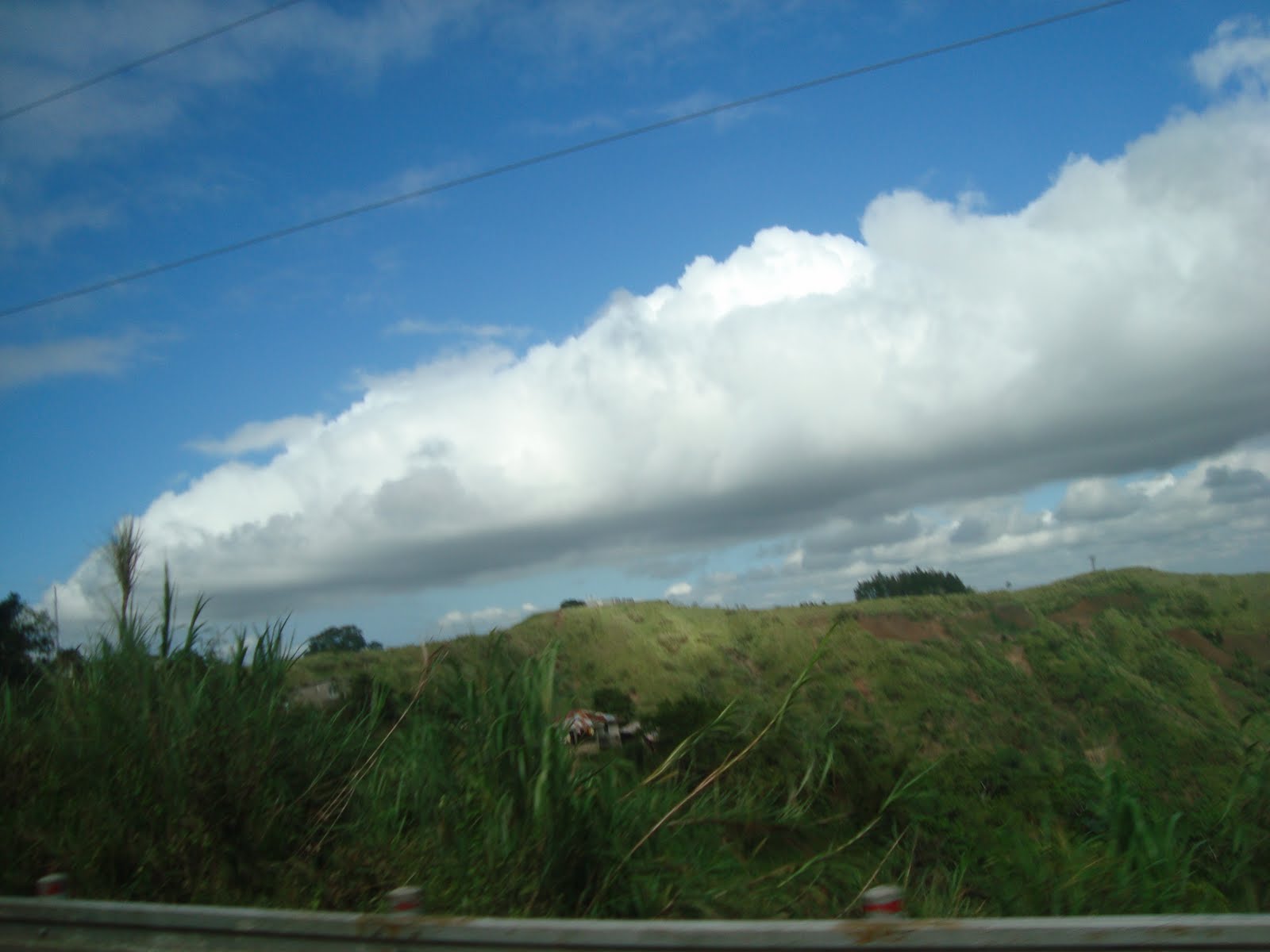
A stretch of cumulo-nimbus cloud over Tagaytay, Cavite

Heavy clouds over Tagaytay Ridge


City skyscape before sunset, QC


Stormy clouds on the West


Sunset over Quirino Bridge, Santa Ilocos Sur

Fiery clouds before sunset, San Vicente I Sur

Gray sunset, Tagaytay City

Solar eclipse, Lagro QC


Skyscape


Ephemeral as the sampaguita flower,
Ever changing like the chameleon;
Unpredictable as rain at the end of summer,
It mirrors my thoughts and passion.

Wednesday, August 23, 2017

Flow Gently, Sweet Afton - Memories of War

"Flow gently sweet Afton among thy green braes,
Flow gently I'll sing thee a song in thy praise"

Dr Abe V. Rotor


WWII Memorial beside the St Paul University Museum, QC. The school is remembered as a concentration camp of the Japanese during the War. It was later left in ruins after the liberation.


It was in the last year of the Japanese occupation that memories of World War II became vivid to me. In desperation the enemy killed anyone at sight in exchange for its apparent defeat. Hiroshima and Nagasaki were soon to be erased virtually from the map. I was then four years old. According to psychologists, at this age impressions become lasting memory.

Vigilance was the game. Far ahead of time one should be able to detect the enemy. Fear gripped the neighborhood and the whole town. We hid in a dugout shelter made of solid narra slabs several meters away from our house. Trees and banana plants hid it from view. At one time, I wanted to get fresh air, but my auntie-yaya, Basang prevented me to do so. Japanese soldiers were around the place. I heard them chase our geese and chicken. Then I heard my favorite goose, Purao, pleading - then it fell silent. Instinctively I rushed out of our hideout, but Basang pulled me back just in the nick of time.


Before this incident Japanese soldiers entered and ransacked our house. Two confronted Basang who was then wearing thick shawl and holding me tight in her arms. In trembling voice, she was saying repeatedly, “Malaria, malaria,” and begging the soldiers to take anything they wanted and leave us. One took all our eggs and started eating them raw, pitching the shell at us. One hit me straight on the face and I  squirmed. Basang apologized. The soldier shouted. Then the other came back with a stuffed pillow case and signaled the other to leave, but before leaving he gave me a hard look.


It is a face I still see today, cold as steel, lips pursed into a threat, brows drawn down like curtain over sultry and flashy eyes. How I reacted on the wicked face, I don't remember. I must have just stared coldly. But deep in me grew a resolved never to be afraid of the Japanese or any enemy for that matter.


Images of planes in dogfight are still vivid in my memory. Toward the east is the Cordillera range that looked blue in the distance. The view was clear from our house, and hideout. Even if the old San Vicente church got across our view, we saw now and then warplanes passing above. It was also the first and only time I saw a double body aircraft flying. There was one occasion warplanes fought just overhead, a plane simply burst into flame and dark smoke not far from our place. My dad prodded us to go back to our underground hideout.


When I was in high school I had a teacher in literature, Mrs. Socorro Villamor. She was the widow of war hero, Col. Jesus Villamor, one of the greatest Filipino pilots in WWII. After shooting down a number of Japanese fighter planes, his own plane was hit and he died in the crash. Camp Villamor was named in his honor.


My classmate and I wondered why Mrs. Villamor was always wearing black. At one time she recited in class, Flow Gently Sweet Afton lyrics  by Robert Burns, a famous 18th century English poet. She even sang it, then came to a halt sobbing. We were all very quiet until she recovered. The poem made us weep, too, more in sympathy to our teacher.


The first stanza is the most moving part of the poem, which is repeated in the sixth and last stanza.


Flow gently sweet afton among thy green braes
Flow gently I'll sing thee a song in thy praise
My Mary's asleep by thy murmuring stream
Flow gently sweet afton, disturb not her dream

Thou stock dove whose echo resound through the glen
Ye wild whistling blackbirds in yon thorny den
Thou greencrested lapwing thy screaming forbear
I charge you, disturb not my slumbering fair

How lofty, sweet Afton, thy neighboring hills
Far marked with the courses of clear winding rills
There daily I wander as noon rises high
My flocks and my Mary's sweet cot in my eye

How pleasant thy banks and sweet valleys below
Where wild are the woodlands, the primroses blow
There oft, as mild evening weeps over the lea
The sweet scented birk shades my Mary and me

Thy crystal stream, afton, how lovely it glides
And winds by the cot where my Mary resides
How wanton the waters her snowy feet lave
As gathering sweet flowers, she stems thy clear wave

Flow gently sweet afton among thy green braes
Flow gently sweet river, the theme of my lays
My Mary's asleep by thy murmuring stream
Flow gently sweet Afton, disturb not her dream


"Sweet Afton" lyrics is thoroughly romantic in the use of natural objects as a background for human emotions, which in this case is symbolic of a sad experience that permeates into the heart and soul of a grieving person. The melody has a refrain after each lyric-stanza, slowly rising and falling within the standard octave, so that it can be sang with little effort, and in ones own cadence. It can be sang and recited in an alternate fashion taking liberty to pause now and then.

Sweet Afton is a lyrical poem describing the Afton Water in Ayrshire, Scotland. It was written by Robert Burns in 1791 and set to music by Jonathan E. Spilman in 1837, under the title Flow gently, sweet Afton. Sweet Afton contains a lot of monosyllables, which contribute to a gentle, soothing rhythm. It can be seen as a hymn for peace. The poem is in the metre 11 - 11 - 11- 11, and is often sung to the tune of the popular Christmas carol Away in a Manger called Cradle Song.


I treasure the poem very much. I imagine my mother who died during the war and I was an infant then, lying in a tomb by the shade of an old acacia tree. Both the tomb and tree are now gone, but the breeze like the flow of Afton, takes me to some memories I'll never understand but can only feel as I read the poem or play on the violin its plaintive melody. There too, I see in my mind a great warrior in the sky, and a strong willed teacher telling us in school to go on with life, like a stream, gently flowing, gently flowing. 

NOTE: For his bravery as a pilot and ingenuity as an intelligence officer, President Ramon Magsaysay awarded posthumously Lieutenant Colonel Jesus Antonio Villamor the Medal of Valor on January 21, 1954. As a further tribute to one of the Air Force's greatest heroes, the PAF's principal facility in Metro Manila has been named Col. Jesus Villamor Air Base. x x x

Saturday, August 19, 2017

Can you see the creatures in this painting?

Dr Abe V Rotor 
Living Wall  in acrylic by AVR 2015

Where are the butterflies fluttering, midges hovering,
honeybees in their daily chore,
  mantises stalking for prey, ants scurrying,
carrying goods to their store?  

Where are the birds chirping, crickets fiddling, 
calling the members of their kind,
millipedes moving like train, snails gliding,  
camouflaged and hard to find?

You can't see them in this composite painting;  
only through imagination
do they exist - the art of make-believe working   
in the artist's solemn bastion. ~ 


The Phoenix reborn into a Devil Child

The atomic bomb has not only defiled the essence of rebirth and renewal as symbolized by the mythical Phoenix; it has usurped human dignity and the sacredness of life, casting a shroud of fear and gloom on humanity, and defying the Creator Himself. 

Dr Abe V Rotor

This blood-curdling photo appears like a child monster in the like of the fiction character in Mary Shelley's novel, Frankenstein.  Here civil defense officials watch an atomic bomb test on Yucca Flat, Nevada, in 1951, six years after the US dropped two atomic bombs, first on Hiroshima and then on Nagasaki, killing hundreds of thousands people, mainly innocent civilians. To this day there are still people dying as a result of the radiation, notwithstanding physiological and psychological effects on both old and young generations. (Life photo.)


A phoenix depicted in a book of mythological creatures by FJ Bertuch(1747–1822)


In Greek mythology, a phoenix is a long-lived bird that is cyclically regenerated or reborn. Associated with the sun, a phoenix obtains new life by arising from the ashes of its predecessor. The phoenix symbolizes renewal in general, as well as the sun, time, empire, resurrection, and life in the heavenly Paradise. (Wiki)

                      Deadly nuclear mushroom cloud over Hiroshima (left) and Nagasaki  
                                          
                       Hiroshima before and after the atomic bombing, August 5, 1945                                                                    
                              Nagasaki before and after the bombing, August 9 1945 
                   Nagasaki WWII memorial, hypocenter of the atomic bomb

Acknowledgement: Life and Wikipedia for the photos

Dying Tower

Dr Abe V Rotor

Century old tree, HoChiMinh City, SRVietnam

You look for a friend
you sheltered and cared
you look for your kin
through life you shared.

Now you are left alone;
even the clouds drift by,
the birds sit but briefly,
then soar to the sky
as you wait
your final state. ~

12 Old Folks' Sayings

Dr Abe V Rotor 
Living with Nature School on Blog


1. Old man to young man: “I have eaten more rice than you had.” (Meaning the old man is more knowledgeable by experience.)
Typical rural scene by national artist Fernando Amorsolo

2. Old man to young boy: “Amoy gatas ka pa lang, hijo.” (“You smell of milk, child,” a sarcasm comparing ignorance with the innocence of a child.)

3. “Isang sigarilyo lang ang layo.” (It’s only a cigarette away, the distance covered by smoking a stick of cigarette.)

4. “Pumurao ton’ diay uwak.” (Ilk) Literally, “The black crow will turn white.” You cannot wait for the impossible.

5. “Hindi mo magising ang gising.” You can’t wake up one who is already awake.

6. “Agannad ka no saan mo nga kayat ti agtangad ti barsanga.” This is a cold warning on the face, which literally means “Beware if you don’t like to look up at the grass.” (barsanga is sedge, a relative of the grass growing on open field).

7. “Saan nga napan no saanna nga nayon.” (“It’s not there if it’s not part of it.” - referring for example, fly maggots in fermenting fish sauce or bagoong.)

8. “Di ka pay la nakuret.” (Better if you had died of kuret, a tiny poisonous crab that resides in the gills of big fish.)

9. “Matira matibay” It refers to Darwinian concept of “survival of the fittest.”

Author (right) with senior friends Dr Domingo Tapiador and the late Dell H Grecia (center)

10. Nothing goes up that does not go down. This phrase refers to one who has reached the pinnacle of wealth or power.

11. “Aramid ti saan nga agdigdigos.” (“It a work of a hippie or bum.”)

12. “Balat sibuyas.” (An expression that refers to one who easily gets peeved.)


Friday, August 18, 2017

Green Rock


Painting and Poem by Dr Abe V Rotor

Green Rock, in acrylic (37” x 22.5”) AV Rotor, 2013

What good is rock if it loses the essence
     on which life rises, so with dreams;
nurtures the living from birth to death,
     builds rills, rivulets and streams?  

What greater strength than to yield
     to the lowly moss and lanky vine,
to tall trees that live for a hundred years,
     once upon a rock now a shrine?

What greater gift than boys climbing
     a rock face, in pure adventure
to conquer the world, real or fantasy,
     and unveil the secrets of nature?

What greater drama than in the world
     of young Darwin’s and Jules Verne’s time,   
when imagination and reason are but one   
     to make a rock become sublime?    

Endangered Species: Don't ever say goodbye!

Dr Abe V Rotor
Living with Nature - School on Blog

Lesson: Let's protect threatened and endangered species. They are part of the Web of Life. Losing them means breaking the links of the chain, thus destroying the integrity of the system in which man is a part. List down the species of plants and animals that are threatened or endangered in your area or country. What can you do to protect them? Don't allow them to say goodbye. Research and present it in class or in an environment conference or workshop.

Specimens of endangered animal species, among them the Flying Lemur, Palawan Peacock, Porcupine, and Spotted Philippine Hawk. Former St Paul University Museum, QC


Philippine Eagle (formerly monkey eating eagle) Parks and Wildlife Center QC


Sea eagle, La Union Botanical Garden, Cadaclan, San Fernando LU

Giant fruit bat. Lake Tikob, Tiaong, Quezon

Swordfish. Photo taken at San Fernando, La Union 2004

Never say goodbye, my friends in the wild,
Friends of my ancestors, of time long gone;
Survivors of the meteor's gale, Darwin's test, 
By creation or evolution that you've come. 
Never say goodbye, it's not coming or going,
As casual as among kin and friends;
Else death the consequence of your absence;
A link of the chain broken, and life ends. 
I wish you to stay under the roof above -
The sky, although heavy and foul;
To stay on land, the field, hills and valleys,
Though crowded each soul yearning a bowl.

I shall protect your last bastion, just don't say
Goodbye. Else it's losing Paradise again,
All creatures become orphans of Mother Earth -
Lifeless - no one shall be left to gain. ~

Old Spanish Vigan

Dr Abe V Rotor
UNESCO World Heritage - This is how Vigan, the oldest Spanish settlement in the Philippines, after Cebu and Manila, looked like - day and night - way back in the 16th century. Today Vigan is the top tourists' attraction in the whole of the Ilocos Region. Photos by Matthew Marlo Rotor who hails from the place. (Vigan is 400 km north of Manila, reached in 6 hours on first class buses. Check flight schedule to Vigan, or Laoag. From Laoag, it's 90 km by land down to Vigan.)