Cryptobiology: The Study of Nature Spirits
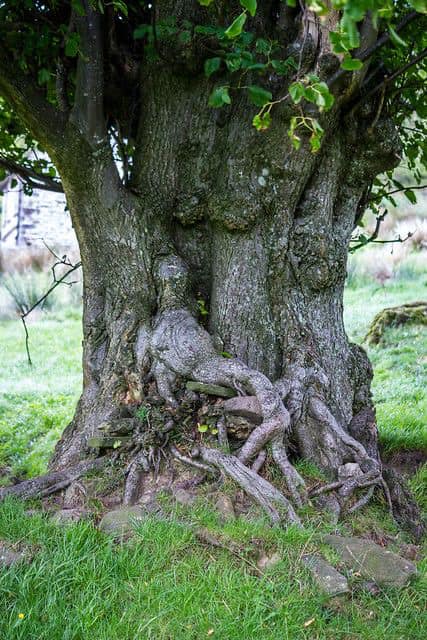
Annex - A Collection of Images of Cryptid Trees
Dr Abe V Rotor
Deep inside, we still have a longing to be reconnected with the nature that shaped our imagination, our language, our song and dance, our sense of the divine. And forget not that the earth delights to feel your bare feet and the winds long to play with your hair. And taste the beauty of the wild. still! Internet
Coed, Angie Tobias 18, displays cryptid driftwoods from a collection of Nature Spirit remains at the Living with Nature Center in San Vicente Ilocos Sur. These items resemble unique features of creatures and objects, a subject of pseudoscience called cryptobiology.
Cryptobiology is a field of study at the border of science and superstition., thus scientists call it pseudoscience. It is however, older than science itself owing to its indigenous and popular nature. With today's growing awareness in protecting nature from rampant destructive practices, this new field is gaining support from scholars and people in general.
There are two fields of cryptobiology, one concerning animals (cyptozoology) and the other, plants (cryptobotany). The former took off with the discovery of strange creatures like the Coelacanth fish thought to have become extinct millions of years ago. On the other hand, the search of legendary and fiction characters like Loch Ness, Bigfoot, and the Abominable Snowman, continues to draw attention.


Philippine Eagle Driftwood in two views, personal collection of the author
on display at the Living with Nature Center, San Vicente, Ilocos Sur
Search for the Incredible
Media with the advancement of science and technology have embellished findings and reports about a "third world of creatures". The platypus is among nature's most unlikely animals. In fact, the first scientists to examine a specimen believed they were the victims of a hoax. If the Red Wood (Sequoia) was not discovered, no one would believe in its enormous size compared with high rise buildings. How many creatures completely unfamiliar to most of us live in a drop of pond water? In terms of biological diversity, 90 percent of living things remain unknown and unidentified, more so if we include the prototype and extinct organisms since life appeared three billion years ago.

Driftwood representing a Philippine eagle, hawk (lawin), and a dragon in biblical times and in fairy books. Displayed as a table top figurines, subject of curiosity and subsequent exchange of stories among young and old alike.

This figure of an aquatic creature apparently swimming, was discovered in an estuary. Old folks claim the creature once lived where sea and river meet, a unique habitat of many strange creatures, animals and plants as well. Mural background adds to the queer ambiance of the figure.
Horned duck with wings half-spread ready for takeoff, gives a fantasy image of a strange creature, which kids relate with cartoon characters and unique specimens like the Pterodactyl, an extinct genus of pterosaurs.
Top photos: Half-serpent, half-avian with distinct eyes, beak and crown (palong Tag); yelping puppy in a greeting pose. Lower photos: Long legged reptile emerging from a broken jar seems to be telling story fit for a horror movie.
Augury is the practice from ancient Roman religion of interpreting omens from the observed behavior of birds. A white dove means “peace”. A black dove means “war”. It could also pertain to matters of the heart, relationships, luck, misfortune, death, Remember the emissary bird in the biblical Noah's Ark? Have you seen a black dove in our real world?
Out of this world creatures haunt the forest, playing the role of guardian against poachers and loggers. Nature spirits are friendly to environmentalists and are believed to be protecting Nature's resources against abuse.
Cryptobiology is traced to our ancestors, and carried on through history, treasured in primitive societies, religious organizations, and time honored beliefs and tradition conveyed in documents and folktales.
Cryptobiology, Keeper of Values and Tradition
One time I asked a man of his true name. He said when he was a boy he was sickly. To overcome his condition, his nickname was changed with one stroke of a bolo (Taga' sa punong kahoy.) To this day Mang Kapok (kapok is cotton tree, Ceiba pentandra), now a senior, is heathy and strong, thanks to the spirit of the place and the village herbolario.
Beginning of Crypto communication
With the breakthrough in cybercommunication, it is evident that soon we will be communicating with Nature more directly than before, more than mere fantasy and imagination, over and above, inferential and psychological.
Cryptobiology and Conscientization
Conscientization conveys the idea of developing, strengthening, and changing consciousness. Consciousness leads us to think further than knowledge in the pursuit of values, truth and the ideal. Here is a piece I wrote for a university lecture on Nature and Literature. ~
ANNEX A - A Collection of Images of Cryptid Trees
Researched by Dr Abe V Rotor
"Cryptids are earthly symbols of communication between
and among creatures - including humans." - avr
"Cryptids are Nature spirits appealing for understanding
and love from humans." - avr
Monsters are real, and ghosts are real too. They live inside us,
and sometimes, they win. - Stephen King
These and many cryptid figures are encountered on the Internet - blogs, facebook, e-mails, apps - indicating growing awareness of the dilemma of Nature's destruction, cum curiosity and fancy that accompany such experience. Acknowledgement with gratitude to all sources of these photos. -avr
"All that we see or seem is but a dream within a dream.
- Edgar Allan Poe
“Maybe all the people who say ghosts don’t exist are just afraid to admit that they do.” - Michael Ende, The Never Ending Story
"We seem to take for granted unseen spirits, but we cannot escape
them as a result of our folly, indifference and greed." - avrotor
ANNEX B: AI Overview
Meaning
of “Cryptobiology” in Dr. Abercio V. Rotor’s Works
Living with Nature - School on Blog
naturalism avrotor.blogspot.com
In
Dr. Abercio V. Rotor’s writings and presentations, cryptobiology is described
as “the study of nature spirits” and the investigation of cryptids — creatures
from folklore, myth, or unverified reports — that exist at the border of
science and superstition.
According to Rotor, cryptobiology examines physical
evidence or reported sightings of such beings without resorting to occult
explanations. It is a controversial field because mainstream science often
labels it pseudoscience, yet it has roots in indigenous knowledge and popular
culture, and is gaining some support from scholars and the public.
Two Main Branches
- Cryptozoology – the study of unusual or legendary animals, such as
the coelacanth fish (thought extinct for millions of years) or modern
cryptids like Bigfoot, the Loch Ness Monster, and the Abominable Snowman.
- Cryptobotany – the study of unusual or legendary plants, often
linked to local myths or ecological curiosities.
Examples in Rotor’s Work
- Driftwood specimens shaped like the Philippine eagle, hawk (lawin),
or even mythical creatures, displayed at the Living with Nature Center in
San Vicente, Ilocos Sur.
- Cryptid trees and other natural objects that resemble animals or
mythic beings.
- Stories and artifacts tied to local folklore, such as aquatic
creatures found in estuaries or “nature spirits” believed to protect the
environment.
Broader Context in Rotor’s Philosophy.
Rotor frames cryptobiology within an ecological and
cultural lens:
- It connects people to the “third world of creatures” — those
unknown to mainstream science but part of local imagination and tradition.
- It emphasizes reconnection with nature and the preservation of
environmental values, often linking “nature spirits” to ecological
stewardship.
- It acknowledges that 90% of living things remain unknown,
highlighting the vast unexplored biodiversity of the Earth.
In short:
In Dr. Rotor’s works, cryptobiology is both a scientific inquiry into
unverified or mythical creatures and a cultural–ecological practice that blends
folklore, environmental awareness, and the exploration of the unknown natural
world. ~




No comments:
Post a Comment