Sunday, October 4, 2026

Literacy and Education: "It's time to move up from bedtime stories." (In celebration of World Teachers' Day, October 5, 2026)

Literacy and Education in 3 Stories

"It's time to move up from bedtime stories." - avr 
Dr Abe V Rotor

"Let us remember: One book, one pen, one child, and one teacher can change the world." - Malala Yousafzai

(Malala Yousafzai is a Pakistani female education activist, and producer of film and television. She is the youngest Nobel Prize laureate in history, receiving the Peace Prize in 2014 at age 17, and is the second Pakistani and the only Pashtun to receive a Nobel Prize.)

World Teachers' Day has been celebrated since 1994. It is a day to celebrate how teachers are transforming education but also to reflect on the support they need to fully deploy their talent and vocation, and to rethink the way ahead for the profession globally. UNESCO

1. Functional Literacy

Here is a story* about Pedro and Jose I read in my elementary days.

One day Pedro approached his boss and complained why his partner Jose is receiving a higher pay when both of them have the same nature of work.

“Ah, Pedro,” sighed the boss with a sheepish smile. “You will come to know the reason.”
Just then the doorbell rang. “Pedro, please find out who is at the gate.”

After some time, Pedro returned, “Someone is looking for you, sir.”

“Ask who he is.” Pedro went to the gate again, and reported back.

“He is a certain Mr. Carlos, sir.”

“Ask him what he wants.” Pedro went to the gate for the third again, and then returned.

“I did not get it well, sir. But he said he sells home appliances…promotion, something like that. He would like to meet the manager.”

“Tell him we do not need appliances.”

The next day the doorbell rang again. This time, both Pedro and Jose were in the office of their boss. Jose promptly rose from his seat to attend to the visitor at the gate. After a while he returned and reported back.

“Our visitor is an insurance agent, sir. He was offering insurance for our building, and knowing that it is already covered, I told him we do need his offer for the moment. He gave me his business card.” Jose handed the card and excused himself for another call.

“Now you understand,” said the boss to Pedro with a sheepish smile.

2. “I cannot feel,” Computer

A teacher gave a home assignment to her students: first, what is love, and second, what does it feel to be truly in love.

Promptly the students consulted their computer. Not their parents first because they were not around. They were in their work, or abroad. Not their friends, they’re bias, of course. Not a spiritual adviser, to many, he is too religious. Not an elderly, he is too traditional. Hello? Anyone out there? Everybody seems to be too preoccupied.

So Johnny or Jon-jon, as Juan likes to be called, typed the first question: What is love? Immediately the computer responded with a hundred definitions. And he chose the easiest and shortest one. It’s just an assignment, he thought. His teacher may not have time to read it. She is loaded with school activities other than teaching.

Next, he entered, What does it feel to be in love? The computer printed: WAIT. Johnny was impatient. He had to hurry up, otherwise he’ll miss his favorite TV program. He tried again. The computer finally answered: I CANNOT FEEL.

And here we have our youth with their best friend the computer, who cannot feel, spending hours every day, 365 days a year, and most likely throughout their lives.

We seem to be locked up with a robot, our intelligence is no longer a natural one. We are becoming slaves of the robot. Modern industries are run by robots (automation). War is fought by robots (drones). Robots beat us in Chess. They steal our time, peep into our room, and trace us on the street (CCTV). They rob us of our privacy. We have indeed enslaved ourselves with our inventions, a new kind of slavery.

Computers gather and store huge amounts of information, information we do not really need, mixing up important and trivial, genuine and fake information materials. This is the newest kind of pollution today – information pollution or “infollution.” We are sinking into a quagmire of information waste alarmingly increasing every day. We lose our sense of judgement and priorities. Computers cannot truly think and feel, they have no capacity for love, and faith. Without love and faith we break our interrelationship as humanity, the interconnection of the human spirit and creation, and our sacred relationship with God.

3. The Mystery Child.

In a workshop for village leaders, the instructor asked the participants to draw on the blackboard a beautiful house, a dream house ideal to live in and raise a family. The participants formed a queue before the blackboard to allow everyone to contribute his or her own idea of such a dream house. The first in the queue drew the posts , on which the succeeding members made the roof and floor, followed by the making of the walls and windows. In the second round the participants added garage, porch, veranda, staircase, gate, fence, swimming pool, TV antennae, and even a car and other amenities.

Finally the drawing was completed and the participants returned to their seats. What make a dream house, an ideal house? A lively “sharing session” followed and everyone was happy with the final drawing – indeed a dream house.

Just then a child was passing by and peeped through the open door. He saw the drawing of the house on the blackboard and entered the classroom, and stood there for a long time looking at the drawing. The teacher approached him, the participants turned to see the unexpected visitor. The child pointed at the drawing on the board and exclaimed, “But there are no neighbors!”

In the same village there was a similar workshop exercise, but this time the participants were to draw an aerial view of an ideal community. The participants formed a queue before the blackboard and after an hour of working together, they came up with a beautiful drawing of a community. There are houses, a church, a school, village hall, and plaza. A network of roads and bridges shows the sections of the village. People are busy doing their chores, especially in the market place. Indeed it appeared as an ideal village.

“What constitute a community?” It was a lively discussion and everyone was so delighted with their “masterpiece” that the teacher even wrote at the corner of the blackboard “Save.”

Just then a child was passing by. When he saw the drawing on the backboard through the open door, he entered the classroom. He went close to the drawing and looked at it for a long time. The teacher and participants fell silent looking at their very young guest.

The child exclaimed, “But there are no trees, no birds; there are no mountains, no fields, no river!”

Some days passed since the two workshops. No one ever bothered to find out who the child was or where he lived. Then the whole village began to search for the child, but they never found him – not in the village, not in the neighboring village, not in the capital, not even in the church. Not in any known place.

Who was the child? Everyone who saw him never forgot his kindly beautiful and innocent face, bright eyes, radiant smile, and pondered on his words which became the two greatest lessons in life. ·

  • But there are no neighbors of the beautiful house! 
  • But there are no trees, no birds; there are no mountains, no fields, no river in the ideal community! 
Analyze the story. Who is this Mystery Child? What is the significance of this story to you? To your future career? 

Acknowledgement with gratitude: Internet images, About Malala Yousafzai. ~

QUALITIES OF A GOOD TEACHER In celebration of World Teachers’ Day, October 5, 2026

 World Teachers’ Day, October 5, 2026

Theme: “Standing with teachers: 60 years of protecting the profession, advancing its status and shaping our futures.”- UNESCO

Dr Abercio V Rotor, PhD
Retired Professorial Lecturer
UST, DLSU-D, SPU-QC, UPHSD
Qualities of a Good Teacher


Part 1. Effective teaching is both inborn talent and learned skill
Part 2 - Unveiling Teaching Expertise:  A Self Evaluation as a kind of self-examination. 
Part 3 - Attributes of the Expert Teacher - "Parts of a Teacher"
ANNEX A - Prayer for Teachers as Good Shepherds and Disciples of Peace
ANNEX B - Teaching is a Gift - Inborn and Learned

 Part 1. Effective teaching is both inborn talent and learned skill
There is debate about whether teachers are born with certain qualities or if they can be made through training and experience. Some say that teachers are born with certain qualities, such as: Genetic makeup; a caring, patient, encouraging, and joyous personality; innate characteristics and personality traits. 

"By nature, some people possess a combination of personality characteristics that are conducive to effective teaching" - Malikow, 2006

 
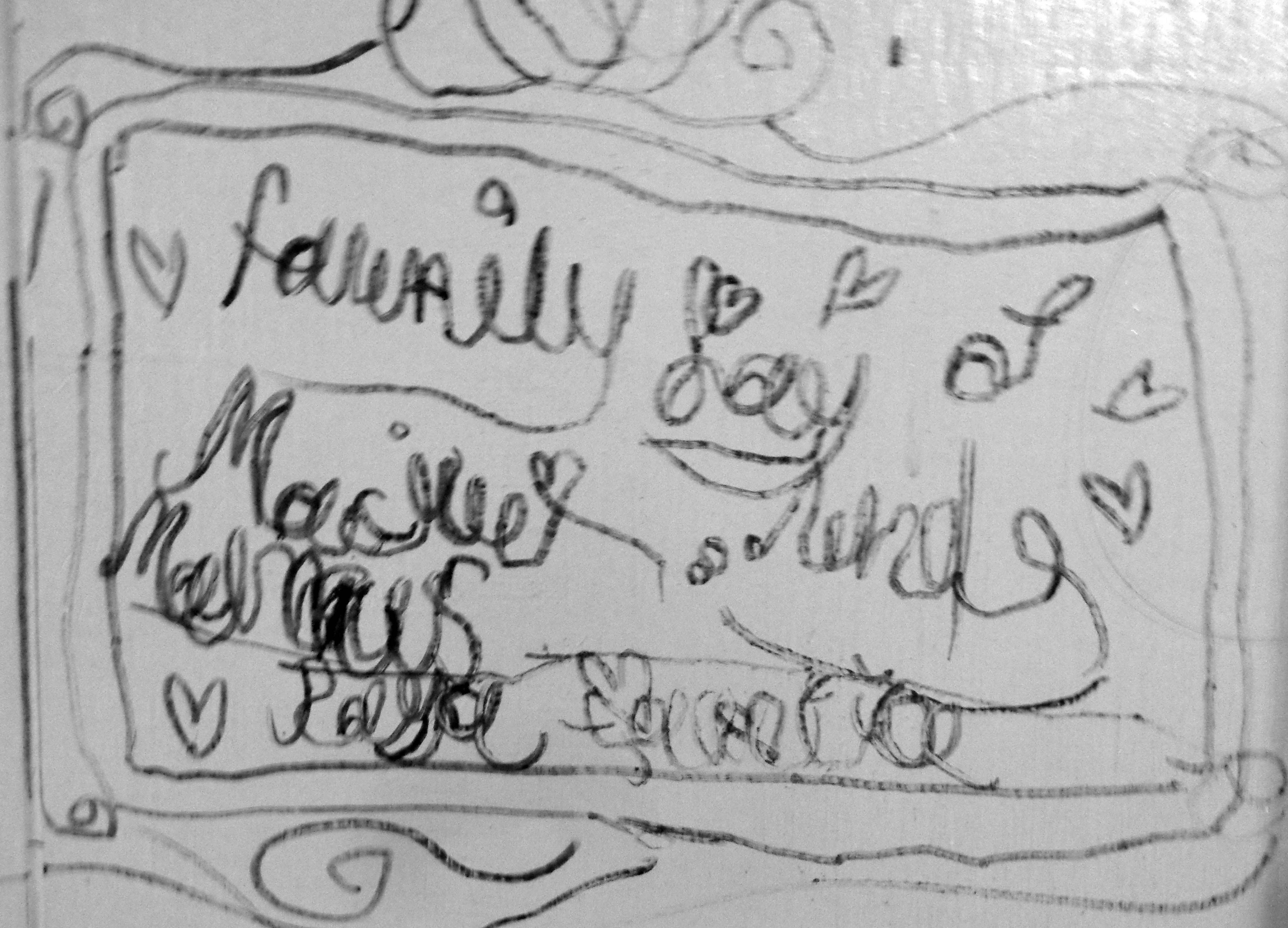
Drawings on the wall by Mackie R Sta Maria, 6 years old*

Part 2 - Unveiling Teaching Expertise
                              A Self Evaluation as a kind of self-examination.  
 I invite the reader to go over these questions as a reference in search of Effective Teaching and Teaching Models. 

1. In teaching, Humanities and Science must go together. This requires the use of both, the left brain which is for creativity and the right brain which is for logical thinking or reasoning. (False, brain lobes are interchanged.)

2. The majority of the teacher-participants are experimentalists. They uphold the experimental educational philosophy. This means that these teachers are flexible and open to educational change. True 

3. Twelve are advocates to perennialists, educational philosophy, which means that they do not subscribe to just one philosophy, and they shift their roles from being facilitators of learning to transmitters and interpreters of knowledge. (False, they are eclectic.)

4. Twelve are eclectic that is, they perceive themselves as authority figures in the classroom, transmitting and interpreting knowledge. (False, they are perennialists.)

5. Nine are realists. They tend to focus on the here and now. They stress knowledge as how it is applied or observed. For example the laws of nature are better understood through observation and research. True

6. Most of the expert teachers are idealists. They view education as a means of developing students’ intellectual abilities. Influenced by the Greek philosophers Socrates and Plato, these teachers stress the importance of logic and philosophy. 
(False, there are very few – only 1 in the survey is an idealist.)

7. Of the two compositions used as basis in relating it to effectiveness in teaching. Essentials refer to requisites or “musts” for the attainment of teaching expertise. True

8. Enhancers are teaching practices and behaviors contributory to teaching expertise. True 

9. The effective teacher draws inspiration from his or her family, school administration and his community. (True. Almost one-half of the expert teachers consider the supportive role of family members who understand the nature of teaching as having greatly contributed to their success. Twenty of the expert teachers mentioned of a family member as their mentor and source of inspiration. On the other hand the role of school administrators is very important, with almost 70% of the participants attributing the administration’s support to their success. The ambiance of teaching is equally important whereby the school is one large respectable family with a community atmosphere.)

10. Subject matter expertise – All of the experts demonstrates a very thorough knowledge of subject matter, which facilitates effective organization of content to promote learning. True 

11. Being up-to-date with the latest developments in their fields – The experts are updated and very knowledgeable, explain new alternative ways of solving a problem – refers to effective classroom diagnostics.  True

12. Knowledge of practical application and concrete, interesting examples to clarify abstract ideas/concepts – All of the expert teachers have readily available examples which are clear, simple, and interesting, to clarify issues or ideas – subject matter expertise. True

13. Instructional Expertise – The expert teachers demonstrate facility in the use of varied instructional strategies, demonstrate knowledge of different teaching strategies, adopt group dynamics, and are particular in instructional clarity. They have the ability to simplify and clearly present lessons. (True. Use of varied teaching strategies – 90% of the expert teachers use varied teaching strategies. They employ other than lecture and recitation, song and movement, role-playing, pantomime, choral; reading visual imagery, concept mapping, brainstorming, contest, simulation, oral debate, cooperative learning etc.)

14. The founders of the world’s greatest religions were teachers. True

15. Dr. Albert Schweitzer was great English explorer and teacher-missionary in Africa who became famous for his philosophy “reverence for life.” (True. He was one of the last great explorers to bring knowledge, peace and Christianity into the Dark Continent.}

16. Classroom Management Expertise – This is the ability of the teacher to prepare for and provide a physical learning environment. Students engage actively in class, time is properly managed, and students behave accordingly. A highly desirable study ethic prevails in class.  True

17. Efficient handling of routine activities and time management – refers to effective diagnostics. (False. – All expert teachers manage classroom routine and time efficiently. The teacher is familiar with the names of his students, and knows who is absent, who is a fast or slow learner. More than half of the experts (58%) do not check attendance because the students are properly monitored and absenteeism does not pose a problem. Classes start and end on time. The teacher employs different ways of maximizing class time, such as the use of OHP, and other instructional devises, including handouts.)

18. Maintenance of students’ on-task behavior is a key enhancer. They use socialization techniques, encourage students to recite, motivate, and check their progress. There is never a dull moment in the classroom for an expert teacher. (True, 92% of the model teachers used this technique.)

19. Absence of class disruptions – The expert teachers make sure that the class does not suffer from unnecessary disruption. The experts are not reactive to disruptive situations; they are proactive, meaning they anticipate and prevent such situations to happen – or they can immediately remedy the situation from getting worse. True

20. Classroom Management Expertise – this is the ability of the teacher to prepare for and provide a physical learning environment. Students engage actively in class, time is properly managed, and students behave accordingly. True

21. Expert teachers have a range of teaching experience from 2 to 47 years, with a median of 25 years. (True, it takes 25 years to be a model teacher. There is a saying, “Experience does not only make a good teacher; experience is the best teacher.”)

22. The experts were honor graduates and campus leaders. (False. They were academic achievers in college. There were only 14 of the experts who were active in extracurricular activities in college, say in athletics and campus politics. Fifty-eight are academic achievers, with 33 as top performers but who did not make it in the dean’s list, and 25 who were consistent scholars and honor students. Only 11 were average academic performers.}

23. In general, the 69 outstanding teachers did not choose teaching as their first career.
(True.  Only 26 actually set their minds to teaching as early as upon graduation in high school. For one reason or another, 43 set out for other careers. Others found teaching compatible with their present professions, while a good number opted to spend their retirement as teachers or professors.)

24. Women dominate the teaching profession. (True. Of the 69 outstanding teachers, women constitute 74% as compared with that of men which is 26 &, or a ratio of 4 to 1. The reason for this is that men place less priority to teaching than better paying jobs. This is manifested in the choice of careers. In the case of men, they prefer law, engineering, and applied courses in industry and technology that offer better professional growth opportunities and pay as compared to teaching.)

25. Honor graduates are the best teachers because they are highly knowledgeable and can adjust easily to situation.  (False, however high intelligence is preferred.)~

Reference: Unveiling Teaching Expertise: A Showcase of 69 Outstanding Teachers in the Philippines, Flordeliza Clemente-Reyes 2002. Lesson on former Paaralang Bayan sa Himpapawid, DZRB 738 AM, 8 to 9 o’clock in the evening, Monday to Friday.

 Part 3 - Attributes of the Expert Teacher
In celebration of World Teachers' Day and Month, October 5, 2026

Dr Abe V Rotor
1. Women dominate the teaching profession. Of the 69 outstanding teachers, women constitute 74% as compared with that of men which is 26 &, or a ratio of 4 to 1. The reason for this is that men place less priority to teaching than better paying jobs. This is manifested in the choice of careers. In the case of men, they prefer law, engineering, and applied courses in industry and technology that offer better professional growth opportunities and pay as compared to teaching.

2. The median age of the expert teacher is 50. Majority of the experts (82.6%) are in their past 40. Surprisingly one-fifth of the experts is in the 60 to 79 age bracket. These data point out that teaching – contrary to common belief – does not deteriorate with age. On the other hand, teaching improves with time and experience. Distilled and seasoned knowledge is wisdom.

3. Forty-five of the 69 expert teachers are married. The remaining 24 are single with two of them a nun and a priest. Again at this point, contrary to common belief, being married and having a family is not a deterrent to being a good teacher. On the contrary there are many cases where teaching career is enhanced by an understanding and cooperative family.

4. In general, the 69 outstanding teachers did not choose teaching as their first career. Only 26 actually set their minds to teaching as early as upon graduation in high school. For one reason or another the 43 set out for other careers. Others found teaching compatible with their present professions, while a good number opted to spend their retirement as teachers or professors. Among the outstanding teachers are practicing agriculturists, journalists, scientists, lawyers, doctors, engineers, TV hosts, and the like. This shows that a good teacher may not have started out early in his career as teacher but ended up becoming a good teacher. Professions and experiences outside of teaching greatly contribute to teaching effectiveness.

5. The experts were academic achievers in college. There were only 14 of the experts who were active in extracurricular activities in college, say in athletics and campus politics. Fifty-eight are academic achievers, with 33 as top performers but who did not make it in the dean’s list, and 25 who were consistent scholars and honor students. Only 11 were average academic performers. Dr. Reyes explains the relationship of academic performance and expertise in teaching this way. “Academic achievers generally have good self-esteem and exude high self-confidence – personal attributes that are helpful to teachers, cognitive intelligence as a facilitative factor to subject mastery and instructional skills, notwithstanding.” An intelligent teacher is therefore highly desirable so long as he demonstrates humility patience and understanding. On the other hand, “magtitser ka na lang,” is an insult to the teaching profession.

6. On the educational attainment of the expert teachers, 35 of them have doctoral degrees while 26 have master’s degrees. The remaining ones were at the time of the survey still pursuing their graduate studies. This means that 88.4% of the expert teachers have at least a master’s degree, which points out to the importance of graduate education as a factor in effective teaching. Graduate education is characterized by “extensive professional reading and research, as well as personal discipline, perseverance, diligence, and a strong motivation to succeed,” in the words of Dr. Reyes. The pursuit of graduate studies confirms the strong conviction of the teacher towards excellence and dedication in his profession. Graduate studies confer the imprimatur of a teacher’s professional status, and his place among his peers.

7. The expert teachers do not only possess high educational attainment; they also excel in specific disciplines or fields of study. Here is a breakdown of the findings:

 Education and related fields 36 %
 Applied and natural sciences 26
 Languages, literature, communication art 15
 Medicine, nursing and public health 6
 Political, social science, economics 6
 Psychology, guidance and counseling 5
 Philosophy 3
 Agriculture 3

It is interesting to note that 55 of the experts have either completed or enrolled in programs that offer rich opportunities for sharing research, information, and work experiences in the school setting.

8. On teaching experience, the range is wide – 2 to 47 years, with a median of 25 years. Yes, it takes 25 years to be a model teacher. There is a saying, “Experience does not only make a good teacher; experience is the best teacher.”

9. Which hemisphere of the brain is more useful to the expert teacher? The different specializations of expert teachers attest to a left-right brain combination or mix-brain, which means that the use of both hemisphere in proper balance and harmony is needed in teaching - the left for language, mathematics and logic, and the right which is dominantly for creativity is for intuition, inspiration and imagination. Majority of the expert teachers are mix-brained (43 women and 11 men). The rest are left-brained who are experts in the fields of science, mathematics, language, philosophy, research, nursing and agriculture. The survey came up with a negative right-brained among the experts.

10. The effective teacher draws inspiration from his or her family. Almost one-half of the expert teachers consider the supportive role of family members who understand the nature of teaching as having greatly contributed to their success. Twenty of the expert teachers mentioned of a family member as their mentor and source of inspiration. On the other hand the role of school administrators is very important, with almost 70% of the participants attributing the administration’s support to their success. The ambiance of teaching is equally important whereby the school is one large respectable family with a community atmosphere.
---------------------
Acknowledgement:  Internet cartoon; reference: Unveiling Teaching expertise: A Showcase of 69 Outstanding Teachers in the Philippines by Flordeliza Clemente-Reyes

ANNEX A - Prayer for Teachers 
as Good Shepherds and Disciples of Peace

On many occasions Christ found nature as the perfect setting of his prayers, sermons and parables. Among them are The Sower, Sermon on the Mount, Mustard Seed, Prodigal Son, and The Good Shepherd. The Sea of Galilee, River Jordan, Plain of Judea, Garden of Gethsemane (oasis) were part of his wanderings to reach out for the faithful. 

We are teachers in our own rights - as parents, community leaders, elders, scholars, etc.

Father Almighty, teach us to become good teachers in the way of the Good Shepherd

Father Almighty, source of light, of life and everything in this world, as we observe Teachers' Day, we beg you to be with us, to be our “unseen Guest.” Light our way; touch our heart as we touch the hearts of others, especially the young ones, the youth, whom You have placed under our care. Bless us with joy and enthusiasm, with zeal and obedience, with understanding and compassion as we take their hands and walk with them to make this world a better place to live in.
Teach us then to become good teachers and educators in the way of the Good Shepherd.

- Make us unifying element that we may live peacefully in one community;
- Make us catalysts of change, and an anchor of undefined destiny as well;
- Make us conveyors of knowledge, skill and values rolled into a holistic well-being;
- Make us healers by bringing enlightenment to human misery;
- Make us agents of rational thoughts and decisions;
- Make us sentries that we may fend off evil intentions that undermine true education;
- Make us custodians of tradition amid modernism;
- Make us guardians in the way of the Parable of the Sower, and the Prodigal Son;
- Make us the Good Samaritan, as well.

You have chosen us teachers to be the intellect and heart of the academe - because You want us to examine education in the way we examine our calling.

- to reach out for one another;- to listen;
- to care;- to comfort;
- to encourage one another when we fail;
- to pray for one another when we falter;
- to be strong together;
- to share the joy of teaching; and
- to convey the Sermon on the Mount

With you, Father Almighty, we can do many things; without you, we can do nothing. We ask You these through your Son Jesus Christ, who reigns forever and ever. Amen ~

Sermon on the Mount: the Greatest Teacher who ever lived and preached among the people is Christ. Even with the computer and other means of modern education today, the philosophy and methodology of teaching laid down by Christ remains as relevant and forceful as ever.  Like passing on the torch of knowledge and wisdom, Christ has influenced teachers, leaders, people of all walks of life, particularly at the grassroots, more than any teacher the world has known.  

ANNEX B - Teaching is a Gift - Inborn and Learned
AI Overview
Some believe that teaching is an inborn talent, while others believe that teaching is a skill that can be learned

Inborn talent
Some believe that some people are naturally gifted to teach, and that their genetic sequence gives them certain characteristics that make them good teachers. These characteristics include being caring, patient, encouraging, and joyous.


Learned skill
Others believe that teaching is a skill that can be learned through training and education. They argue that even if some people have a personality that is suitable for teaching, they still need to go through the training and learn the goals and standards.

Intrinsic Personality
Some say that great teachers are passionate, have a sense of humor, and are committed to finding new ways to deliver content. They also say that teachers should use their unique personality to inspire and motivate their students.

                                                               Other qualities 
  • Communication skills, 
  • Listening skills, 
  • Collaboration skills, 
  • Adaptability, Empathy, 
  • An engaging classroom presence,
  • A value in real-world learning, 
  • A lifelong love of learning
Acknowledgement with gratitude: Internet

Inborn faculty refers to a natural ability or aptitude that a person is born with. For example, the idea that children are born with an inborn faculty for language acquisition is a central tenet of Noam Chomsky's theory of language acquisition. Internet

“One child, one teacher, one book, one pen can change the world.”
– Malala Yousafzai 
Malala Yousafzai is a Pakistani female education activist, and producer of film and television. She is the youngest Nobel Prize laureate in history, receiving the prize in 2014 at age 17, and is the second Pakistani and the only Pashtun to receive a Nobel Prize. Wikipedia
-----------------------
* World Teachers' Day - October 5 2026 
** Mackie is grand daughter of the author.

Saturday, October 3, 2026

10 Famous Teachers Who Changed the World (In celebration of World Teachers' Day, October 5, 2026)

 In celebration of World Teachers' Day, October 5, 2026

 10 Famous Teachers Who Changed the World
Published by ADMIN INTERNET

Education is just impossible without a proper and appropriate teacher and the present world that we are looking around would not be possible without an appropriate and right teacher. However, the great teachers of time had their own methods to teaching and learning and put through the foundation of present contemporary world. Below are mentioned some of the greatest teacher of our times who shaped the civilization to a greater
extent.

1. Confucius: He was a Chinese thinker and social philosopher whose teachings have influenced Chinese, Korean, Japanese and Vietnamese life to a greater extent. In his philosophies, he advocated personal and governmental morality. His teachings developed into a system of philosophy known to be as Confucianism.


2. Aristotle: He was a Greek philosopher, student of Plato and teacher of Alexander the Great. He has written over a good number of subjects like physics, metaphysics, poetry, theatre, music, logic, rhetoric, politics, biology and zoology. (photo)

3. Johann Amos Coménius: He was a Moravian teacher, scientist, educator and writer. He was a Unity of the Brethren/ Moravian Protestant bishop, a religious refugee, the earliest champions of universal education and a concept set forth in his book Didactica Magna

4. John Locke: He was an emphatic follower of the belief that knowledge is needed to be taught. He insisted on teaching of character first and academics later. He was of the belief that good character far exceeds the value of learning to read, write, and complete calculations and other uses.

5. Friedrich Froebel: He was a German pedagogue, a student of Pestalozzi who put forth foundation for modern education on the basis of research that students have their own specific need and capabilities for learning. He created the concept of kindergarten and coined the word as well for use in English language

 
6. Henry David Thoreau: He was an American poet, author, surveyor, historian, philosopher and leading transcendentalist. He is better known for his book Walden, about simple living in natural surroundings. His articles, essays, journals and poetry total over 20 volumes. (photo, right)

7. Booker T. Washington: He was a noted and renowned American political leader, educator, orator and author. He was a prominent personality in the American- African community from 1890 to 1915 in the United States. He was from the last generation of those black leaders who were born in slavery and fought for the civil rights of their brethren.

8. Noah Webster: He was an American lexicographer, textbook author, spelling reformer, word enthusiast and editor. He is known to be the Father of the American Scholarship and Education. His “Blue-Backed Speller” books have used for five generations in US to teach children English.

9. Albert Einstein: He was a theoretical physicist and his contribution to the physics is known from the special and general theories of relativity, the founding of relativistic cosmology, the first post-Newtonian expansion, explaining the perihelion advance of Mercury and others. He is best known for his theories of special relativity and general relativity. In 1921, he received Nobel Prize in Physics for his services to Theoretical Physics and his discovery of law of photoelectric effect.(photo, left)

10. Ayn Rand: She was a renowned Russian- American Novelist, philosopher, playwright and screensaver and is known for her two best selling novels and starting a philosophical system that is known as Objectivism. She came into the fame with her novel The Fountainhead in 1943 and again she became immortalized with her philosophical novel Atlas Shrugged in 1957. 
-------------------------------------
Quotations:

“The one exclusive sign of thorough knowledge is the power of teaching. Those who know, do. Those that understand, teach.” Aristotle

“The mediocre teacher tells. The good teacher explains. The superior teacher demonstrates. The great teacher inspires.” ― William Arthur Ward

“One child, one teacher, one book, one pen can change the world.”
― Malala Yousafzai, I Am Malala: The Story of the Girl Who Stood Up for Education and Was Shot by the Taliban

“When you want to teach children to think, you begin by treating them seriously when they are little, giving them responsibilities, talking to them candidly, providing privacy and solitude for them, and making them readers and thinkers of significant thoughts from the beginning. That’s if you want to teach them to think.”
― Bertrand Russell

------------------------------------