
Sunday, June 30, 2013

Thursday, June 27, 2013
UST-AB Photography Photo Session Guide: Top 10 Beginning Photography Tips
Dr Abe V Rotor
Campus photography. Plan out your itinerary to take photos that best illustrate each of these tips.


Acknowledgment: BetterPhoto.com (tips)
Dr Abe V Rotor
Campus photography. Plan out your itinerary to take photos that best illustrate each of these tips.
- Move in closer
- Be quick Compose with care
- Be selective Focus on yoiur subject
- Experiment in time
- Look at the Light
- Watch the weather
- Keep it simple Be Bold
Here are sample photos to analyze. Provide the caption and brief description of your photos.

Bugsy

Pagoda Bagworm

Flash flood, España

Skycraper

Pandangera - fantail bird nesting
Acknowledgment: BetterPhoto.com (tips)
Wednesday, June 26, 2013
Tuesday, June 25, 2013
Photography Ideas and Application
There's more than just good in photography.
Dr Abe V Rotor
Professor in Photography, UST
Faculty of Arts and Letters
Living with Nature School on Blog


 5.
The enduring beauty of Black & White photography will stay in
spite of the breakthrough in digital photography and wireless
technology. The tunnel effect towards the source of light gives the
needed hope for these children in war-torn Europe during the second
World War. (Time-Life)


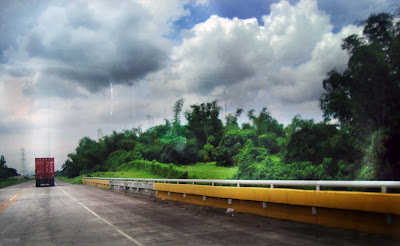

7. Skyscape is classified as landscape. The rainbow is perhaps the most photographed skyscape, followed by the many figures created by clouds. These views were photographed on the highway in Batangas at around five o'clock in the afternoon on September 21, 2012, which happens to be Autumnal Equinox.
Dr Abe V Rotor
Professor in Photography, UST
Faculty of Arts and Letters
Living with Nature School on Blog
Paaralang Bayan sa Himpapawid with Ms Melly C Tenporio
738 DZRB-AM Band. 8 to 9 evening class, Monday to Friday

1.
Halo effect enhances religious ambiance of the stone icons atop UST's
main building in modified silhouette through selective photo editing,
without erasing the colonial features of the building. Photo by Miss
Alyssa Beltran.

2. Chandelier, stained glass and lantern. Without tripod this night
scene can be captured with high resolution camera, within the range of 5
to 8 megapixels. Editing is needed to enhance contrast and colors.


3. Combining field photo and still life of the same subject gives a complete picture of the specimen - rambutan.
The composite photo shows botanical characteristics of the fruiting
tree and morphological features of the fruit showing the rind and edible
pulp. This technique is recommended for technical photography. AVR


4. Macro and micro photography. Stone covered with green algae (lumot); microcopic structure of Lyngbya crosbyanum, a common green freshwater alga, magnified 50x under the Low Power Objective (LPO) of a compound microcope. AVR


6.
Nature is perhaps the most popular application of photography,
surpassing human portraits and events. Here the details of shy
creatures like the land snail, (African snail), and hatchlings
soft-shelled turtle are revealed for biological study.


7. Skyscape is classified as landscape. The rainbow is perhaps the most photographed skyscape, followed by the many figures created by clouds. These views were photographed on the highway in Batangas at around five o'clock in the afternoon on September 21, 2012, which happens to be Autumnal Equinox.
Part 1: Aim at Excellence - 12 Tips
Dr Abe V Rotor

1. Success does not come easily; you must be willing to pay the price.
2. Don't repeat your mistakes; learn from them and take another approach.
3. Mend broken relationships, the sooner the better. You will achieve more in a pleasant company.
4. Congratulate your peers for their accomplishments. And don't forget to thank your spouse for his or her help and support.
5. Check your grooming on the mirror, practice your piece, and stop in the bathroom for final check before you meet your audience.
6. Be concerned when or lose or fail, just don't give up - never feel defeated.
7. SLT (Stop, Look, Listen) before you respond; and before making a decision, repeat this motto, and pause.
8. Invest your time in learning, not just training; but know what priorities you wish to learn.
9. Take time to shapen your saw, so to peak.
10.Keep sharpening your ommunication skills. Proofread outgoing communications, manuscripts for publication on paper, or the Internet - even simple text mesages on your cell phone.
11. Never settle for mediocrity, aim at excellence.
12. Silence is a necessity. Practice daily silence alone - to think, to relax, and most importantly - to pray.
Reference: The Book of Excellence by Byrd Baggett, 1990 Rutledge Hill Press, Nashville Tennessee.

Aim at excellence, put you best foot forward. NFA conference, Cebu 2013
1. Success does not come easily; you must be willing to pay the price.
2. Don't repeat your mistakes; learn from them and take another approach.
3. Mend broken relationships, the sooner the better. You will achieve more in a pleasant company.
4. Congratulate your peers for their accomplishments. And don't forget to thank your spouse for his or her help and support.
5. Check your grooming on the mirror, practice your piece, and stop in the bathroom for final check before you meet your audience.
6. Be concerned when or lose or fail, just don't give up - never feel defeated.
7. SLT (Stop, Look, Listen) before you respond; and before making a decision, repeat this motto, and pause.
8. Invest your time in learning, not just training; but know what priorities you wish to learn.
9. Take time to shapen your saw, so to peak.
10.Keep sharpening your ommunication skills. Proofread outgoing communications, manuscripts for publication on paper, or the Internet - even simple text mesages on your cell phone.
11. Never settle for mediocrity, aim at excellence.
12. Silence is a necessity. Practice daily silence alone - to think, to relax, and most importantly - to pray.
Reference: The Book of Excellence by Byrd Baggett, 1990 Rutledge Hill Press, Nashville Tennessee.
Monday, June 24, 2013
Remember, summer is gone.
Dr Abe V Rotor


Summer ends, monsoon season begins.


Empty hall and stairway to garden

Bahay Kubo and Kiosk -" all's quiet on the western front."
The last rose of summer, remember?
An April day's sudden shower;
Footsteps I hear only in imagination;
distant drums roll the thunder;
back to work, back to school,
remember, remember!
The last rose of summer, remember?
An April day's sudden shower;
Footsteps I hear only in imagination;
distant drums roll the thunder;
back to work, back to school,
remember, remember!
Thursday, June 20, 2013
UST-AB Photography Course Outline
Description: Digital photography as the term implies is specifically designed to meet the needs of modern journalism and creative writing, making use of modern tools and equipment which include advanced optical and digital inventions. It emphasizes the application of digital photography in all branches and forms of media (print, broadcast and internet), exploring its usefulness in publicity and promotions, newspapers and magazines, education, photographic arts and other fields, particularly those that pertain to Philippine conditions.
Dr Abe V Rotor
Living with Nature - School on Blog
Paaralang Bayan sa Himpapawid (People's School-on-Air)
738 Khz DZRB AM band 8 to 9 evening class, Monday to Friday.


State-of-the-Art Digital cameras
A. General Objective: To develop basic skill in the use of the digital camera following the theories and general principles of photography for effective communications. B. Specific Objectives: Upon completion of this course, the student is expected to be able to
1. appreciate and identify the role and application of photography in the various fields of communication;
2. apply digital photography in effective communication and creative composition, other artistic expressions notwithstanding;
3. acquire the facility of choosing the equipment and process in digital photography, which include processing, editing,
organization and presentation;

4. prepare photographs acceptable for publication - print and non-print; and
6. acquire the discipline and cooperation in collective work, adherence to the ethics of journalism; and develop a healthy
attitude towards the advancements and movements of photography and communication.
1. Introduction and overview of the course
2. Application of digital photography in media
3. The camera: evolution, types and models
4. The story: text and photos
5. Creativity and communication
6. Digital processing and printing
7. Publication and exhibition
General Topics
- Digital photography: relevance with current issues, and prospects
- Digital photography: analysis of the course’s etymology/keywords
- Digital photography in newspapers, magazines and Internet
- Basic principles and operation of film and digital cameras, and other optical tools.
- Taking photographs, and writing the story.
- Complimentarity in creativity in photography and writing;
- Photo processing techniques with Adobe Photoshop
- Presentation, display and publication of photo and story, in print or non-print medium.
- Current events and relevance to the course
- Defining the scope of the subject
- Identification and classification of photos in feature stories, sports, entertainment, etc.
- Hands-on with the camera, familiarization of parts and accessories
- Hands-on exercises in photography sessions
- Exploring potentials for news with the camera.
- Criteria for good photographs for media and entertainment
- Editing, cropping, collage and layout, special effects
- Survey to current events, their relevance to the course, and present conditions
- Digital photographs samples as course references
- Selected photos as specimen in critiquing
- The camera: film and digital compared
- Models and rules in digital photography, and documentary
- Kinds and models of the students studied, compared
- Digitcam processing techniques, tools and equipment
- Adobe Photoshop, scanner and printer, tools and materials: for exhibition of works
- Tools and equipment from camera to exhibits to explore the wide world of photojournalism.
- Heightened awareness. Experiences and discoveries in photography
- Critiquing, exposure and awareness of quality of work samples.
- Skills development; proper care of equipment
- Objectivity and accuracy in the photography journalism
- Developing the 6th and 8th sense in photography
- Development of patience, reflection, analysis through creativity
- Aesthetics in action, appreciation and
- “fine culture.”
- Concern and Involvement;advocacy and service.


UST Arch of the Centuries in celebration of the 400th anniversary of the oldest university in the Philippines; the main building's tower glows in the late afternoon exuding a sense of peace and quiet.


Summative Assessments: These shall be a 50-item examination formulated to test recall, analysis, conceptualization, practical application, organization, and creativity of the student, to complement with least duplication creative assessments.
References:
1. Photo-Journalism Stylebook (1991) - The Associated Press
2. Creative Photography (1991) – Michael Langford. The Reader’s Digest
3. More Joy of Photography (1988) - The Editors of Eastman Kodak Company
4. Digital Portrait Photography (new) – D. Evans
5. Digital Photography (new), Tom Ang and Michael Beazley
6. The Everything Photography Book (2000), Elliot Khuner and Sonie Weiss
7. Digital Camera 3rd edition, 2003, Dave Johnson
8. Black and White Photography (1988) 3rd edition, Henry Horenstein
9. An Illustrated A to Z Digital Photography (2000), Nigel Atherton and Steve Crabb
10. 100 Ways to Take Better Photographs (1998), Michael Busselle
11. Photographing Your Children (new), John Hedgecoe
12. Time Annual 2005
13. Underwater Photography (new), Annemarie Danja Kohler
14. Secrets to Great Photographs, Zim Zucherman
15. Nature Photography, Learning from an Expert, Gilles Martin and D Boyard
16. People Shots That Sell, Tracy Tannenbaum and Kate Stevens
17. Beginners Guide to Digital Photography, (new) PC World
18. Close-up Photography, Michael Freeman
19. The Photo Book (1996), Phaidon
20. Complete Idiot’s Guide to Photography like a Pro (1997)
21. Through the Lens, National100 Photographs That Changed the World, Life, 2004
22. The World’s Top Photographers in Landscape (new), Terry Hope
23. Geographic Greatest Photographs, 2004
24. The Essentials of Underwater Photography Manual, Denise Nielsen Tachett
and Larry Tachett
25. Portrait Photography, David Wilson
26. Journalism for Filipinos (2003) - 3rd Edition, Alito Malinao
27. Handbook of Journalism (1994) Victoria Villanueva Sebastian
28. Light in the Woods, Photographs and Poems (1995), Abercio V. Rotor
29. Sunshine on Raindrops (1996), Abercio V. Rotor
30. Light of Dawn (1998), and Genevieve Andrada and Abercio V. Rotor
31. In His Presence, Praises (2003), Belen Tangco and Abercio V. Rotor
32. Rotor AV (2003) Living with Nature Handbook , UST Publishing House
37. Rotor AV (2006) Living with Folk Wisdom Volumes 1 and 2 (Manuscripts)
38. Other references sourced from the SPUQ Library and IMC, International Newsmagazines (e.g. Time, Photography),newspapers, Internet and TV programs National Geographic and Discovery Channels.
Source various topics of photography on the Internet
Acknowledgment: Wikipedia, Google
Monday, June 17, 2013
Raging Falls
Dr Abe V Rotor

Patapat, Paguppud, Ilocos Norte
Rage, rage, rage
And I will be calm;
Be calm, and I shall rage;
Rage, rage rage,
And I will be calm. ~
Sunday, June 16, 2013
“Too many cooks spoil the broth.”
Dr Abe V Rotor
A teenage son bought a pair of pants too long for himself by two inches. He needed to have it cut and sewed. Not having the skill to do it, and even if he had, he is the bunso (youngest) child in the family and is the center of attention.
But on this particular day, on this particular hour, every one he approached to shorten his pants said, “Later, after I have finished what I am doing.”
His sister was cooking, his mother ironing clothes, his lola was feeding the chicken.
When each one had finished her work, it was siesta time.
The grandmother took the scissor and cut the pants two inches off, sewed it and left.
Next the mother saw the pants, took the scissor and cut two inches off, sewed it and took a nap.
The sister suddenly remembered his brother’s request, took the scissor and cut two inches off and sewed.
When the teenage son woke up, he tried his new pants, now repaired to his expectation. But alas, his pair of pants has become into a porontong (half-short half-pants)! ~
Saturday, June 15, 2013
Big Foot


Foot-shape ube (Dioscorea alata) lends a light moment,
bringing back childhood and keeping mythology alive.
Stress, tension, anxiety - they all disappear
when moments of joy take over;
when the little child in us - the Little Prince
knocks on our home and office door.
Wednesday, June 12, 2013
UST-AB 3CA1,2,3,4: Re-discover the magical touch of Black and White
Dr Abe V Rotor
What are the applications of B &W photography? Cite 5 other than these examples.


 Now the two kids are indistinguishable. Leo with pet Billy the Kid. At Home, QC.
TRIVIA: Can you take color photos with the electron microscope? Support your answer.

B & W emphasizes massive limbs of acacia, as well
as the tree's very old age. San Ildefonso, Ilocos Sur

B & W enhances microscopic detail of a green
alga and its symbionts. Home laboratory, QC.

When color gives way to B & W, the result is
better contrast, yet closer organization. Leo
Carlo at home. QC.

Monotony of subject is masked by B & W such
as this native sow. San Vicente, Ilocos Sur

B & W hides age. Where are the gray hairs
and wrinkles? UST campus, Manila

Overexposed but looks fresh in the morning
sun. Church ruin, Magsingal, Ilocos Sur

B & W makes you look neat and trim. Manila
Bulletin, Intramuros, Manila

B & W enhances countryside view of this
landscape. Mandaon, Masbate.

Natural frame in black (branch) gives a
telescopic as well as stage effect to this
view. Sta. Maria, Ilocos Sur

B & W fits well for this broken bell to look
like relic of the past. San Juan, La Union

Colored clothes (red in this case) in B & W
gives focus to the bird instead of the person.
Avilon Zoo, San Mateo, Rizal

Quaintness is enhanced by converting color
photo to B & W. Bantay, Ilocos Sur.

Good morning! It's a world of B & W. Camping, QC

TRIVIA: Can you take color photos with the electron microscope? Support your answer.
Sunday, June 9, 2013
UST-AB 3CA1,2,3,4: The Rainbow - A Study in Photography
Dr Abe V Rotor
Living
with Nature School on Blog
Paaralang
Bayan sa Himpapawid (People's
School-on-Air) with Ms Melly C Tenorio
738
DZRB AM Band, 8 to 9 evening class Monday to Friday
 | ||
 | ||
 |


A rainbow spans a continuous spectrum of colors in sequence - red, orange, yellow, green, blue, indigo and violet (ROYGBIV). Rainbows can be caused by other forms of water than rain, including mist, spray, and dew. Photos by Matthew Marlo R Rotor. Canon EOS 350. Bamban, Tarlac. Canon EOS 350.
Rainbow, rainbow, tell me where your end lies
that I may meet the Leprechaun;
Rainbow, rainbow, lead me to the pot of gold
you keep season after season.
My child, my child, where I end is where I begin,
seven colors of life I send;
My child, my child, I will lead you to my treasure,
if you dream and strive to the end. ~
Environment and Biology: Dormancy - Hibernation and Aestivation - Survival Adaptations of Organisms
Environment and Biology: Dormancy - Hibernation and Aestivation - Survival Adaptations of Organisms
Dr Abe V Rotor
Living
with Nature School on Blog
Paaralang
Bayan sa Himpapawid (People's
School-on-Air) with Ms Melly C Tenorio
738
DZRB AM Band, 8 to 9 evening class Monday to Friday
 Ant colony on the move to safe ground, sensing the coming of the rainy season.
 The lichen is a classical example in the art of dormancy. The lichen shown here belongs to the foliose type. Lichens are made up of algae and a fungi living in symbiosis, which explains their superb ability to withstand extreme environmental conditions - except pollution.

Frangipani or kalachuchi remains leafless in summer, then
bursts with flowers. It regains its foliage come rainy season.
"Sleep, so called, is a thing which makes man weep,
And yet a third of life is passed in sleep."
- Lord Byron, Don Juan
"Sleep, so called, is a thing which makes man weep,
And yet a third of life is passed in sleep."
- Lord Byron, Don Juan
Who is not fascinated by the first heavy rain in May, the start of the monsoon season or habagat? The fields come alive, transformed from scorched landscape into vast greenery. What brings about this sudden transformation?
Rainwater breaks the dormancy of seeds lying in the ground. It wakes up the sleeping little plant in a poem, The Little Plant, we learned in the elementary.
In the heart of a seed,
Buried deep so deep.
A tiny plant,
Lay fast asleep.
"Wake," said the sunshine,
"And creep to the light."
"Wake," said the voice,
Of the raindrops bright.
The little plant heard
And it rose to see,
What the wonderful,
Outside world might be.
Buried deep so deep.
A tiny plant,
Lay fast asleep.
"Wake," said the sunshine,
"And creep to the light."
"Wake," said the voice,
Of the raindrops bright.
The little plant heard
And it rose to see,
What the wonderful,
Outside world might be.
Seeds of many annual plants like saluyot (Corchorus olitorius) and wild Amaranthus wake up to the rain. The same stimulus touches dormant buds like a magic wand, and in a short time become new and fresh crowns of trees that had been in deciduous state. Tubers and corms come alive simultaneously with tillers and stolons and take their first peep above ground. Bulbs send out their first shoots. There is rejuvenation everywhere.
Thunder and lightning accompany rain and send old folks to hunt for mushrooms the day after. There is scientific explanation to this, although much of the mystery remains. Lightning directly fixes atmospheric nitrogen into nitrate (NO3), which being soluble, is brought down by rain. It is then absorbed by plants, protists - and fungi to which mushrooms belong. How is dormancy of fungi explained? Is it the same as in green plants?
Basically, it is. While plants photosynthesize their food in the presence of sunlight, fungi on the other hand are saprophytic, and draw energy from decomposition of organic matter. But the conditions that break dormancy is the same – the supply of nitrates and other nutrients, sufficient water, suitable foothold and substrate, and favorable temperature. The mycelia of fungi which appear as white, threadlike mass may remain dormant, then springs to life, rapidly spreading all over its growing medium until it is time to produce fruiting bodies, which are the mushrooms.
Dormancy of Seeds
Seeds are masters of the art of dormancy – the temporary stoppage of life processes. Nature has precisely made dormancy as a means of adaptation, and adaptation is a means of survival. Adaptation is the key to fitness defined in Charles Darwin’s law of natural selection. The failure of seeds to grow immediately after maturity – even though conditions of the environment may be favorable – is generally an advantage of many plants.
This phenomenon is demonstrated by plants which are highly sensitive to photoperiodism. These are classified as short-day and long-day species and varieties. For example, the traditional rice variety, wagwag, produces grains only during the short-day period, usually in the last quarter. If it is planted late and does not have chance to mature within the period, it will remain in its vegetable stage and will flower only in October in the following year.
Many desert plants exhibit superb resistance to punishing heat and dryness. They produce seeds that lay dormant in the hot desert soil for as long as there is no rain. Then, when rain finally comes, these seeds sprout immediately, grow and mature as fast as water in the soil is lost. Before the desert reverts to its arid condition, the plants have completed their life cycle, and their seeds once more lie dormant waiting as long as they could for the next unpredictable rain.
Many seeds of cereals and other annual remain dormant for a few days to some weeks under natural condition. However at the International Rice Research Institute (IRRI) in Los Baños, the seeds of about 100,000 rice cultivars kept in the institute’s Germplasm Bank can remain viable for 20 years. It is necessary to germinate the seeds before they lose viability to replace the gene collection.
 A colony of dormant Drynaria fern clings on an acacia tree.
 This epiphyte, relative of the mistletoe, takes advantage over its host in its deciduous state.
Most farm crop seeds are probably dead after 25 years, even under favorable storage conditions. The alleged germination of seeds after prolonged storage in ancient tombs is known to be a myth. I had a chance to examine some authentic seeds recovered from a pharaoh’s tomb at the Egyptian Museum in Cairo. The seeds were highly carbonized and have completely lost their viability. There are however, seeds of some plants in the wild that retain their vitality for 50 years or more. Dry arctic lupine seeds found buried in lemming burrows under 10 to 20 feet of frozen soil in the Yukon Territory in Canada, were able to germinate. Their assumed age is older than that of the Great Pyramid of Giza.
Vernalization – Overwintering of Crops
 Local yam or singkamas sends out shoots after a long
dormancy, which coincides with the rainy season.
The Russians found out that by pre-germinating wheat seeds and keeping them safe and healthy during the long winter, the young seedlings will resume growth immediately as the snow thaws. Much time is saved for the crop to grow, while its life cycle is significantly shortened. Before the winter sets in, the crop is already harvested.
Thousands of hectares have been placed under cultivation following this procedure. Seeds of wheat, oats and barley are planted in late autumn. They germinate and remain dormant under snow for the whole winter (overwintering), then resume growth in spring and harvested at the end of the short summer. Researches on the application of vernalization have successfully made other crops adapted to this kind of environment. Former wastelands in Siberia and Northern Canada are now productive farmlands.
Breaking the Dormancy of Wildlife Species
Aestivating snails, crustaceans and frogs ensconced in the bottom of rice fields are similarly liberated by the monsoon rains. Together with hito and dalag which aestivate in mud like the lungfish, they stir with the first contact with rain water, wiggling out to freedom in the flooded fields where they resume active life – growing, mating and reproducing – and migrating while the monsoon persists and whole fields are one contiguous lake.
These are biological feats that feed man’s fantasy to live long and postpone death.
1. The African lungfish buries in mud up to two feet deep in order to escape extreme drought and heat in the desert. It curls into a ball and seals its chamber with its own mucus secretion and there it aestivates for as long as four years in the absence of rain.
2. Garter snakes survive the long Canadian winter while remaining in burrows, or in extreme cases, encrust in ice. They are liberated only when the ice thaws in spring, and soon resume their normal activities. They grow, mate and reproduce before they hibernate again come next winter.
3. Snakes and other reptiles easily go for long periods without food. Snakes have been kept alive without food for almost two years. A python in captivity has been observed to go without food for a period of 13 months. Frogs can fast for 16 months and fishes for 20 months; land tortoise for a year and salamander for one and one-half years.
4. The most popular mammals that hibernate is the bear. Sustained by large amounts of stored fat, it sleeps in the entire winter in its den. Its normal body temperature remains the same in spite of its heartbeat reduced from 40 to 10 times per minute. Beware, a sleeping bear may be provoked at the slightest disturbance.
5. Bats in hibernation hang in caves, eat nothing, their hearts feebly beating and their breathing scarcely imperceptible. Through collective body heat the colony survives extreme cold and long winter.
Fasting – Mechanism for Survival
 After its fill, an iguana can fast for several days.
 Hairy caterpillar prepares for final molting, enters pupal stage, and emerges into moth.
Fasting is a means of meeting exigencies of life. It is one of nature’s best methods of dealing with physiological problems. Take the hibernating bear, the aestivating crocodile, the sick elephant, the wounded dog – these fast in order to meet the problems before them. Fasting is indeed a very useful means of adaptation.
But how long can animals abstain from food? Let us look into these examples.
1. There were dogs that remained alive for 38 days without food. The longest survival record is 117 days.
2. Rats may survive after 5 to 6 days. Guinea pigs may last for 7 to 8 days without food, while rabbits can live for 15 days under strict fasting.
3. Spiders undergo incredible fasting, spinning webs daily from substances generated by their bodies. Spiders have been observed to exist without food for 17 months.
4. Unicellular organisms such as amoebae and paramecia can exist without food from 4 to 24 days. As a result they undergo diminution in size.
5. The larvae of a beetle, Trogoderma tarsale, that infest cereals can live for as long as five years without food.
6. The condor, like all other vultures, is capable of fasting for days. It gorges itself however, when it finds food.
7. Scorpions are known to have starved for 368 days.
8. A freshwater fish, Amia calva, can fast for 20 months.
9. Ticks can exist in an active state for as long as four years without eating anything.
10. A boa constrictor may remain inactive for months after a full meal. So with the anaconda in the Amazon jungle.
Deeper mystery shrouds our knowledge of Dormancy
It is practice to irradiate potato and onion before they are stored in order to retard sprouting. If radiation does not kill the embryo how does it induce dormancy?
Locusts may suddenly group and coalesce into a swarm. Like birds and other animals, migration is an adaptive mechanism to escape extreme conditions of the environment. Are these organisms not equipped with the gene for dormancy?
Deciduousness (complete shedding of leaves) of certain trees like the narra, occurs periodically but not necessarily jibed with the dormancy period. In fact some trees are even more luxuriant when other plants are dormant. We have little knowledge about the biological clock that dictates dormancy among different species of organisms.
Episodes of the Red Tide phenomenon caused by dinoflagellates, such as Pyrodinium, Peridinium, and Gonyaulax, are unpredictable. What predispose these organisms to bloom? How do they stay dormant in between seasons of occurrence?
This leads us to the epidemic cycles of certain human diseases. How do influenza viruses stay “alive” during off-season? What made H1N1 virus (swine flu) spread into pandemic in so short a time? When will its virulence subside?
How does HIV remain passive in an HIV positive patient? Bubonic plague devastated medieval Europe in three major waves killing one-third of the population. How do we explain alternate virulence and dormancy of the causal organism?
What really induce flowering? How does potassium nitrate induce flowering of mango during off-season? Why is it that old folk cut notches on the trunk of trees that are “lazy” to bloom? Then for whatever reason, the wounded trees come alive with flowers and fruits.
As I was writing this article, some birds came flying by and perched on a nearby talisay tree singing melodious songs that herald a new season - amihan. The Siberian winds have arrived. In the Northern hemisphere it is time for hibernation, in the South hemisphere it is aestivation. For many birds and animals, it is time for migration.
Except for humans, all living things take heed of Nature’s call. ~
Subscribe to:
Posts (Atom)