Friday, November 20, 2020

Trees are sanctuaries. Let Us Save the Dying Trees!

Trees are Sanctuaries 
Let Us Save the Dying Trees!

Dr Abe V Rotor


NOTE: This tree was found a great danger to these students at leisure and passersby at the time this photo was taken. Appropriate measures were immediately undertaken.


The camphor trees at the University of Santo Tomas are facing the consequences of environmental degradation and climate change. There are many trees in the metropolis facing this grave threat. Efforts to save the trees are a great concern for every one of us. 

The effect of intermittent flooding is evident; we can even see the usual depth of flood. Water logging occurs after a sudden downpour and may last from a few hours to several days.

Floodwater deposits pollutants from oil to toxic metals. As the tree struggles to survive, termites and fungi set in, the same way we suffer of secondary infection and complications when our health is poor.


Wound that does not heal easily invades the whole system. Here it has reached both roots and branches, predisposing the tree to insects and rot. A gust of wind is enough to break the tree at its weakest point.

Death comes slowly as the roots fail to absorb nutrients for the leaves to use in photosynthesis. The tree actually starves to death, a process we may not readily notice until the tree defoliates and fails to produce new shoots. There's one sign though at the threshold of death which is universal to all organisms: reproduction. The tree profusely bear flowers, fruits, and principally seeds. It's nature's way of preserving the species. 


Left: This tree is virtually without foothold; it will certainly topple down. The pith is severely damage and new cells cannot replace it fast enough. But what precipitates death is that the wood of a tree is the conducting vessel of food and water. If this function fails, the tree, like any organism that is starved, will certainly die. It had been a long struggle it seems until this tree succumbed. 

Right: Pruned branch shows the cambium layer trying to heal the wound the same way our wound heals and later covered with scar. Untimely and too much pruning may deprive a tree from manufacturing enough food. The same principle applies that when a tree is felled, no amount of new shoots will revive the remaining stump. 


It's hauntingly sad to see a tree skeleton. Against the sky we see a cross we ourselves made. It is no different from the one we make to profess your faith. For faith in God and in his Creation - Nature is one. And the sin we committed in the death of trees Is mainly a sin of omission. It is simply because we seem to lack compassion - that sensitivity for other living things, which we define on a higher level of our culture as reverence. Reverence for life. 
-----------------------------
A few minutes ago every tree was excited, bowing to the roaring storm, waving, swirling, tossing their branches in glorious enthusiasm like worship. But though to the outer ear these trees are now silent, their songs never cease.  - John Muir
--------------------------

What can we do to save the trees?

1. Never use trees to post advertisements, announcements, campaign posters. Injury from nails and other materials retards growth, predisposes trees to termites and fungi, and may lead to their early demise.


2. Never carve a message on the trunk with a knife. There are better ways of expressing your affection such as planting a tree together with your loved one. A tree of love will certainly last long.


3. Don't build fire near a tree, more so at its base. Never cook food under the tree. Keep barbecue stand at a distance. Don’t throw cigarette butts, or spill drinks and chemicals.

4. Don't dump garbage near and at the base of trees. Never do composting beside a tree, or at the base of its trunk. Composting builds heat and emits poisonous gases of ammonia and sulfur which are deleterious specially to the roots.


5. On Christmas, plant trees to celebrate the Season. Don't cut trees to make Christmas Trees. Instead, simply decorate a standing tree, with care not to injure it. A potted tree seedling or sapling may be decorated in lieu of an artificial Christmas Tree. At the end of the season, plant it as an expression of thanksgiving for the Season

Before pruning, transplanting, spraying a tree, and the like, consult an expert or an agriculturist in your area. ~


Living Christmas Tree.  
Make Christmas Day an Arbor Day.  So with Palm Sunday. (See Article, Plant trees on Palm Sunday in this blog)  Let us plant more trees and take care of the standing ones to save Mother Earth - and us. 

 
Poinsettia - Nature's Christmas Tree

------------------------                           

*Camphor (Cinnamomum camphora) is a terpene (organic compound) that's commonly used in creams, ointments, and lotions. Camphor oil is the oil extracted from the wood of camphor trees and processed by steam distillation. It can be used topically to relieve pain, irritation, and itching. (Internet)  


   **Arbor Day is celebrated in the US on the last Friday in April (April 28, 2020). The Philippines is one of many countries that celebrate Arbor Day, a holiday dedicated to tree planting. Arbor Day in the Philippines is celebrated on June 25, it was established in 2003 to promote a healthier ecosystem through the rehabilitation of the environment. Arbor Day originated in the United States in 1872.

Thursday, November 19, 2020

Let us sharpen our eighth sense - naturalism.

Let Us Sharpen Our Eighth Sense of Naturalism

Let's not just rely on our inventions, such as the barometer and seismograph. The behavior of living things can be read and interpreted, including our own feelings. Unusual observations and occurrences tell us to prepare for eventualities. Let us sharpen our eighth sense - naturalism.

Dr Abe V Rotor

Mosquitoes become aggressive before a rain; they need blood before laying eggs in stagnant water left by the rain.

1. Drought – Occurs in summer; landscape scorched; dry riverbeds and ponds; brush fires occur; lake water recedes; crack on earth, especially areas under water in monsoon; worst scenario - flowering of bamboo usually during El Nino, a phenomenon that happens every 7 to 10 years.

2. Earthquake – Farm animals restless; horses kick and neigh; pigs snort; fowls abandon usual roost; turkey cackle; cattle seek exit from corral; dogs howl; and the like. Wild animals abandon abode – snakes come out into the open; reptile keep out of the water; elephants defy their master’s command; birds abandon nest, other emigrate.

Misty crown and ring around the moon could mean bad weather ahead

3. Typhoon – Doldrums-like calm; uneasiness to both humans and animals as barometer reading drops which means atmospheric pressure goes down; arthritis and hypertension symptoms are felt by sensitive persons. As typhoon approaches, sea becomes rough; sky overcast; clouds move fast to one direction; gusts of cold and warm wind, thunderstorms.

4. Mad dog – Its tail is tucked underneath; animal restless biting at anything within its reach; froth coming from its mouth; stealthily moves about without any apparent direction; dreads the presence of water (hydrophobia); usually occurs during hot days particularly in summer. Be keen; keep distance; notify others of danger; get help.

5. Influenza – Precipitated by alternate cold and hot weather, thunderstorms, abrupt change in season. Influenza season is usually at the onset of amihan as the habagat comes to an end. Practical signs: people coughing in church and other gatherings; sale of cold tablets and antibiotics is up; hospitals full. Epidemic starts in the family, neighborhood, local community; also, in schools, malls and markets, and may spread to cover a city or district or province. Modern transportation has made spread of flu easier and wider.

6. Pristine Environment – Abundance of lichens on trunks and branches of trees, rocks, and soil. There are three types: crustose (crust), foliose (leaf-like) and fruticose (fruiting type). They are biological indicators of clean air. The ultimate test is the abundance of the fruticose type.

7. Inclement Weather – Halo around moon; gray and red sunset; a storm may be coming depending upon the intensity of these signs.

8. Rain - Dragonflies hovering; aggressive biting of mosquitoes; ants move to another place carrying their young and provisions. The latter predicts heavy continuous rainfall or siyam-siyam or nep-nep. Herons on the move heralds the monsoon.


When field crickets (Acheta bimaculata) PHOTO are noisy, it's still summertime. Crickets are "watchdogs" in Chinese homes. They stop fiddling at the slightest sound of an intruder.

9. Monsoon – Frogs croak; insects (termite, ants) swarm; lightning and thunder get frequent; first heavy rain in May vegetates the landscape, thus turning from brown to green. It comes early or late, but usually in later part of May. Global warming has brought unpredictable signs indicating that our climate is changing.

10. Ripening of Fruits – Generally from green to yellow to orange (banana, orange, apple, etc. Determined by smell: guava, jackfruit, durian, melon, etc); shiny rind (caimito, siniguelas). Dull skin (chico), enlarged ridges and furrows (atis, guayabano, anonas)

Apply Naturalism in the following: (For research and discussion)

1. Sweetness/sourness of fruit
2. Maturity and succulence of vegetables (okra, cucumber)
3. Tenderness of nut (buko, macapuno)
4. Sweetness and maturity of fruit (watermelon)
5. Time to harvest singkamas, onions, garlic, sugarbeet
6. Presence of jellyfish
7. Red tide signs
8. Coming flood (earthworm)
9. Time to harvest palay, corn, wheat.
10. Slippery walkway (presence of algae and scum, seldom used)
11. Depth of water (by color, sound of oar, current, clarity)
12. Cloud reading of weather nimbus for rain, cirrus for fine weather)
13. Glassy eyes (deep feelings like hatred, or “wala sa sarili”)
14. Wrinkles at the corner of eyes (happy disposition)
15. Furrows on forehead (problematic)
16. Rough hand (worker, also athlete)
17. Brilliant and attentive eyes (intelligence)
18. Clumsiness, strummer (nervous, uncertain)
19. Heavy feet (angry, lazy)
20. Tight jaw (angry, restlessly active)

Topics for Research and Discussion

1. How reliable is “gut feel”
2. How about ESP?
3. What is “aura?” How does it apply to relationships?
4. What is Biological Clock? Name how it affects your life.
5. Life starts at 40 – how do you interpret this?

6. What are prophets to you? Are there people who can see the future? Do you believe in Nostradamus? 
7. Are dreams hidden motives, indirect messages, prophesies?
8. How superstitious are you? Do you practice superstition?
9. Do you think you were once living on earth in another being or living thing? Do you believe re-incarnation?
10. How fatalistic are you – you are predestined even before you were born.

Living with Nature, AVR
----------------------------------------------------
Mad dog – Its tail is tucked underneath; animal is restless biting at anything within its reach; froth coming from its mouth; stealthily moves about without any apparent direction; dreads the presence of water (hydrophobia); usually occurs during hot days particularly in summer. Be keen; keep distance; notify others of danger; get help.
-----------------------------------------------------------------------
Dogs warn before they attack. This dog at home (Kulit) warns intruders with flashy eyes. Slowly withdraw but don't show you're afraid by looking straight into the dog's eyes. On the street don't turn your back and run. The dog will run after you - and it could be the whole pack. Tell this to your children. ~

Wednesday, November 18, 2020

Dormancy - Hibernation and Aestivation - Survival Adaptations of Organisms

Dormancy - Hibernation and Aestivation - 
Survival Adaptations of Organisms

Dr Abe V Rotor
Ant colony on the move to safe ground, sensing the coming 
of the rainy season. AVR
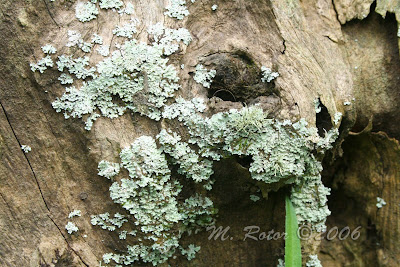
The lichen is a classical example in the art of dormancy. The lichen shown here belongs to the foliose type. Lichens are made up of algae and a fungi living in symbiosis, which explains their superb ability to withstand extreme environmental conditions - except pollution. AVR

Frangipani or kalachuchi remains leafless in summer, then bursts 
with flowers. It regains its foliage come rainy season. AVR

"Sleep, so called, is a thing which makes man weep,

And yet a third of life is passed in sleep."
- Lord Byron, Don Juan

Who is not fascinated by the first heavy rain in May, the start of the monsoon season or habagat? The fields come alive, transformed from scorched landscape into vast greenery. What brings about this sudden transformation?

Rainwater breaks the dormancy of seeds lying in the ground. It wakes up the sleeping little plant in a poem, The Little Plant, we learned in the elementary.


The Little Plant 
Photo by the author, Baguio 1996

In the heart of a seed,
Buried deep so deep.
A tiny plant,
Lay fast asleep.
"Wake," said the sunshine,
"And creep to the light."
"Wake," said the voice,
Of the raindrops bright.
The little plant heard
And it rose to see,
What the wonderful,
Outside world might be.

Seeds of many annual plants like saluyot (Corchorus olitorius) and
wild Amaranthus wake up to the rain. The same stimulus touches dormant buds like a magic wand, and in a short time become new and fresh crowns of trees that had been in deciduous state. Tubers and corms come alive simultaneously with tillers and stolons and take their first peep above ground. Bulbs send out their first shoots. There is rejuvenation everywhere.

Thunder and lightning accompany rain and send old folks to hunt for mushrooms the day after. There is scientific explanation to this, although much of the mystery remains. Lightning directly fixes atmospheric nitrogen into nitrate (NO3), which being soluble, is brought down by rain. It is then absorbed by plants, protists - and fungi to which mushrooms belong. How is dormancy of fungi explained? Is it the same as in green plants?

Basically, it is. While plants photosynthesize their food in the presence of sunlight, fungi on the other hand are saprophytic, and draw energy from decomposition of organic matter. But the conditions that break dormancy is the same – the supply of nitrates and other nutrients, sufficient water, suitable foothold and substrate, and favorable temperature. The  mycelia of fungi which appear as white, threadlike mass may remain dormant, then springs to life, rapidly spreading all over its growing medium until it is time to produce fruiting bodies, which are the mushrooms.

Dormancy of Seeds

Seeds are masters of the art of dormancy – the temporary stoppage of life processes. Nature has precisely made dormancy as a means of adaptation, and adaptation is a means of survival. Adaptation is the key to fitness defined in Charles Darwin’s law of natural selection. The failure of seeds to grow immediately after maturity – even though conditions of the environment may be favorable – is generally an advantage of many plants.

This phenomenon is demonstrated by plants which are highly sensitive to photoperiodism.  These are classified as short-day and long-day species and varieties. For example, the traditional rice variety, wagwag, produces grains only during the short-day period, usually in the last quarter. If it is planted late and does not have chance to mature within the period, it will remain in its vegetable stage and will flower only in October in the following year.

Many desert plants exhibit superb resistance to punishing heat and dryness. They produce seeds that lay dormant in the hot desert soil for as long as there is no rain. Then, when rain finally comes, these seeds sprout immediately, grow and mature as fast as water in the soil is lost. Before the desert reverts to its arid condition, the plants have completed their life cycle, and their seeds once more lie dormant waiting as long as they could for the next unpredictable rain.

Many seeds of cereals and other annual remain dormant for a few days to some weeks under natural condition. However at the International Rice Research Institute (IRRI) in Los Baños, the seeds of about 100,000 rice cultivars kept in the institute’s Germplasm Bank can remain viable for 20 years. It is necessary to germinate the seeds before they lose viability to replace the gene collection.

A colony of dormant Drynaria fern clings on an acacia tree. AVR

This epiphyte, relative of the mistletoe, takes advantage 
over its host in its deciduous state. AVR

Most farm crop seeds are probably dead after 25 years, even under favorable storage conditions. The alleged germination of seeds after prolonged storage in ancient tombs is known to be a myth. I had a chance to examine some authentic seeds recovered from a pharaoh’s tomb at the Egyptian Museum in Cairo. The seeds were highly carbonized and have completely lost their viability. There are however, seeds of some plants in the wild that retain their vitality for 50 years or more. Dry arctic lupine seeds found buried in lemming burrows under 10 to 20 feet of frozen soil in the Yukon Territory in Canada, were able to germinate. Their assumed age is older than that of the Great Pyramid of Giza.


Vernalization – Overwintering of Crops


Local yam or singkamas sends out shoots after a long
dormancy, which coincides with the rainy season.


The term vernalization was first introduced by my professor in Plant Physiology in the late fifties. The technology had just began to revolutionize farming in countries where winter is long and harsh. Formerly in these areas, it was almost impossible to grow wheat and other crops because of the very short growing season. Even if planting is done in early spring, by the time the grains start to mature, frost has already set in.

The Russians found out that by pre-germinating wheat seeds and keeping them safe and healthy during the long winter, the young seedlings will resume growth immediately as the snow thaws. Much time is saved for the crop to grow, while its life cycle is significantly shortened. Before the winter sets in, the crop is already harvested.


Thousands of hectares have been placed under cultivation following this procedure. Seeds of wheat, oats and barley are planted in late autumn. They germinate and remain dormant under snow for the whole winter (overwintering), then resume growth in spring and harvested at the end of the short summer. Researches on the application of vernalization have successfully made other crops adapted to this kind of environment. Former wastelands in Siberia and Northern Canada are now productive farmlands.


Breaking the Dormancy of Wildlife Species


Aestivating snails, crustaceans and frogs ensconced in the bottom of rice fields are similarly liberated by the monsoon rains. Together with hito and dalag which aestivate in mud like the lungfish, they stir with the first contact with rain water, wiggling out to freedom in the flooded fields where they resume active life – growing, mating and reproducing – and migrating while the monsoon persists and whole fields are one contiguous lake.


These are biological feats that feed man’s fantasy to live long and postpone death.

1. The African lungfish PHOTO buries in mud up to two feet deep in order to escape extreme drought and heat in the desert. It curls into a ball and seals its chamber with its own mucus secretion and there it aestivates for as long as four years in the absence of rain.

2. Garter snakes survive the long Canadian winter while remaining in burrows, or in extreme cases, encrust in ice. They are liberated only when the ice thaws in spring, and soon resume their normal activities. They grow, mate and reproduce before they hibernate again come next winter.


3. Snakes and other reptiles easily go for long periods without food. Snakes have been kept alive without food for almost two years. A python in captivity has been observed to go without food for a period of 13 months. Frogs can fast for 16 months and fishes for 20 months; land tortoise for a year and salamander (PHOTO) for one and one-half years.


4. The most popular mammals that hibernate is the bear. Sustained by large amounts of stored fat, it sleeps in the entire winter in its den. Its normal body temperature remains the same in spite of its heartbeat reduced from 40 to 10 times per minute. Beware, a sleeping bear may be provoked at the slightest disturbance.


5. Bats in hibernation hang in caves, eat nothing, their hearts feebly beating and their breathing scarcely imperceptible. Through collective body heat the colony survives extreme cold and long winter.


Fasting – Mechanism for Survival


After its fill, an iguana can fast for several days.
Hairy caterpillar prepares for final molting, enters 
pupal stage, and emerges into moth.

Fasting is a means of meeting exigencies of life. It is one of nature’s best methods of dealing with physiological problems. Take the hibernating bear, the aestivating crocodile, the sick elephant, the wounded dog – these fast in order to meet the problems before them. Fasting is indeed a very useful means of adaptation.


How long can animals abstain from food? 

Let us look into these examples.

1. There were dogs that remained alive for 38 days without food. The longest survival record is 117 days.


2. Rats may survive after 5 to 6 days. Guinea pigs may last for 7 to 8 days without food, while rabbits can live for 15 days under strict fasting.


3. Spiders undergo incredible fasting, spinning webs daily from substances generated by their bodies. Spiders have been observed to exist without food for 17 months.


4. Unicellular organisms such as amoebae and paramecia can exist without food from 4 to 24 days. As a result they undergo diminution in size.


5. The larvae of a beetle, Trogoderma tarsale, that infest cereals can live for as long as five years without food.


6. The condor, like all other vultures, is capable of fasting for days. It gorges itself however, when it finds food.


7. Scorpions are known to have starved for 368 days.


8. A freshwater fish, Amia calva, can fast for 20 months.


9. Ticks can exist in an active state for as long as four years without eating anything.


10. A boa constrictor may remain inactive for months after a full meal. So with the anaconda in the Amazon jungle.


Deeper mystery shrouds our knowledge of Dormancy


It is practice to irradiate potato and onion before they are stored in order to retard sprouting. If radiation does not kill the embryo how does it induce dormancy?


Locusts may suddenly group and coalesce into a swarm. Like birds and other animals, migration is an adaptive mechanism to escape extreme conditions of the environment. Are these organisms not equipped with the gene for dormancy?


Deciduousness (complete shedding of leaves) of certain trees like the narra, occurs periodically but not necessarily jibed with the dormancy period. In fact some trees are even more luxuriant when other plants are dormant. We have little knowledge about the biological clock that dictates dormancy among different species of organisms.


Episodes of the Red Tide phenomenon caused by dinoflagellates, (PHOTOS) such as Pyrodinium, Peridinium, and Gonyaulax, are unpredictable. What predispose these organisms to bloom? How do they stay dormant in between seasons of occurrence?


This leads us to the epidemic cycles of certain human diseases. How do influenza viruses stay “alive” during off-season? What made H1N1 virus (swine flu) spread into pandemic in so short a time? When will its virulence subside?

How does HIV remain passive in an HIV positive patient? Bubonic plague devastated medieval Europe in three major waves killing one-third of the population. How do we explain alternate virulence and dormancy of the causal organism?


What really induce flowering? How does potassium nitrate induce flowering of mango during off-season? Why is it that old folk cut notches on the trunk of trees that are “lazy” to bloom? Then for whatever reason, the wounded trees come alive with flowers and fruits.


As I was writing this article, some birds came flying by and perched on a nearby talisay tree singing melodious songs that herald a new season - amihan. The Siberian winds have arrived. In the Northern hemisphere it is time for hibernation, in the South hemisphere it is aestivation. For many birds and animals, it is time for migration.


Except for humans, all living things take heed of Nature’s call. ~

Tuesday, November 17, 2020

The Greater Lagro Gazette: Multi-Awarded Urban Community: A Vision of the Future of Barangay Greater Lagro (QC)

 The Greater Lagro Gazette: 

Multi-Awarded Urban Community:  A Vision of the Future of  Barangay Greater Lagro (QC)

Jan-March 2018 Issue 
GUEST EDITORIAL
"A strong and responsive leadership though proven in the past and present, is committed to the continuity of progress, that “life must go on”, and we mean an enlightened, compassionate, loving, fulfilled - and above all, a life by the people, for the people, of the people with the guidance of the Almighty."
                                               Dr Abe V Rotor
If it were a line graph, imagine a steep rise settling on a plateau of awards and honors gained principally in the last ten years. Steered by a strong leader and council whose terms invariably spanned with those of three presidents of the country, including the present, the challenge today is, "Quo vadis, Lagro?"

Where is Barangay Greater Lagro headed for is a question that confronts incoming leaders after Atty Renato U Galimba bows out after three consecutive terms as Barangay Chairman.  

(The coming Barangay elections in the Philippines on May 14, 2018 shall elect the Punong Barangay, more commonly known as barangay captains, and members of the Sangguniang Barangay, or barangay council, in 42,028 barangays or villages throughout the country. Barangays are the smallest local government unit in the Philippines. Elections for the reformed Sangguniang Kabataan or SK will also be held at the same time.) 
Greater Lagro and adjoining Fairview, hug the Northeastern limits of La Mesa Dam a 700-hectare water reservoir that supplies water to Metro Manila and suburbs.

Chairman Galimba leaves behind a village metamorphosed into a complex community that spontaneously grew up during its 21-year history as one of the most progressive urban barangays not only in Metro Manila but in the Philippines. 


Simultaneous growth of adjoining barangays, principally North Fairview, saw the rise of three giant shopping malls - SM, Robinsons, and Fairview Terraces. four big academic institutions led by Our Lady of Fatima University, STI and AMA University, and a growing number of houses of worship, hospitals and clinic, business establishments, SMEs, modern residences, and entertainment centers, among others. 

Before the decade ends, MRT 7 shall then have connected through Regalado Highway, Quirino Highway, and Commonwealth Avenue the whole area complex. It is a main thoroughfare in Barangay Greater Lagro to Mindanao Avenue and the Neopolitan Business Park.
---------------------------------
The awards and citations garnered by Barangay Greater Lagro principally from the QC city government are in the fields of peace and order, waste management, LGU administration and legislation, gender equality, community journalism and best performing barangay. BGL played host to other LGUs on practicum and educational trips. BGL leads in drug rehabilitation, environmental conservation, and senior citizens' projects. Its networking with religious groups, schools, GOs and NGOs, as well as civic organizations earned the barangay prestige and trust.
----------------------------------------
Barangay Greater Lagro has indeed metamorphosed from a GSIS housing project in the early seventies. Today the barangay encompasses La Mesa Dam, Hilltop Subdivision, Sitio Milan of Neopolitan Subdivision, and Lagro Subdivision, which is the biggest and the center of Barangay local government.

As Manila grew into a metropolitan city in the sixties and seventies, inevitably the growth of its suburbs had to spread farther. Its original residents and influx of people from the provinces seeking space to breath and place to have their own homes, began to settle in new areas which included sprawling Novaliches which extends to Lagro subdivision. In spite of its distance and poor accessibility then, the area soon transformed from countryside to a vibrant urban center. Yet in the early stage, who would like to settle some twenty kilometers away from downtown Manila?

But demography tells us why. Three generations jointly came like links in a chain, with the millennials - those born into the new millennium and immediately thereafter - dominating our postmodern society. On the other hand, longevity of the older generation broke all records, creating a major demographic force. This is a pattern experienced in many parts of the world which explains the birth of urban centers and growth of cities into metropolises and megapolises.

MetroManila is about to graduate into a megacity with a population of more than 15 million, spilling into our own Greater Lagro area with more than 2 million residents. Worldwide, there are 7.7 billion people in the world, half of them ensconced in urban centers, and more are on the way in a kind of exodus.

There is an adage "All roads lead to Rome." to describe the failure of society ruled by centralized power which explained the rise and fall of the Roman Empire, so with a dozen past civilizations, by world renown historian Edward Gibbon. Exodus to cities has been a syndrome with people moving en masse from the rural to urban areas. Boom in economy is associated with growth of cities. So with the standard of living, and a progressive life in general. Today the “world is wired at all its corners” by Internet. We cannot live today without the Internet. Cyberspace is the extension of our daily lives. But we cannot live without heeding to limitation.

Limits to Growth (1972) by DH Meadow warns us of "progress gone stray." building up into a dinosaur that led to its demise. 
On the other hand, more and more economies agree with EF Schumacher's scholarly book Small Is Beautiful: A Study of Economics As If People Mattered (1973), The phrase "Small Is Beautiful" is often used to champion small, appropriate technologies that are believed to empower people.


Future Shock a 1970 book by the futurist Alvin Toffler, defines the term "future shock" as a certain psychological state of individuals and entire societies. His shortest definition for the term is a personal perception of "too much change in too short a period of time." spurred by an accelerative thrust of technology. To which FH Hornedo tersely defined our postmodernism era as "living tomorrow today in a free fall," pointing out to man's helplessness adrift towards an unknown future.

Without controls the Malthusian theory warns us of a scenario of arithmetic food growth with simultaneous geometric human population growth predicted a future when humans would have no resources to survive on. To avoid such a catastrophe, Malthus urged controls on population growth.

Our postmodern society appears to be vulnerable to socio-economic failure. While cities are the centers of education and culture, they too, are the breeding ground of poverty, lawlessness, breakdown of values. Cities are orphaned ganglia or nerve centers severed from the countryside. As a consequence both sides suffer. The parameters of progress are visibly artificial and short-term, measured by immediate returns and not by sustainability that insures the future of the next generations.

But we have to look into the brighter side of life guided by the power of the human spirit, reflected in Plato's Republic, a Utopian society, and in the testimonies of residents that BGL is a beautiful place no other place in the world can compare.

On a plateau where we now stand, on a pedestal of honors and awards we are proud of as Lagronians, lies around us a view far and wide that takes us to a mystery - what lies yonder in time and space.

Barangay Greater Lagro is a microcosm of a global community. It mirrors local and international events like the coming and passing of seasons that make history. Barangay Greater Lagro has the potential capability of plotting its course guided by the philosophies of Meadow, Gibbon, Toffler, Schumacher, Malthus, Plato 

and in real terms and most crucial of all, the philosophy of the present leadership under President Rodrigo Duterte translated down the line to the Barangay level.


A strong and responsive leadership though proven in the past and present, is committed to the continuity of progress, that “life must go on”, and we mean an enlightened, compassionate, loving, fulfilled - and above all, a life by the people, for the people, of the people with the guidance of the Almighty.

Lagronians of the I Generation (i-gen) precedes the coming of Pheonix Generation. 

This is the very essence in choosing the right leaders who are undoubtedly capable of carrying such responsibility and accountability to make Barangay Greater Lagro a little corner of Eden to all three generations under one roof, and in ushering the newest generation, Phoenix Generation. 

In the coming Phoenix Generation, according to futurist and sociologist, KL Dennis, humanity is entering a momentous phase in its history. Being born today is a generation of children that will radically reinvent human society, moving our culture from competition, control, and censorship toward connection, communication, and compassion.

This is Barangay Greater Lagro in the making. ~-------

------------------------
Barangay Greater Lagro was created in 1996 by the splitting of the former Barangay Pasong Putik in three barangays through a city ordinance sponsored by Councilor Godofredo Liban II. It commenced on June 1, 1997. www.qcpubliclibrary.org/qcmanuscript.php#history_barang
Nearby cities: Antipolo, Rodriguez (Montalban), Rizal, Norzagaray, Bulacan
Coordinates: 14°43'33"N 121°3'35"E

Lichens and Mosses are Nature's Indicator of a Healthy Environment (The Greater Lagro Gazette (For Vol. 7 No. 2, July to August 2014)

 Lichens and Mosses are Nature's Indicator of a Healthy Environment

The Greater Lagro Gazette 
(For Vol. 7 No. 2, July to August 2014)
Special Report: Living with Nature

Dr Abe V Rotor
Living with Nature School on Blog
Paaralang Bayan sa Himpapawid (People's School-on-Air) with Ms Melly C Tenorio
738 DZRB AM Band, 8 to 9 evening class Monday to Friday


Ecologists are learning from lichens and mosses as natural indicators, a sort of barometer, of environmental conditions.  They thrive best where the air is clean; temperature change is moderate, so with relative humidity, the vegetative cover undisturbed, the rivers and lakes full. From various observations and scientific researches, it is believed that lichens and mosses and their kind thrive best where man's intervention is least – or none at all.  
        
Top photo: Country lass poses with living specimens of lichens and mosses growing on ilang-ilang tree. Lower left photo: A closeup of lichens and mosses around a cast skin (exoskeleton) of cicada (kuliglig) which has just emerged. Right: A lichen-bryophyte complex found on cycad. Its species composition is unknown. It is a good subject of study. All these organisms are biological indicators of a good environment in Greater Lagro. They are Nature’s barometer of good climate and clean air.  

The Lichens – Earliest and longest known model of symbiosis  

A lichen is a group of two distinct genera of different kingdoms in the phylogeny of living organisms - alga (Kingdom Protista) and fungus (Kingdom Mycophyta) or in other cases bluegreen (Cyanophyta, Kingdom Monera) - living inseparably, a relationship developed through millions of years of evolution.  

Instead of each member developing its own adaptation, the two joined forces so to speak, in order for both to survive.  It is a perfect example of evolution through
cooperation, instead of competition as in most cases of evolutionary success.

The alga being photosynthetic manufactures food which it shares with the fungus.  The fungus on the other hand, being saprophytic, converts organic matter back into elemental forms which the alga again uses. Such a relationship consists of an enduring cycle - season in season out, year in year out, covering a span of hundreds if not a thousand years. Such a feat is among the wonders of the living world. If the
Redwood or Sequioa is the longest living individual which is estimated to be up to three thousands years, the lichen is the longest living union (mutualism). 

The key to such success through mutualism lies not only in highly efficient nutrient exchange, but gas exchange principally CO2 and O2, as well, more so, for their ability to transform rocks into living mass which they share with other living things in their own time and in the future. They are the precursors of succession in the living world. Which points out to another evolutionary tool - benevolence - the sharing of resources albeit destructive competition. 

Yet lichens are found in the most difficult areas like the Arctic and desert, on rock cliffs, even dilapidated and abandoned structures. Their resistance as well as vulnerability to changing environment has led scientists to use the lichen not only as environmental  indicator, but as pioneer organisms of a young ecosystem. 
How do you rate the place you are living in?

Left, crustose lichen; foliose lichen (leaf-like)


Young colony of squamous-foliose type of lichen on the trunk on acacia. Note its spreading and coalescing growth that will soon carpet a large area. Lichen is a closely knit association of algae and fungi in a state of symbiosis.


Fruticose lichen (right) hangs on  tree trunk. In spite of its epiphytic nature it does not harm its host because it is not parasitic. It shares however with the water and nutrients collected by the tree from rain and dust, as well as from the gradual wearing out of the bark tissues. 


Leave Nature Alone There is a simple old man living a hermit’s life close to the summit of Mt Pulag in Benguet.  It is reminiscent of the American philosopher Henry David Thoreau who lived by a pond (Walden Pond) deep in a woodland far away from town. Here on the country's second highest mountain, 'Tang Ben, when asked on how Nature is kept pristine, simply quipped with confidence and sparkle in his eyes. "Just leave Nature alone."  ~   
---------------------------------------
Lichens are indicators of clean air, in the order of increasing pristine condition: crustose, foliose, fruiticose.  How do you rate the place you are living in?
--------------------------------------------------------It has been estimated that 6% of the Earth's land surface is covered by lichen. Lichens are informally classified by growth form into:

· crustose (paint-like, flat), e.g., Caloplaca flavescens
· filamentous (hair-like), e.g., Ephebe lanata
· foliose (leafy), e.g., Hypogymnia physodes
· fruticose (branched), e.g., Cladonia evansii, C. subtenuis, and Usnea australis
· leprose (powdery), e.g., Lepraria incana
· squamulose (consisting of small scale-like structures, lacking a lower cortex), 
                      e.g., Normandina pulchella
· gelatinous lichens, in which the cyanobacteria produce a polysaccharide that absorbs  and retains water.
-----------------------------------------------------------

Bryophytes, Bridge of Evolution in the Plant Kingdom.


“Ah, but what good is a rock when it loses the essence on which life arises?”  avr
 
Imagine a lowly moss as a tree, and a liverwort as a large green carpet shaped like a liver. A hornwort has pinnacles in Gothic style. It is when you are small that you see small things big, and big things present themselves as giants.

Bryophytes are the dwarves of the plant kingdom, while the true or vascular plants are the giants. Mosses and liverworts are the early forms of plants, which botanists believe to have stopped evolving. What they were millions of years ago are what they appear today. They are living fossils. Observe a piece of rock covered with bryophytes. Under the magnifying lens you are looking at a miniature forest. It is thick and every space is taken by structures that look like stalks, leaves and other parts. On closer look these are not true organs because they lack vascular tissues, which in higher plants are for conduction of water and food and in providing support to the plant.

Since bryophytes are short-lived and seasonal, the soil deposit becomes thicker in each generation, while the borders extend to new frontiers. Soon whole trunks of tree, walls and rocks become covered like green carpet. As the bryophyte community reaches its peak and climax, more and more organisms become dependent on it. Insects frequent the place as a hunting ground for their prey. In turn predators of insects like amphibians and reptiles follow, then birds of prey – and a food web is formed.

Close-up of moss growing on a tree trunk. 

Feel the softness of a carpet of mosses on the wall or rock. It is thick and spongy. Now this is important because when it rains the carpet absorbs and stores water. In the night and in the morning dew precipitates and settles down making the surroundings cool.

Months, years pass. New plants rise out in the middle of the carpet. You are witnessing plant invasion. Soon the bryophytes will lose their dominance to ferns, and ferns to tracheophytes - annuals, biennials and trees. This is how an ecosystem is made together with its biodiversity.  This is how the La Mesa reservoir complex was made through thousands of years – a part of which is Lagro, the community in which we live today.

“What good is rock when it loses the essence from which life rises?”  Ask the lichen and the moss,  et al. ~

Luxuriant growth of moss; close-up of dewdrops clinging on moss.  


Two common bryophytes, liverwort (left) and moss in their reproductive stages. Bryophytes make a carpet of soil which is actually a combination of organic matter and minerals from weathered rock surface. Bryophytes produce acidic substances that break down compounds of calcium, phosphates and other materials. Through time with the process continuously repeated, soil builds up to the advantage of invading plants. A prototype ecosystem arises with the lichens and bryophytes taking the back seat. Biologist, Dr Anselmo S Cabigan examines lichens and bryophytes growing on trees. ~