
LENTEN SEASON 2026
Let Us Enhance Religious Practices and Beliefs Favorable to Health, Culture, and Environment
Original title: Save the Trees on Palm Sunday*
Part 1 - Effects of religious practices and beliefs to Health and Environment

Avoid wasteful candle offering. It is harmful to health and environment.
1. Retreat and reflection is therapy, helps the mind, body and spirit release tension and do away with the effects of stress.
2. Abstinence conserves animal population especially during the lean months, conserving breeding stocks - like seeds (binhi) – in order to multiply in the next season.
3. The washing of feet is not only ritual, it is also sanitation, getting rid of germs and preventing their spread.
4. Dipping your fingers into the holy water bowl is now seldom practiced. Never wash your hands or face in it.
5. Take communion on your palm, never with your tongue. Epidemic such as H1N1 (flu) and COVID-19 can be spread this way.
-------------------------------------------------------------------------------------------------
Usapang Bayan April 4, 2025


Ms Melly C Tenorio, host, and Dr Abe V Rotor, Guest
--------------------------------------------------------------------------------------------------
6. Holding hands in prayer is discouraged also for health and sanitation, keeping one's privacy in reverence, notwithstanding. 7. Kissing icons is likewise discouraged for the same reason. Wiping holy objects with handkerchief will only pick up germs.
8. Paying last respect to the dead should be done with extreme care, especially if the cause of death is highly contagious like COVID-19, Ebola and SARS. Remember the tragic death of some religious sisters who contacted Ebola from their dead colleague?
9. Don't walk on your knees to the altar; kneeling in prayer is enough. Be kind to your knee tendon and kneecap; knee injury may incapacitate you permanently. "You re not growing younger," an elder advised me. Let's learn from athletes who retired early because of knee injury.
10. Removing shoes before entering a house of worship is an expression of respect and reverence, as well as for purposes of maintaining sanitation in the place. Any footwear carries dirt and germs, and may be teems with bacteria and fungi from long and intimate wear. This practice may not be as strict in Catholic churches as in Muslim mosques and Buddhist temples. Removing shoes in other places like prayer rooms, wakes, even homes, are becoming a popular practice.
8. Paying last respect to the dead should be done with extreme care, especially if the cause of death is highly contagious like COVID-19, Ebola and SARS. Remember the tragic death of some religious sisters who contacted Ebola from their dead colleague?
9. Don't walk on your knees to the altar; kneeling in prayer is enough. Be kind to your knee tendon and kneecap; knee injury may incapacitate you permanently. "You re not growing younger," an elder advised me. Let's learn from athletes who retired early because of knee injury.
10. Removing shoes before entering a house of worship is an expression of respect and reverence, as well as for purposes of maintaining sanitation in the place. Any footwear carries dirt and germs, and may be teems with bacteria and fungi from long and intimate wear. This practice may not be as strict in Catholic churches as in Muslim mosques and Buddhist temples. Removing shoes in other places like prayer rooms, wakes, even homes, are becoming a popular practice.
11. Many religious ceremonies are without the use of incense**. Incense smoke and scent usually produce a pleasant and calming effect to the faithful. It is also an effective fumigant against flying and crawling insects. Its repellant effect helped keep down the spread of bubonic plague during the Middle Ages. The Plague bacillus, Yersinia pestis, which killed a third of the population in the known world is carried by flea (Xenopsylla cheopis) that resides in rats. Incense comes in various preparations and offerings, candle sticks among the most common. Burning candles have similar but lesser effects. To get rid of flies around food; one or two burning candles keep them at bay. Try it.
12. To some religions pork is banned. Pork is a carrier of known parasites such as tapeworm, hookworm, and Ascaris. It contributes to obesity, and related ailments.
13. Ancient religions regard certain places, objects such as trees sacred, thus enhancing their conservation. Such worship was replaced by later religions, and modern living, thus losing their protection as a result.
14. On Palm Sunday trees are stripped off of their buds, leaves and stems. This is detrimental to the environment. Millions of pesos worth of coconut trees and other trees are destroyed. Endangered species such as the Cycad (Oliva), are pushed to the brink of extinction.


Bundles of palm fronds (young leaves of coconut and other palm trees).
Lavish and wasteful observance of Palm Sunday, while Nature suffers and
people lose their livelihood.
- Don't use young (bud) leaves of coconut for palaspas. You will kill the tree.
- Conserve the Oliva or the Cycads (Cycas spp). They are "living fossils" which lived in the dinosaur era, and now endangered as species.
- Don't strip the young leaves of buri and anahaw palms. They are now in the list of threatened species. The buri (Corypha elata) is the largest native palm species found in the Philippines, with trunks attaining a diameter of 1 meter, height of 20 meters, and with large fan-shaped leaves from which buri braids, raffia, and buntal hats are made.
- Get only the mature leaves - never the young leaves or bud. Get only a frond or small leaf, or part of it. Don't be wasteful.
- There's no need for each faithful to carry palaspas. One for a whole family is enough.
- Get substitute plants that are not ecologically endangered and economically threatened. (Examples: MacArthur's Palm, palmera, Areca or betel nut, bunga de Jolo, and from hundreds of non-palm plants from bamboo to ground orchid and fern. Use mature or older leaves - never the young leaves and buds.
- Seek advice from your community and religious leaders, and environmentalists.


Oliva or Cycas, a living fossil is now endangered. Buri palm
(Corypha) is now classified as threatened species
5 Benefits of Religious Practice for Your Health
1. It reduces the risk of death2. Lower rates of depression3. Religious experiences provide a cognitive framework for dealing with traumas4. Religiousness is better for mental health than sports among older people5. It keeps young people away from alcohol and drugs
-------------------------------------------------------------------------------
Review and Summary

1. On Palm Sunday trees are stripped of their buds, leaves and stems. This is detrimental to the environment especially in summer when plants face tight water regime.
2. Fasting is cleansing, it helps the body stop the accumulation of unwanted substances such as cholesterol, and allows the body to eliminate toxic materials.
3. Retreat and reflection is therapy, helps the mind, body and spirit to release tension and do away with the effects of stress.
4. Abstinence conserves animal population especially during the lean months, conserving breeding stocks - like seeds (binhi) – in order to multiply in the next season. Abstinence protects us from infectious animal diseases such as anthrax.
5. To some religions pork is banned. Pork is a carrier of known parasites such as tapeworm, hookworm, and Ascaris. It is known to contribute to obesity and many ailments.
6. Ancient religions regard certain places and trees sacred, thus enhancing their conservation. Such worship was replaced by later religions, and modern living style, thus losing their protection.
7. The washing of feet is not only ritual, it is also sanitation, getting rid of germs and preventing them to spread.
8. Walking on knees, a form of penitence, usually along the aisle to reach the altar, is harmful to the knee joint and cap (patella).
9. Self inflicting of wounds imitating the scourging at the pillar, practiced by flagellants may lead to loss of blood, serious infection, and even death.
10. Communal holy water may become a breeding place of vermin and germs causing ailments and epidemic diseases.
Review and Summary
1. On Palm Sunday trees are stripped of their buds, leaves and stems. This is detrimental to the environment especially in summer when plants face tight water regime.
2. Fasting is cleansing, it helps the body stop the accumulation of unwanted substances such as cholesterol, and allows the body to eliminate toxic materials.
3. Retreat and reflection is therapy, helps the mind, body and spirit to release tension and do away with the effects of stress.
4. Abstinence conserves animal population especially during the lean months, conserving breeding stocks - like seeds (binhi) – in order to multiply in the next season. Abstinence protects us from infectious animal diseases such as anthrax.
5. To some religions pork is banned. Pork is a carrier of known parasites such as tapeworm, hookworm, and Ascaris. It is known to contribute to obesity and many ailments.
6. Ancient religions regard certain places and trees sacred, thus enhancing their conservation. Such worship was replaced by later religions, and modern living style, thus losing their protection.
7. The washing of feet is not only ritual, it is also sanitation, getting rid of germs and preventing them to spread.
8. Walking on knees, a form of penitence, usually along the aisle to reach the altar, is harmful to the knee joint and cap (patella).
9. Self inflicting of wounds imitating the scourging at the pillar, practiced by flagellants may lead to loss of blood, serious infection, and even death.
10. Communal holy water may become a breeding place of vermin and germs causing ailments and epidemic diseases.
11. Receive holy communion with the palm of your hand to lessen the possibility of disease transmission.
12. Kissing or touching the dead is discouraged. Diseases like COVID-19, Ebola, SARS, MERS-CoV must be strictly quarantined.~
12. Kissing or touching the dead is discouraged. Diseases like COVID-19, Ebola, SARS, MERS-CoV must be strictly quarantined.~
How do you classify the following practices? Add on to this list for livelier sharing with your family and church

- Removing shoes and slippers before entering a temple of worship
- Viewing the bright sky and even the sun - to witness a miracle
- Wearing robes and habits of holy persons
- Wearing veil when attending mass or any ritual inside the church
- Baptism by immersion in a pool or river
- Offering flowers at the altar, especially in the month of May
- Walking barefoot as penitence, usually under the sun on rough road..
- Actual crucifixion on Good Friday as "ultimate penitence"
- Joining a huge religious assembly or procession such as the Black Nazarene.
- Kissing icons for intercession or expression of reverence. ~
*Laudato Si' is an encyclical of Pope Francis published in May 2015. It focuses on care for the natural environment and all people, as well as broader questions of the relationship between God, humans, and the Earth. The encyclical's subtitle, “Care for Our Common Home,” reinforces these key themes.
** Burning incense can help boost creativity and flow state by clearing and stimulating the mind. Purify your space. Buddhist monks have been using incense to purify their atmosphere for thousands of years. Amazingly, one study showed that burning incense for an hour reduced the bacteria in the air by 94%!
NOTE: This article served as a yearly lesson for more than 30 years on the former Paaralang Bayan sa Himpapawid with Ms Melly C Tenorio as host, and the author as broadcast instructor. 738 DZRB AM, 8 to 9 evening class, Monday to Friday, linked with Philippine Broadcasting Service (PBS) network, and this Blog avrotor.bloforgspot.com and Naturalism - the Eighth Sense
Acknowledgement: Internet, Radio Katipunan, Ateneo, UST, San Vicente IS Parish
Replay on 87.9 fm Radyo Katipunan, February 23, 2023
Pope Francis proposed 15 simple acts of charity.
2. Say thank you (even if you don't “have to”).
3. Remind others how much you love them.
4. Greeting with joy those people you see every day.
5. Listening to the other's story, without prejudice, with love.

6. Stopping to help. Being attentive to those who need you.
7. Lifting someone's spirits.
8. Celebrating the qualities or successes of another.
9. Select what you don't use and give it to someone who needs it.
10. Help when needed so that another can rest.
11. Correct with love, don't keep quiet out of fear.
12. Have nice details with those who are close to you.
13. Clean what I use at home.
14. Help others overcome obstacles.
15. Call your parents, if you are fortunate enough to have them.
• Fast from hurtful words and spread kind words
• Fast from discontent and fill yourself with gratitude
• Fast from anger and fill yourself with meekness and patience
• Fast from pessimism and fill yourself with hope and optimism
• Fast from worries and fill yourself with trust in God
• Fast from complaining and fill yourself with the simple things in life
• Fast from pressures and fill yourself with prayer
• Fast from sadness and bitterness and fill your heart with joy
• Fast from selfishness and fill yourself with compassion for others
• Fast from unforgiveness and fill yourself with attitudes of reconciliation
• Fast from words and fill yourself with silence and listening to others
And from Pope Leo, "Fast from too much Social Media.
If we all try these fasts, our daily life will be filled with: *PEACE,* *TRUST,* *JOY,* AND *LIFE*
 Minimize Food Waste
Yes, we understand. In the heart of Ramadan, where every Iftar (the meal with which Muslims break their fast) carries the weight of tradition, food takes the spotlight. Yet, amid the culinary delicacies, the burden of meal preparation can weigh heavy (those tasked with the responsibility of cooking can relate). Sadly, this holy month often witnesses a global issue: an excess of uneaten food. Countries like the UAE and Saudi Arabia have seen successful community initiatives to redistribute excess food to those in need, a practice that can be emulated elsewhere.
Meanwhile, kindly spare a thought and a prayer for those in parts of the world suffering from hunger and a lack of clean water. Food is a basic need, but a huge chunk of unprivileged people have been denied this right. The least we can do is minimize food waste and help in whatever way we can.
Embrace Sustainable Eating
A plant-based diet primarily focuses on consuming plant foods, such as whole grains, legumes, fruits, vegetables, nuts, and seeds, rich in antioxidants, fibre, vitamins, and minerals. Notably, this dietary approach boasts a lower environmental impact compared to meat and dairy consumption.
Dania Jukaku, a Clinical Dietician at Bounceback Centre in Abu Dhabi, UAE, emphasises the significance of consuming a plant-based diet for maintaining energy levels during fasting in Ramadan. She recommends integrating plant-based proteins, fibre, and essential minerals like iron, magnesium, and calcium into Suhoor meals to complement the fasting-induced anti-inflammatory effects. Dania further shares a few quick and nutritious plant-based meals that you too can try:
Smoothie: Blend berries and banana with nut milk, then add a tablespoon of ground flaxseed and chia seeds, and a touch of honey for sweetness.
Breakfast wrap or sandwich: a whole grain tortilla or quinoa bread filled with scrambled eggs, beans, onions, and peppers, topped with avocado.
Soup: Enjoy a comforting bowl of soup with beans or chickpeas, lentils, and vegetables such as mushrooms. Pair it with a crisp, green, leafy salad like tabbouleh for a satisfying and nutritious meal.
Reduce, Reuse, Recycle
The principle of avoiding waste—time, energy, resources, money, or food—is deeply ingrained in Islam. During Ramadan, large gatherings often lead to excessive plastic waste from food packaging, cutlery, and decorations. There is a dire need to opt for sustainable alternatives: paper or bamboo cups, using bagasse (sugarcane fibre) as a biodegradable material, and reusable stainless steel cutlery, even on a smaller scale, like at home. Additionally, make a conscious effort to segregate dry and wet waste; prioritize recycling and reuse, especially with items like clothes, is vital to curbing waste generation. Furthermore, consider investing in durable decorations that can be used year after year.
Farah Ruknuddeen, MPA (Masters of Public Administration and Policy) from Los Angeles, USA, highlights the need for embracing "Green Ramadan" practices, encompassing reusing wherever feasible, minimising extravagance during iftars, and incorporating more plant-based foods into our meals. She adds that her family's journey towards sustainability in their daily lives and consumer choices has been guided by small and consistent steps to implement knowledge for the betterment of themselves and those around them.
Reflecting on her own experiences, Farah shares, "We derive immense joy from crafting some of our Ramadan and Eid decorations, with each passing year adding a new piece to our collection. My children hold a deep sentimental attachment to these homemade treasures. The dedication and time invested in crafting each item fosters a profound sense of care and appreciation, resulting in cherished memories that we eagerly anticipate revisiting year after year."
Energy Conservation
Implementing simple yet impactful changes consistently in our daily routine can bring about significant change. Start by being mindful of energy usage—turn off lights, appliances, and gadgets when not in use, and don't forget to switch off power sockets to prevent energy wastage. Opt for energy-efficient LED lights over traditional incandescent bulbs; not only do they consume less energy, but they also have a longer lifespan, saving you money in the long run. Harness natural light by opening curtains and blinds during the day, reducing the need for artificial lighting and minimising your carbon footprint.
Water Conservation
Water is an extremely precious resource, as life forms depend on it in several ways. According to UNICEF, approximately four billion individuals, which accounts for nearly two-thirds of the global population, endure severe water scarcity for at least one month annually. The need for water conservation is crucial now more than ever, especially in countries facing water shortage issues, like Yemen, Palestine, Afghanistan, India, Pakistan, and South Africa, among others. We can play a role by using water sparingly during ablutions, fixing any leaks in our home, and, if possible, practicing rainwater harvesting. Simple measures can lead to substantial water savings.
Charity and Community Initiatives
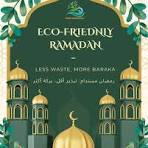
Part 3 - Tips for an Eco-Friendly Ramadan
Yes, we understand. In the heart of Ramadan, where every Iftar (the meal with which Muslims break their fast) carries the weight of tradition, food takes the spotlight. Yet, amid the culinary delicacies, the burden of meal preparation can weigh heavy (those tasked with the responsibility of cooking can relate). Sadly, this holy month often witnesses a global issue: an excess of uneaten food. Countries like the UAE and Saudi Arabia have seen successful community initiatives to redistribute excess food to those in need, a practice that can be emulated elsewhere.
Meanwhile, kindly spare a thought and a prayer for those in parts of the world suffering from hunger and a lack of clean water. Food is a basic need, but a huge chunk of unprivileged people have been denied this right. The least we can do is minimize food waste and help in whatever way we can.
Embrace Sustainable Eating
A plant-based diet primarily focuses on consuming plant foods, such as whole grains, legumes, fruits, vegetables, nuts, and seeds, rich in antioxidants, fibre, vitamins, and minerals. Notably, this dietary approach boasts a lower environmental impact compared to meat and dairy consumption.
Dania Jukaku, a Clinical Dietician at Bounceback Centre in Abu Dhabi, UAE, emphasises the significance of consuming a plant-based diet for maintaining energy levels during fasting in Ramadan. She recommends integrating plant-based proteins, fibre, and essential minerals like iron, magnesium, and calcium into Suhoor meals to complement the fasting-induced anti-inflammatory effects. Dania further shares a few quick and nutritious plant-based meals that you too can try:
Smoothie: Blend berries and banana with nut milk, then add a tablespoon of ground flaxseed and chia seeds, and a touch of honey for sweetness.
Breakfast wrap or sandwich: a whole grain tortilla or quinoa bread filled with scrambled eggs, beans, onions, and peppers, topped with avocado.
Soup: Enjoy a comforting bowl of soup with beans or chickpeas, lentils, and vegetables such as mushrooms. Pair it with a crisp, green, leafy salad like tabbouleh for a satisfying and nutritious meal.
Reduce, Reuse, Recycle
The principle of avoiding waste—time, energy, resources, money, or food—is deeply ingrained in Islam. During Ramadan, large gatherings often lead to excessive plastic waste from food packaging, cutlery, and decorations. There is a dire need to opt for sustainable alternatives: paper or bamboo cups, using bagasse (sugarcane fibre) as a biodegradable material, and reusable stainless steel cutlery, even on a smaller scale, like at home. Additionally, make a conscious effort to segregate dry and wet waste; prioritize recycling and reuse, especially with items like clothes, is vital to curbing waste generation. Furthermore, consider investing in durable decorations that can be used year after year.
Farah Ruknuddeen, MPA (Masters of Public Administration and Policy) from Los Angeles, USA, highlights the need for embracing "Green Ramadan" practices, encompassing reusing wherever feasible, minimising extravagance during iftars, and incorporating more plant-based foods into our meals. She adds that her family's journey towards sustainability in their daily lives and consumer choices has been guided by small and consistent steps to implement knowledge for the betterment of themselves and those around them.
Reflecting on her own experiences, Farah shares, "We derive immense joy from crafting some of our Ramadan and Eid decorations, with each passing year adding a new piece to our collection. My children hold a deep sentimental attachment to these homemade treasures. The dedication and time invested in crafting each item fosters a profound sense of care and appreciation, resulting in cherished memories that we eagerly anticipate revisiting year after year."
Energy Conservation
Implementing simple yet impactful changes consistently in our daily routine can bring about significant change. Start by being mindful of energy usage—turn off lights, appliances, and gadgets when not in use, and don't forget to switch off power sockets to prevent energy wastage. Opt for energy-efficient LED lights over traditional incandescent bulbs; not only do they consume less energy, but they also have a longer lifespan, saving you money in the long run. Harness natural light by opening curtains and blinds during the day, reducing the need for artificial lighting and minimising your carbon footprint.
Water Conservation
Water is an extremely precious resource, as life forms depend on it in several ways. According to UNICEF, approximately four billion individuals, which accounts for nearly two-thirds of the global population, endure severe water scarcity for at least one month annually. The need for water conservation is crucial now more than ever, especially in countries facing water shortage issues, like Yemen, Palestine, Afghanistan, India, Pakistan, and South Africa, among others. We can play a role by using water sparingly during ablutions, fixing any leaks in our home, and, if possible, practicing rainwater harvesting. Simple measures can lead to substantial water savings.
Charity and Community Initiatives
Every human is tested by Allah in different ways; while these trials may seem insignificant to some, for those enduring them, they represent a daunting reality. Ramadan is a time of giving and compassion, particularly towards the underprivileged. It is a time when hearts soften and empathy thrives, inspiring Muslims to take concrete actions to uplift those in need. In the context of Green Ramadan, giving back to the Earth is a form of charity that benefits everyone, from cleaning our surroundings and participating in tree-planting initiatives to enjoying nature walks, feeding birds and animals, and embracing plastic-free iftars. Engaging in these eco-friendly community initiatives fosters a sense of unity and responsibility towards the environment while enriching the spirit of Ramadan.
Educate, Reflect, and Act
Education serves as a potent catalyst, laying the foundation for understanding the significance of eco-friendly practices and their positive impact on the environment. Through introspection, we assess our habits, ensuring they resonate with our values and contribute to the well-being of our planet. Whether it's disseminating tips, ideas, or insights on social platforms, scrutinising our consumption habits, or engaging in communal endeavours, each effort brings us closer to fostering a greener Earth.
"As an educator for nearly six years, I've made it a priority to instill in my students the importance of reducing plastic usage, supporting local products, and advocating for environmental responsibility. This Ramadan, I'm encouraging my students and friends to avoid plastic containers during iftars, opting instead for paper alternatives to minimise pollution,” shares Hiba Zohra, Teacher, Saudi Arabia.
Conclusion
Observing a greener Ramadan isn't just about shrinking our environmental impact; it's about honouring and fulfilling our duty as caretakers of the Earth—a fundamental value deeply ingrained in Islamic teachings. While we fast, pray, and strive to do more good deeds with an intention to please Almighty Allah, let's also pledge to make choices that safeguard and cherish our planet for generations to come. By adopting these practices, believers can ensure that their Ramadan observance fosters a planet that's healthier, cleaner, and more sustainable. Let this Ramadan mark the beginning of a lifelong dedication to eco-conscious living, inspiring communities worldwide with our positive example. ~
Educate, Reflect, and Act
Education serves as a potent catalyst, laying the foundation for understanding the significance of eco-friendly practices and their positive impact on the environment. Through introspection, we assess our habits, ensuring they resonate with our values and contribute to the well-being of our planet. Whether it's disseminating tips, ideas, or insights on social platforms, scrutinising our consumption habits, or engaging in communal endeavours, each effort brings us closer to fostering a greener Earth.
"As an educator for nearly six years, I've made it a priority to instill in my students the importance of reducing plastic usage, supporting local products, and advocating for environmental responsibility. This Ramadan, I'm encouraging my students and friends to avoid plastic containers during iftars, opting instead for paper alternatives to minimise pollution,” shares Hiba Zohra, Teacher, Saudi Arabia.
Conclusion
Observing a greener Ramadan isn't just about shrinking our environmental impact; it's about honouring and fulfilling our duty as caretakers of the Earth—a fundamental value deeply ingrained in Islamic teachings. While we fast, pray, and strive to do more good deeds with an intention to please Almighty Allah, let's also pledge to make choices that safeguard and cherish our planet for generations to come. By adopting these practices, believers can ensure that their Ramadan observance fosters a planet that's healthier, cleaner, and more sustainable. Let this Ramadan mark the beginning of a lifelong dedication to eco-conscious living, inspiring communities worldwide with our positive example. ~

No comments:
Post a Comment