Thursday, August 25, 2022

Light from the old Arch: A search for meaning in a highly scientific and technological world.

Light from the old Arch

"In our age of modern science and technology, of automation and computerization, of globalization and space travel, will we finally find the answer to this perplexing quest - a search for meaning in a highly scientific and technological world?" - avr

Dr Abe V Rotor

A collection of 18 essays about life and living, 216 pages. Published by UST in 2000 with the Preface written by Fr. Jose Antonio Aureada, regent of the Graduate School.

"What is considered a religion of disconnection betrays man's inability to see sensuality through divinity and divinity through sensuality... 

It was Victor Frankl, a Jewish psychotherapist-philosopher, who popularized logotherapy, a word of Greek origin which literally means healing through meaning. Dr Abe. the poet-musician-painter-scientist rolled into one, reminds us of the Franklian inspired principle: 

The unheard cry for meaning if only well-heeded in all aspects of life - from the least significant to the extremely necessary, from the most commonplace to the phenomenally sublime - can only restore authenticity back to living life beautifully."
------------------------
In the Introduction of the book, Professor Paulino M Capitulo, curator of the JP Laurel Memorial Museum, and professor of the author in history, has this to say in an excerpt, as follows: 

"Man in his eternal guest for what he believes, more often than not, finds something better than what he expects - serendipity, that is - in the plethora of God-given gifts.  He strives to perfect things to his need only to realize that hidden behind the simplest organisms lies an iota of beauty hitherto completely ignored.  Man's harmony with nature is eloquently expressed in this concept where he unwittingly finds the interpretation of how and why the world came into being." ~

Arch of the Centuries of the University of Santo Tomas, Manila,
founded 1611

 Excerpt from the book, Springtime - Season of Metamorphosis

"It is easier to teach than to learn, to lecture than to share, to welcome than to accept, to accept than to forgive.  It may be easier to treat a friend than a brother, receive awards than to show recognition, walk up to the podium than stoop to lend a hand. How do we know endurance than sacrifice?  Responsibility from accountability? To help than to care?  Wake up, It is springtime."

Tuesday, August 23, 2022

Living with Nature

 Living with Nature

In this age of environmental degradation, resource depletion, and unparalleled human population explosion, how can man live and find meaning in their lives with nature?

Dr Anselmo S. Cabigan, PhD
Former Professor, St. Paul University QC, and
Former Director, National Food Authority

Living with nature built character and helped men find meaning in their lives. Moses walked through the desert and found his commission at the burning bush. John the Baptist lived in the wilderness and preached repentance, sustained by locusts and honey. Jesus of Nazareth spent days in the wilderness and came out committed to the way of the cross. Saul of Tarsus waited for marching orders in his garden from a Master whose followers he once persecuted. Charles Darwin took a peek into evolution while sailing along the shores or South America and into the Galapagos. George Washington Carver parlayed with his Creator in the forest and gave the world its first taste of peanut butter.
Once upon a time, nature was pristine, undefiled, and unspoiled. We used to live in a dreamlike world of tropical virgin forests, and pure hidden springs, calm ponds, and serene lakes with majestic purple mountains, crowned with canopied trees. That was when people took only what they needed, caught only what they ate, and lived only in constant touch with a provident earth.
Dr Cabigan with rare species of bamboo, Tagaytay City

Nature eventually succumbed to human exploitation and was sacrificed in the altar of greed. Her bowels were desecrated for minerals and oil, and her verdance raped for timber and paper. The face of earth was scraped for agriculture and housing projects, and her waters poisoned and mercilessly gagged with garbage. Man choked the air with pollutants and dumped garbage on the oceans. Meanwhile the earth’s species were hunted to extinction, and her forests burned with billowing smoke, so massive, it is visible from the surface of the Moon.

In this age of environmental degradation, resource depletion, and unparalleled human population explosion, how can man live and find meaning in their lives with nature?

Very common people, in very common settings, with very simple objects, now tell us how to keep in touch with nature. For instance we rejoice in the bounty of leafy vegetables growing on discarded tires, sustained with compost from a city dump. We also find relief from a burning fever through a cup of lagundi tea, or savor broiled catfish fattened at a backyard pond. Sometimes, we painfully ponder the fate of a dog headed for slaughter, or grieve at the gnarled skeleton of a dead tree, or awe in at the metamorphosis of a cicada, or immersed in the lilting laughter of children at play.

The following episodes speak of very common people, in very common settings with very simple objects, finding meaning in their lives. The Living with Nature Handbook speaks of us and to us.

(Author’s Note: Dr Anselmo S. Cabigan and the author are very close friends, having studied for their doctorate degrees. They share many things in common, both in their personal lives and professions. Both are naturalists, gentlemen farmers, executives of the government, and college professors. It is most fitting for one, as close to the author as Dr. Cabigan is to speak about the book on his friend’s behalf.)

Monday, August 22, 2022

Landscape Therapy

                                                 Landscape Therapy

"… when the curtain is lifted and the horizon rolls on with life passing this way but once, yet it’s more than destiny, more than eternity."

Painting and Poem by Dr Abe V Rotor

Landscape Therapy in acrylic, AVR 2014

Landscape therapy is gaining back clarity and focus, though slowly from strained vision of light and shadow, of passing cars and blinking screens;  

Landscape therapy is getting the frayed nerves back to function in reflexes governed by the conscious and unconscious mind in peace and harmony; 

Landscape therapy is when primary colors once more come as true colors, secondary colors and tertiary ones as sweet progeny of color combination;    

Landscape therapy is when the forests appear once more lush green, the mountains in the distance blue, and the sky azure as the deep sea; 

Landscape therapy is when the consciousness once more map the migrating birds in the sky, the fish in the stream, a drop of pond water teeming with life; 

Landscape therapy is when the biological clock readjusts with the passing of seasons, understanding the reason behind Rachel Carson’s Silent Spring; 

Landscape therapy is when - in the midst danger, courage is being afraid but doing the brave thing, for the landscape of life is often perceived in duality; 

Landscape therapy is when the swamp dries up to become a grassland, to become a woodland, in a magic sere that spawns rich life’s diversity; 

Landscape therapy is finding once more a niche, bridging the past and present, tradition and modern, the living and the non-living world in Rousseau’s scenery;     

Landscape therapy is when raucous urchins sound in lilting joy; thunder a Beethoven’s bass drum, chirping a language in music – all in thanksgiving;

Landscape therapy is when a person like a prisoner in Plato’s Allegory frees himself to discover the realities of the world, which is the aim of education;   

Landscape therapy is when life is viewed with the power of the imagination – romantic or real or abstract - yet find meaning in reverence to the Creator;

Landscape therapy is when the curtain is lifted and the horizon rolls on with life passing this way but once, yet it’s more than destiny, more than eternity. ~


Thursday, August 18, 2022


Shades of red make a garden distinctly beautiful.

Shades of red make a garden distinctly beautiful.
Dr Abe V Rotor


Fire red gummamela (Hibiscus rosa sinensis)
San Vicente Botanical Garden (SV Ilocos Sur)

Achoite or annatto (Bixa orellana) flower, Silang, Cavite

Cadena de Amor ) Antigonon leptosus), UPLB Laguna

Umbrella Tree or Talisay  (Terminalia catappa) loses  
leaves (deciduous) for new ones to grow in place
San Vicente Botanical Garden (SV Ilocos Sur) 

Food Crisis Series 8: Will Genetically Modified Food (GMF) Feed the World?

Food Crisis Series 8: Will Genetically Modified Food (GMF) Feed the World?
Original Title: “Will Frankenfood feed the World?”

Dr Abe V Rotor

A general impression about seminars and conferences on Genetic Engineering is to find out if one agrees with the issue or not. One may be asked, “Are you in favor of genetically modified organisms (GMO) and genetically modified food (GMF)? Outside of the hall one may be asked casually of the same question.

Photo Acknowledgement: Time Magazine

It is hard to expect clear yes or no answers. Here is the story to make us understand why – and to help us take side intelligibly on the issue.

We in the older generation have witnessed three revolutions in food production. The first green revolution was the opening of new frontiers, such as the development of Mindanao, the land of promise. The second green revolution was brought about by the so-called miracle varieties, or the introduction and breeding of high yielding crops. In both cases production tremendously increased – horizontally with new lands placed under cultivation, and vertically with higher productivity obtained. The third, which we are experiencing today, is biotechnology, which highlights the radical approach of genetic engineering.

The first Green Revolution pushed production frontiers up to the mountains and down to the sea. Slope agriculture and aquaculture were born. When agronomy succeeded in pushing plants and animals to yield to maximum, we began tinkering with their genes through conventional breeding and atomic radiation. The world proved Malthus to be wrong up to this point.

Today with more than 7 billion people populating the earth and with their geometric increase unabated, the biggest challenge of mankind is how to meet the tremendous increasing demand for food. By year 2050, the world’s population will be 9 billion. Proponents of genetic engineering believe that only by applying the vast potentials of this scientific breakthrough can the world’s burgeoning population be saved from the Malthusian apocalypse.

By-Products of Green Revolution

The main drawback of the Green Revolution I - that of pushing the frontiers of production - has been the irreversible loss of natural environments and species. For GR II, we spoiled our lands, lakes, rivers and seas with pesticides, fertilizers and other chemicals exacerbated by industrial wastes. For GR III – biotechnology – what is causing a lot of fear is Frankenstein-like, a kind of Genie released from the confines of super intellect.

Some even branded GMF as Frankenfood named after Frankenstein, title of a novel written in 1818 by Mary Shelly. It is a story about a brilliant medical student, Victor Frankenstein, who created a monster that terrified the world and at the end turned against his own creator. It is not difficult to associate the concept of genetically altering organisms to Frankenstein syndrome. The story is perhaps the first serious warning on the use of high technology in man’s ambition to play God. GMO is the most controversial issue today that touches all aspects of our life - environmental, health, safety and ethical questions. It is claimed to be anti-God and anti-nature.

The Promise of GMO

“Will Frankenfood feed the World?” is an article written by Bill Gates for Time, Visions of our 21st Century Technology. The multi-billionaire stirs the world on two fronts: GMF has met fierce opposition among the well-fed, but it is the poor and the hungry who need it most.

He admits that even before the warning came – in spite of the information highway – the world was not well informed before hand. There was no global consultation. But GMF is already a part of life of Americans and Europeans. Here are some proofs.

1. A third of the corn and more than half of the soybeans and cotton grown in the US is the product of biotechnology.

2. Since 1992, a total of 70 genetically modified crop plants have been released commercially worldwide. This means that many people have been eating genetically modified food without their knowledge.

3. Only one country in Asia – Malaysia that has not introduced GMO. On the other hand Singapore imports food in bulk from the US and Europe and therefore Singaporeans are likely eating GMF.

4. In the Philippines the most likely GMF we are eating without knowing or being informed about it are those served at fast food stores and PX goods coming from Europe and the US.

But the debate about biotech is tempered by the fact that there is apparent desperate need to feed fast-growing and underfed populations. According to the UN 800 million people around the world are undernourished.

While we cannot rely on conventional agriculture, ironically too, arable land has declined steadily since 1960 and will decrease by half over the next 50 years, according to the International Service for Acquisition of Agri-Biotech Applications (ISAAA).
_______________________________________________________________

One area of heated debate is in the aspect of ecology. Because the products of Genetic Engineering are new and untested, their effects as they pass through the food chain must be thoroughly investigated. Admittedly very little study has been done on this aspect.
______________________
_________________________________

Genetically Modified Organism (GMO): Neo-Frankenstein Monster


A Genetically Modified Organism (or GMO) is a result of rapid genetic pooling or buildup of desirable traits by means of genetic engineering, rather than through the conventional method of breeding. 

GMO  Gone Wild in acrylic by the author 

The conventional agricultural breeding methods are tedious, and subject to uncertainty. Today’s biotechnology opened a frontier whereby the genes of organisms can be transferred and combined according to the traits one wishes to combine. It is actually opening a floodgate of possibilities, spectacularly including cross-species or cross-phyla transfer of genes. This could mean a firefly gene implanted in a rat can make the rodent glow in the dark.

All these scenarios have their early beginnings with the DNA (Deoxyribonucleic acid) model proposed by F.H.C. Crick and J.D. Watson in 1953, the two later sharing the Nobel Prize in biology. So precise is the double helix model that with modern tools, one can insert a portion of the genetic material from one organism onto another, causing the latter to carry a desired trait. Thus a gene of a bacterium, Bacillus thuringiensis, spliced into the genetic structure of corn produced the Bt corn, the first genetically modified crop. The plant is claimed to be caterpillar-resistant since B. thuringiensis causes disease in caterpillars that destroy corn. Protein gene of one legume can increase the protein nutrients of another. Beta-carotene gene from daffodils, when introduced into rice produces golden rice.

The questions are, when introduced, what extent are the modifications? What kinds and directions will they go? Could an organism, reaching a level of modification, lose its genetic identity, thereby becoming alien to its adopted environment?

We ask these questions in the light of the following premises:

1. A single gene may control one trait, but where there are more traits controlled by multiple, blending genes, the process can get out of hand. The collective expression of modified gene combinations, not to mention the effects of disturbed loci in the genes, can be dangerous. It will take time for us to know the adverse effects of GMO on the human species, and the environment.

2. Every trait of an organism, in one way or the other, has an affect on the environment, and vice versa. This means that if the protein is elevated, the higher protein levels will need more nitrogen, thereby requiring fertilizer subsidy. An increase in milk output means more cattle feeds, and antibiotic input to protect the animal from milk production-related stress. There is a saying in ecology that there is no such thing as “free lunch”.

3. Ecologically, how will a GMO relate to the natural members of the environment? How will the new organism now fit into the ecosystem in which its “parents” were once a part, integrally built by laws governing seres, niches and evolution? We may be only interested in how the organism serve our purpose for the moment, but unaware of its usefulness or destructiveness, when left alone in its own environment.

4. Genetic engineering may increase the number of plants and animals that now depend entirely on man’s care and attention. Many genetically altered breeds and varieties may no longer be able to live and prosper in the open. This is indeed an antithesis of ecological farming, and sustainable agriculture. ~


Continued...

Food Crisis Series 9: Can the Philippines regain its fame in the 70s as rice exporter?

 Food Crisis Series 9: 

Can the Philippines regain its fame in the 70s as rice exporter? 

More importantly, can we assure the Filipino people 
sufficient food at affordable level, particularly during the pandemic?

                                                             Dr Abe V Rotor*

After almost three decades now the country has been depending on imported rice to fill up its yearly deficit of no less than 10 percent of local production.  Rice is the staple food of 80 percent of our population. 

It's a fact that we had been exporting rice instead. Not only did we succeed in rice production but in the production of other basic food to the point of self-sufficiency level.  

Looking back at the government's program makes one wonder whatever happened, where have all the "heroes" gone, recognizing their achievement  - men in government led by then President Ferdinand Marcos, technocrats, farmer leaders, rural youth, even school children,  families raising fruits and vegetables in pots and on trellises, poultry and livestock and fish, too, on their backyard.  

Memory is kept fresh of people who did their part well, a number of them quiet in their retirement, yet contributing still to the good of the country in their own ways. Proudly I cite Domingo F Panganiban, an operations man in the words of Dr Emil Javier a prominent scientist and educator. Fondly called by his colleagues, co-workers, and at the grassroots as "Ding,"  I liken him to a general in the battlefield.  Indeed he went with his soldiers and fought in the battlefield. Not once, twice, thrice under different administrations. They say, "generals don't die, they just fade away."  Ding never had a dull movement.  He went to other battlefields abroad and proved the effectiveness of his strategy of food production.    

Filipinos' sense of food security is basically rice, and their sense of pride is having  food plentiful and affordable.  And there is no reason we fail to have them on the dining table at any time in spite of force majeure and other difficulties.      

Long had the euphoria of the People's revolution gone. Revolution has to shift to other causes such as "food self-sufficiency."  Disparity of prices of palay-on-the-farm and rice-in-the-market is highly questionable as to, who is getting the profit.  Fresh tomato at P200 a kilo, P250 a kilo of tilapia, drain a laborer's wage for a day.   We may skirt the issue with COVID pandemic as license.  We may be restricted in some ways but the will and determination to provide food for the people becomes greater and in fact the greatest resolve today. 

The test of genius is in crisis. We need people like Domingo F Panganiban, Emil Q Javier, and those who have gone ahead: Arturo Tanco Jr, (DA secretary), JD Drillon (DA Undersecretary) Roberto Fronda (NFAC Exec Director and Dep Adm NFA), Jesus Tanchanco (NFA adm), Dioscoro Umali (FAO chief Asia), among others I have had the opportunity to work with. 

May this article serve to inspire disciples of these great Filipinos and support President Rodrigo Duterte in assuring food and nutrition for the people.  

This is an excerpt of an article from the Internet.  With gratitude to my former supervisor in government service, humble and kind, industrious and dedicated, Ding Panganiban is indeed the field general in Philippine agriculture. 

DOMINGO F. PANGANIBAN- The Operations Man
Excerpts from Golden profiles: Domingo F. Panganiban
Posted July 8, 2010 by upcagolden2010 in Golden Profiles.
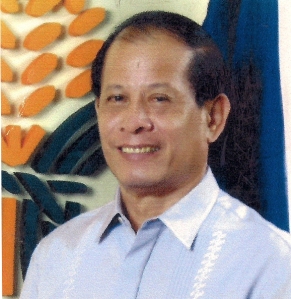
By Emil Q. Javier

Although arm-chair economists challenge this, rice self sufficiency remains the Holy Grail of Philippine agriculture. The country always had been importing rice and in the last few years, had been the world’s largest importer of the staple. However, for one brief shining moment in the 70s we did succeed in producing enough for our own people because of the MASAGANA 99 rice program. The man of the hour was the operations man of M-99- Domingo F. Panganiban.
He served with distinction as Director of the Bureau of Plant Industry and consequently as Executive Director of the National Food and Agriculture Council (NFAC). He was appointed career operations Deputy Minister of Philippine Ministry of Food and Agriculture in 1984. After the Marcos government fell in 1986 with EDSA, Panganiban left government and worked for the giant Filipino food company. 
As the technocrat, Panganiban’s name was invariably associated with Masagana 99, alongside President Marcos and former Agriculture Secretary Arturo Tanco. This signal achievement made him a highly sought international agriculture adviser and lead to several consultancy assignments for the United Nations’ Food and Agriculture Organization (FAO) in developing countries in Asia and Africa, particularly Vietnam, Lao PDR and Cambodia.
In 1996, recognizing the worth of Ding, then President Fidel V. Ramos recalled him from his international commitments and appointed him as Presidential Assistant for Agriculture. He became the Philippine Secretary of Agriculture in 2001 under President Joseph Estrada and then again under President Gloria-Macapagal Arroyo in 2005. In November 2006, President Arroyo tapped Panganiban to lead the Philippine National Anti-Poverty Commission with cabinet rank.
Ding always had been a simple, unpretentious, hands-on and straight-talking public servant. The epitome of the operations man, he always gets things done and on time. Always a go-getter he brought vigor, enthusiasm and imagination to the traditionally phlegmatic and reactive bureaucracy. These traits endeared him to four Philippine Presidents, to countless friends and colleagues, to partner local government and non-government organizations but most importantly to small farmers.
-----------
Dr Rotor was council secretary of the National Food and Agriculture Council (NFAC),  and  concurrent chief Agricultural Projects coordinator  under then NFAC deputy executive director Ding Panganiban.  He became regional director in Region 1, Cordillera and Cagayan Valley under the former National Grains Authority, and later director of the National Food Authority.  After opting early retirement, he was tapped adviser of the Philippine Senate on Agriculture and Food, joining the academe thereafter as university professor.