Sunday, May 23, 2021

Twilight in the Forest

 Twilight in the Forest

"Twilight is the quiet awaiting of sleep and forgetting, the expectation of the sensation that is peaceful and resigned... The forest always silent, now assumes that calm that is more breathless and awesome than silence." - Dr Arturo B Rotor, Convict's Twilight 

Light in the Woods in acrylic by Dr Abercio Valdez Rotor 1995, Displayed  at the former St Paul University Museum QC. Cover of book Light in the Woods by the same author.

The forest, always silent, now assumes that calm that is more breathless and awesome than silence; 
the breeze dies down, the leaves cease to rustle, the animals of the woods slink away to their lairs; 
one sees only an occasional crow, its obstreperous caw-caw-cao echoing and re-echoing for miles around. 


No Angelus rings here, for the nearest church is a day's journey away, 
      down the river and along the coast, 
but one does not need to hear the tolling of distant bells to be reminded 
      of the hour for prayer. 
One must pray here, if only to relieve the terrifying solitude, 
      to stay the gathering darkness. 

Here one must kneel down, make the sign of the cross, 
      join the twilight hush that like a solemn invocation rises 
above the heads of the tallest tree to heaven. 
      The darkness comes like a sluggish, ever deepening stream. 

Imperceptibly it crawls, inch by inch, and as it crawls it swallows everything 
      that stands in its way, 
first the towering trees, from their buttressed roots to the high quivering leaf, 
      then the shrubs and the undergrowth. 

No one knows that it has reached a certain point by the sepulchral silence 
      that follows in its wake, 
for it passes all sound and movement cease, the creaking of the stiff branches, 
      the scampering of the small animals under the trees, 
even the wind as it hurries through the lattice of the leaves and vines seems arrested
      in its flight. 

Over the deep holes left by decaying logs, the deep puddles made by the wild boar, 
      this stream swirls and eddies and forms little unplumbed pools. 

The hour signifies the end of the day's work, the cessation of all the hurrying
      and stumbling during the day, 
a chance to sit down or lie among the cool sedges that grow near the spring, 
      to bow your head or rest your bowed head on your arms; 
twilight is the quiet awaiting of sleep and forgetting, the expectation 
      of the sensation that is peaceful and resigned... 

The forest always silent, now assumes that calm that is more breathless 
      and awesome than silence.~ 


This piece was lifted from Convict's Twilight, by Dr Arturo B Rotor (PHOTO).  The narrative beauty and musical language used by the author fit well with the style of a poem, although not so much with its new  structure. But on reciting it, following the author's purposive punctuations to emphasize details of the scenarios in romantic mood, one can sense the nostalgia of the setting with the ambiance of twilight. (A V Rotor) 

From the book, the Wound and the Scar, by Dr Arturo B Rotor, 1966 Republic Cultural Heritage Awardee for Literature. Dr Rotor finished medicine and conservatory of music at the same time from the University of the Philippines in 1932. He served as executive secretary of Presidents Quezon and OsmeƱa during the Second World War era.~

Happy Living with Nature

Happy Living with Nature
"We used to live in a dream world..." asc


Happy Living with Nature, a floor-to-wall mural by the author at his city residence in Metro Manila; two faces of our Planet Earth hanging chandelier  AVR 2020

"Once upon a time, nature was pristine, undefiled and unspoiled. We used to live in a dream world of tropical virgin forest, and pure hidden springs, calm ponds, and serene lakes, with majestic purple mountains, crowned with canopied trees. That was when people took only what they needed, caught only what they ate, and lived only in constant touch with a provident earth.

In this age of environmental degradation , resource depletion and unparalleled human population explosion, how can man live and find meaning in their lives with nature?"


Winner of the Gintong Aklat Award 2003 by the Book Publishers Association of the Philippines. The book has 30 chapters (189 pp),divided into four parts, a practical guide on how one can get closer to nature, the key to a healthy and happy life. Second printing, 2008.

Excerpt from the Introduction by Dr Anselmo Set Cabigan, professor, St Paul University QC and former director of the National Food Authority

Thursday, May 20, 2021

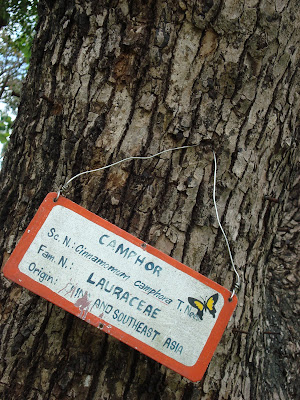
Goodbye, Camphor Trees, Goodbye

Trees for Peace 

Goodbye, Camphor Trees, Goodbye

Dr Abe V Rotor

Goodbye, camphor trees, you've served mankind well 
Since Aristotle and Hippocrates, 
In old villages and in the cities, 
Cure-all to islanders and the Chinese. 
Science has taken your place, it is time 
That you return to the forest and kin; 
Gardens and parks are no longer your home, 
And children do not even know your name. 
We've enough of your secrets copied 
In bottles and syringe and cellophane, 
In formulations that are hard to explain, 
Except in dollars and by those who gain. 
Go back to the wilderness away from man 
While there's still time, while your DNA's still the same. 
We'll call you again, if ever, 
Before sunset and the Armageddon.


Dying Camphor Trees, UST Manila - effects of global warming and pollution, 
and aftermath of typhoons and flooding.

Tuesday, May 18, 2021

San Vicente Botanical Garden: Revival of Bitaog or Palomaria (Calophyllum inophyllum)

 San Vicente Botanical Garden 

Revival of Bitaog or Palomaria  (Calophyllum inophyllum)

Dr Abe V Rotor
.
Bitaog is almost sacred, spirits live in its limbs, people passing by chant bari-bari or tabi-tabi po, to appease them; its flowers are fragrant and they think some soul is hanging around. But kids as we were then simply loved its cool and clean shade for playground. The tree is evergreen, thus it does not litter, unlike the deciduous narra or acacia. Scary enough, unscrupulous loggers would think twice and rather cut down other tree species.     

Author (left) and Dr Domingo Tapiador, UN-FAO expert, examine bitaog specimen at                                                                                      UST Botanical Garden, Manila  

We kids found a favorite hunting ground with homemade slingshots in a grove of bitaog trees in San Vicente, Ilocos Sur. In modern parlance, such a place is called wildlife sanctuary. Here we hunted birds and searched their nests (tarat, panal, sparrow, and the dancing pandangera). We loved to listen to the shrill of cicada, fiddling of crickets; now and then a skink dashes, a monitor lizard scampers, paper wasps warn of our intrusion.

If bitaog deserves more attention and importance today, it’s for its many uses: automotive fuel and lubricant, medicine, insecticide and fungicide, rat poison, and as ornamental tree.  Its indigenous use as arrow poison can still be traced in remote areas.  

With global warming threatening many tree species, bitaog appears to be among the ultimate choices against sea intrusion, typhoon, smog, erosion, siltation, flood and pollution. And thanks to its natural resistance to pest and disease. No wonder all over the topics and in the Pacific islands, bitaog is now widely cultivated, apparently a revival of not only for its conventional use as fine wood furniture and acoustic back and side of guitar and similar instruments.

It is a modest effort to put up an arboretum to promote the cultivation of bitaog, among other species, in cooperation with the community, emphasizing its potential use as substitute to fossil fuel, and in reforestation and rehabilitation of wasteland (bitaog is resistant to sandy condition, salinity and drought). It is a principal component of agroforestry and in the establishment of parks and reservation areas.  
                                                   Flower and ballnut clusters of bitaog
  --------------------------------
 Calophyllum inophyllum is a large evergreen, commonly called Alexandrian laurel balltree, beach calophyllum, beach touriga, beauty leaf, Borneo-mahogany, Indian doomba oiltree, Indian-laurel, laurelwood, red poon, satin touriga, feta'u (Tongan) and tacamahac-tree. It is native from East Africa, southern coastal India to Malesia and Australia.

C. inophyllum is a low-branching and slow-growing tree with a broad and irregular crown. It usually reaches 8 to 20 m (26 to 66 ft) in height. The flower is 25 mm (0.98 in) wide and occurs in racemose or paniculate inflorescences consisting of four to 15 flowers. Flowering can occur year-round, but usually two distinct flowering periods are observed, in late spring and in late autumn. The fruit (the ballnut) is a round, green drupe reaching 2 to 4 cm (0.79 to 1.57 in) in diameter and having a single large seed. When ripe, the fruit is wrinkled and its color varies from yellow to brownish-red. ~
.

Good Morning, Sunshine

                             Good Morning, Sunshine

Meet sunrise with joy among myriads of living things. 

Dr Abe V Rotor 
 Living with Nature School on Blog 

 
 Fortune plant captures the life-giving energy of the sun through
 photosynthesis, a phenomenon that is barely understood by science.

I meet sunrise with joy, 
among myriads of organisms:
plants, animals and protists,
the living minutiae unseen,
stir to the herald of the day. 

trees catch the rays like prism,
splitting light like rainbow, 
and shine like shield or mirror,
reflecting  through the mist, 
into glittering dewdrops.  

I love sunrise, I'm alive and hale;
the day wears off with ease
though strife may cross my way, 
strength I gather with others
that welcome each day. ~  

 
A cylindrical millipede retreats to its abode as the sun rises;
 a geometrid caterpillar looks for food, it's indeed very hungry.

 
Moss mirrored by a dewdrop; filaments of pond alga meet the sun
 
Skin casting hangs where a cicada had just emerged into adult heralding the start of the rainy season; nymph of a harlequin bug displays a royal attire akin to that of a clown.    

I love to paint Nature - and write verses, too

  I love to paint Nature - and write verses, too 

"I paint and talk to the waterfall tumble, roar and hiss,
 the birds in the trees singing with the breeze..." avr

Dr Abe V Rotor

 Watershed, mural on canvas

" I paint the stream laugh and cry,
and hiss over the rock;
 the clouds on the mountain high, 
down the sea and back. "
 
 Coral Reef, wall mural SPUQC 

"It's a race of time and essence,
before the coral reef is gone;
for posterity in urgent sense,
for the archive and my son,"  

Edge of a Crater 

"Who joins me in Jules Verne's novel,
Journey to the Center of the Earth,
 and travel down the burning navel,
far from the comfort of the hearth?"

 Cascade

"Too full to contain a downpour in May,
but burst with fury;
ends a long, hot summer in a day
        and lives in a story."   
                          
Wounded fish

"Death - if you must,
let me carry on life
until I turn into dust,
    in earnest strife." 
  
 
Predator 

"Life the raw, the wild,
 the weak, the mild,
death the ugly, the good,
 Lo! to the cruel, the bold,"
 
Bouquet 

"Bouquet - how extreme:
how happy, how sad,
how deceitful, how holy,
how tame, how mad!

Bouquet - how fresh,
picked for vase or lei;
how withered when gone
across the bay.

Bouquet - how fragrant
across the hall;
how lavish in summer,
how dearth in fall.

Bouquet - how missed
the bee, the butterfly
in the garden, the rainbow
an arch of sigh." 

 Waterfall

"I talk to the waterfall
 hiss, tumble and roar;
I talk to the nearby trees,
dancing with the breeze;

I talk to the clouds,
floating in the blue sky;
I talk to the nesting birds,
romance is in the air;

I talk to a skink darting by,
butterflies fluttering,

 scurrying ants, the busy bees,
seeds and buds waking up
to the morning sun;
I talk to myself
in the silence of song."

 
Mountain cave, detail of mural

"Perched on a mountain high,
observatory of land and sea, 
yellow at sunrise, red at sunset,
green its cloak and curtain. 

Window to the world unknown
eons of time living in peace,
arched by the rainbow
'til man searched its ends."

Rodents in their burrow, old wall mural SPUQC 

"What goes on in a rodent's home,
is love and care like our own." ~

Reviving Lola Basyang: Stories for Children by Severino Reyes a.k.a Lola Basyang


Reviving Lola Basyang:
Stories for Children by Severino Reyes a.k.a Lola Basyang

Compiled and Edited by Dr Abe V Rotor 
Living with Nature - School on Blog

Philippine Literature Today by Abercio V Rotor and Christine Molina-Doria CE Publishing Co. QC

Acknowledgment: To all sources of information I used in this educational blog, including the movie producers of Lola Basyang stories, magazine and Klasiks publishers, Ballet Manila and all its performers, book publishers and distributors, the Internet, family and friends of the greatest Filipino storyteller for children of all times, and the University of Santo Tomas where he graduated a long time ago. I was told he finished a degree in Philosophy and Letters from UST. 

There is one very extraordinary lesson about the storyteller which should inspire his audience, and particularly writers like me, and that is, there is nothing too late to achieve something valuable: Mang Binoy as he was fondly called, wrote the first of his four hundred children's stories at the age of seventy-five.  It inspires us all for an old man to talk the language of children and make them real men and women, courageous and happy to face the world where fantasy makes reality not only bearable but kind and fulfilling.  

I invite my readers to revive the good tradition of Lola Basyang amidst conflicting values that make children difficult to raise. It is tradition I know to be the best alternative to too much exposure to today's living conditions, what with all the computers and malls, and too much expectations we demand from our children.  Let them be in their own sweet time.  Knowledge is also learned in leisure and quiet, in sitting by the fireplace listening to a Lola Basyang, when the roads turn rough, so with the tides of life. Be children like the children in Lola Basyang's time.  


 Lola Basyang stories translated into Tagalog Komiks 
became popular among the masses in sixties and seventies.

Popularly known as Mang Binoy, Don Severino Reyes, was also the co-founder and editor of the Liwayway in 1923. The very first years of the Liwayway was a struggle, and there was scarcity of literature to include in its contents, so Mang Binoy created the "Mga Kuwento ni Lola Basyang" in 1925 as filler. He did not sign it with his name though because he thought it was unethical, while still serving as editor of the magazine.

And so Mang Binoy used the byline "Lola Basyang" after a friend's neighbor named Gervacia Guzman de Zamora, who was known as "Tandang Basyang". It was from her where Mang Binoy took the inspiration to create"Lola Basyang".

In real life, Tandang Basyang was described as an old bespectacled woman in baro't saya, seated in her famous silyon, and reading her timeless classic stories - dug from her ancient baul (wooden chest) - to her fascinated grandchildren.  The grandchildren were more than eager to hear stories about faraway castles, heroic princes, lovely maidens, giants, and elves. Always, at the end of each story is a moral lesson to be learned.

The first story of the "Mga Kuwento ni Lola Basyang" was entitled ang "Plautin ni Periking", a wonderful story of a kindhearted kid who has a magical flute and flying carpet. It was the first of the more than 400 "Lola Basyang" stories to have graced the Liwayway, and only discontinued because of Mang Binoy's death in 1942. (Wikipedia)
    
In 2006, Anvil Publishing, Inc. relaunched a series of picture books based on the tales written by Severino Reyes and retold by Christine Bellen. All books were illustrated by Frances C. Alcaraz, Albert Gamos, Elbert Or, Liza A. Flores and Ruben de Jesus. The 11 picture books are:

· Ang Alamat ng Lamok (The Legend of the Mosquito), which was originally titled Ang Parusa ng Higante (The Giant's Curse)
· Ang Mahiwagang Biyulin (Magical Violin)
· Ang Sultan Saif (Saif the Sultan)
· Parusa ng Duwende (The Dwarf's Curse)
· Plautin ni Periking (Periking's Flute)
· Rosa Mistica (Mystical Rose)
· Ang Binibining Tumalo sa Hari (The Maiden Who Defeated a King)
· Ang Prinsipe ng mga Ibon (Prince of Birds)
· Ang Prinsipeng Duwag (The Cowardly Prince)
· Si Pandakotyong
· Ang Prinsipeng Mahaba ang Ilong (The Prince with the Long Nose)

Mga Kuwento ni Lola Basyang (TV series)
From Wikipedia, the free encyclopedia

Season 1
· Ang Mahiwagang Kuba (The Enchanted Hunchback)
· Ang Prinsipeng Unggoy (The Monkey Prince)
· Ang Parusa ng Duwende (The Dwarf's Punishment)
· Ang Binibining Tumalo sa Mahal Datu (The Maiden Who Defeated the Datu)
· Ang Mahiwagang Biyulin (The Enchanted Violin)
· Ang Prinsipeng Mahaba ang Ilong (The Prince with A Long Nose)
· Ang Sumpa ng Higanteng si Amok (The Curse of Amok the Giant)
Ang Walong Bulag (The Eight Blind Men)
· Ang Prinsipeng Duwag (The Cowardly Prince)
· Akong Ikit
· Maria Alimango
· Si Sultan Saif (Sultan Saif)
· Ang Prinsipe ng mga Ibon (The Prince of the Birds)

Season 2
· Si Pedrong Walang Takot (Fearless Pedro)
· Ang Gwapong Sastre (The Handsome Tailor)
· Ang Palasyo ng mga Duwende (The Palace of the Dwarves)
· Ang Kapatid ng Tatlong Maria (The Brother of the Three Marias)
· Ang Hukbo ni Padre Pedro (The Legion of Father Pedro)
· Ang Plautin ni Periking (The Flute of Periking)
· Anting-anting (The Amulet)
· Ang Mahiwagang Balabal (The Enchanted Cape)
· Ang Dragon sa Ilog Lingwa (The Dragon in Lingwa River)
· Pandakotyong
· Ang Kastilyong Bakal (The Iron-made Palace)
· Prinsesang Kalbo (The Bald Princess)
· Ang Pitong Hilo (The Seven Idiots) ~