
Tuesday, August 16, 2016

Lawin Project Series: 10 Healthy Food Rules - be healthy and happy with the food you eat
There is no substitute to freshness. The less processed your food is, the better. Drink natural instead of distilled water.
Dr Abe V Rotor

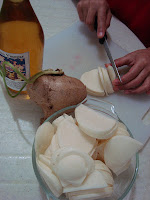
 Ukoy na kalabasa, with egg and small shrimp. It is served in patties, or rolled into lumpia


+A.jpg)
Rule 1 - There is no substitute to freshness. Perishable food must be prepared and served without delay: newly caught fish (better if alive), animals and fowls direct from the slaughter house (better if butchered or dressed at home), newly picked fruits and vegetables (fully mature when harvested).
Rule 2 - The less processed your food is, the better. Reduce if not avoid eating processed food (canned, preserves, dairy, etc), heavily spiced, overcooked, over decorated, culinary loaded - they are unhealthy, They burden body physiology from digestion to circulation to excretion. Besides they are very expensive and unfriendly to the environment.
Rule 3 - Food residues are harmful, if not poisonous. Antibiotics residues in meat and poultry, eggs and dairy; sodium in salted products, instant noodles, sauce; chemical residues in fruits and vegetables from insecticide, herbicide, fungicide, nematocide; and hydrocarbon from fossil fuel and smoke emissions. The miracle insecticide against malaria mosquito - DDT (Dichloro-diphenyl-tetrachloro-ethane) remains banned because it is not degraded even as it passes from one organism to another in the food chain. Thus it accumulates in predators - among them humans. DDT poisoning builds even after years from ingestion.
Rule 4 - Metal poisoning causes permanent impairment, or results to death. Lead is the most common toxic metal around from, china wares to car batteries. It damages the central nervous system and internal organs. Mercury poisoning is more severe. Cadmium is a recent introduction with cell phones and other electronic devices. Other than direct contamination, these metals are absorbed by plants and animals and find their way on the dining table. Kitchen wares made of aluminum, tin, nickel, antimony are being phased out.
Rule 5 - Avoid particulates in food, water and air. Car and factory emissions scatter particulates in the environment which we can only observe in the form of smog, sediments and dusts. Tar from cigarette and asphalt, asbestos from car brakes, unburnt carbon from tires, and old and faulty engines, metal particles in factories, silica from cereal mills.
Rule 6 - Avoid synthetic food and additives, they are harmful, and affect mainly the nervous system and senses. The Number One food additive to avoid is Monosodium Glutamate (MSG) or Vetsin. It is the cause of Chinese Food Syndrome. A friend of mine died of vetsin overdose. It is also used in dognapping by simply throwing a piece of bread saturated with vetsin. Avoid sweeteners - NutraSweet, saccharin, aspartame and other concealed brand names. Another is Olestra - fatless fat. The fat molecules are so large the villi cannot absorb them. So the unbroken fat simply leaks and causes discomfort - and quite often, embarrassment. Go natural, like brewed rather that decaffeinated coffee.
Rule 7 - Beware of the invisible poison: radiation. The worst kind of radiation is from fallout following a nuclear explosion (Hiroshima and Nagasaki, 1945), and nuclear plant meltdown (Three-Mile Island in the US, Chernobyl in Russia in the seventies, and Fukoshima Japan following a massive tsunami in 2011). Radioactive decay slowly takes hundreds of years, thus it can cause harm to the members of the food chain. (grass to cow to milk to baby, back to the same or similar cycle). Radiation from high voltage lines, transmission towers, electronic gadgets may get into the food we eat. So with hospital waste containing radioisotopes. The innocent looking microwave oven is now being phased out in many countries.
Rule 8 - Beware of Frankenfood from Genetically Modified Organisms (GMO). Frankenfood is named after the creator of the monster in Mary Shelley's novel – Frankenstein. Examples are Bacillus thuringiensis Corn (Bt Corn), GM potato, GM soybean, SavrFlavr tomato, and golden rice which contains the yellow pigment gene of daffodil. Pharmed food has built-in medicine or drug. An increasing number of food grown in the laboratory includes in vitro stem cell burger which is dubbed lab meat.
Rule 9 - Drink natural instead of distilled water. Manufacturers call bottled water as mineral water because the process did not take away the naturally occurring minerals which are removed through distillation. But why buy mineral water when you can make your own at home with seeds of malunggay (Moringa oleifera), and through simple water treatment?
Rule 10 - Don't overeat, and eat the right food with the proper nutritional value. Eat more fruits and vegetables and less of meat and meat products. It is best to grow or procure your food, cook at home and serve it yourself to your family. The family that eats together stays together happy and healthy.
Food indeed is santa gracia. ~
Dr Abe V Rotor
Living with Nature School on Blog
Paaralang Bayan sa Himpapawid with Ms Melly C Tenorio
738 DZRB AM Band, 8 to 9 evening class, Monday to Friday


Bulanglang or diningding: young pod of batao, malungay pod, soup
thickened with kamote or sweet potato, topped with sea weed (Gracillaria).


Fresh seaweeds as salad: Gracillaria and Codium (pokpoklo)


Sweet potato paste (suman)


Tamales, fish with onion, tomato black pepper, salt and ginger,
wrapped with banana leaves - steamed.
+A.jpg)
Sinkamas or yam with natural vinegar and salt. Buko - direct from the young nut
Health Food Rules
Rule 2 - The less processed your food is, the better. Reduce if not avoid eating processed food (canned, preserves, dairy, etc), heavily spiced, overcooked, over decorated, culinary loaded - they are unhealthy, They burden body physiology from digestion to circulation to excretion. Besides they are very expensive and unfriendly to the environment.
Rule 3 - Food residues are harmful, if not poisonous. Antibiotics residues in meat and poultry, eggs and dairy; sodium in salted products, instant noodles, sauce; chemical residues in fruits and vegetables from insecticide, herbicide, fungicide, nematocide; and hydrocarbon from fossil fuel and smoke emissions. The miracle insecticide against malaria mosquito - DDT (Dichloro-diphenyl-tetrachloro-ethane) remains banned because it is not degraded even as it passes from one organism to another in the food chain. Thus it accumulates in predators - among them humans. DDT poisoning builds even after years from ingestion.
Rule 4 - Metal poisoning causes permanent impairment, or results to death. Lead is the most common toxic metal around from, china wares to car batteries. It damages the central nervous system and internal organs. Mercury poisoning is more severe. Cadmium is a recent introduction with cell phones and other electronic devices. Other than direct contamination, these metals are absorbed by plants and animals and find their way on the dining table. Kitchen wares made of aluminum, tin, nickel, antimony are being phased out.
Rule 5 - Avoid particulates in food, water and air. Car and factory emissions scatter particulates in the environment which we can only observe in the form of smog, sediments and dusts. Tar from cigarette and asphalt, asbestos from car brakes, unburnt carbon from tires, and old and faulty engines, metal particles in factories, silica from cereal mills.
Rule 6 - Avoid synthetic food and additives, they are harmful, and affect mainly the nervous system and senses. The Number One food additive to avoid is Monosodium Glutamate (MSG) or Vetsin. It is the cause of Chinese Food Syndrome. A friend of mine died of vetsin overdose. It is also used in dognapping by simply throwing a piece of bread saturated with vetsin. Avoid sweeteners - NutraSweet, saccharin, aspartame and other concealed brand names. Another is Olestra - fatless fat. The fat molecules are so large the villi cannot absorb them. So the unbroken fat simply leaks and causes discomfort - and quite often, embarrassment. Go natural, like brewed rather that decaffeinated coffee.
Rule 7 - Beware of the invisible poison: radiation. The worst kind of radiation is from fallout following a nuclear explosion (Hiroshima and Nagasaki, 1945), and nuclear plant meltdown (Three-Mile Island in the US, Chernobyl in Russia in the seventies, and Fukoshima Japan following a massive tsunami in 2011). Radioactive decay slowly takes hundreds of years, thus it can cause harm to the members of the food chain. (grass to cow to milk to baby, back to the same or similar cycle). Radiation from high voltage lines, transmission towers, electronic gadgets may get into the food we eat. So with hospital waste containing radioisotopes. The innocent looking microwave oven is now being phased out in many countries.
Rule 8 - Beware of Frankenfood from Genetically Modified Organisms (GMO). Frankenfood is named after the creator of the monster in Mary Shelley's novel – Frankenstein. Examples are Bacillus thuringiensis Corn (Bt Corn), GM potato, GM soybean, SavrFlavr tomato, and golden rice which contains the yellow pigment gene of daffodil. Pharmed food has built-in medicine or drug. An increasing number of food grown in the laboratory includes in vitro stem cell burger which is dubbed lab meat.
Rule 9 - Drink natural instead of distilled water. Manufacturers call bottled water as mineral water because the process did not take away the naturally occurring minerals which are removed through distillation. But why buy mineral water when you can make your own at home with seeds of malunggay (Moringa oleifera), and through simple water treatment?
Rule 10 - Don't overeat, and eat the right food with the proper nutritional value. Eat more fruits and vegetables and less of meat and meat products. It is best to grow or procure your food, cook at home and serve it yourself to your family. The family that eats together stays together happy and healthy.
Food indeed is santa gracia. ~
Fruits in Season
Fruits in Season
Dr Abe V Rotor

Fruits in Season in acrylic by the author, circa 2004
Fruits in season are often a waste around,backyards, fields, and in the wood;sidewalks, homes, stalls, markets as well,on canvas, fruits too, get spoiled.
Lo! Ephemeral abundance for granted,unreciprocated, its essence lost;and the ardent artist loses too, a gift,like passing wind on empty coast. ~
Lawin Project Series: Oregano (Coleus amboinicus) for Medicine, Culinary and Pest Control
Oregano (Coleus amboinicus) for Medicine, Culinary and Pest Control
Dr Abe V Rotor
Living with Nature - School on Blog
Paaralang Bayan sa Himpapawid with Ms Melly C Tenorio
738 DZRB AM, 8 to 9 evening class, Monday to Friday

Two types of oregano: local (dark green) and variegated (Italian). The variegated oregano is sensitive to Philippine condition. It was given to the author by Dr Domingo Tapiador who brought it from Rome where he was based with UN-FAO headquarters.
There is always oregano (Coleus amboinicus) at home, ready to ease cough and sore throat. I imagine myself wearing a handkerchief around my head, advising my family and neighbors not to take cough drops or antibiotics for simple colds.
I tell them to pick a young leaf or two of oregano and chew it while taking juice or soft drinks. Or blanch it, extract the juice, and add sugar and warm water. It is practical and there are no side effects. And what a feeling! No wonder the plant's name which comes from the Greek words, Ore/Oros means mountain, and ganos is joy. Joy on the mountain.


Pliny the Elder claimed oregano as a remedy for bad digestion. To Italians, it is the secret of their cooking and making pizza, just as the Mexican make chili con carne. Our own dinuguan tastes best with this aromatic herb.
On the other hand, I found out that oregano is an insect repellant. I noticed that mosquitoes, flies and roaches are kept away by its odor. Oregano has essential oil, thymol, which is also a strong antiseptic and disinfectant.
Warning: Oregano extract is not advisable for plant pest control, specially on garden plants, either as spray or sprinkle solution. It has allelophatic substance, which means it is phytotoxic to certain plants, causing stunting or death. Never plant oregano side by side with your favorite garden plants like rose, mayana, anthurium and ground orchid.
Plant oregano in pots by cutting, or the whole shoot or branch. It can grow in the shade or under direct sunlight, with moderate amount of water. During rainy months keep the potted plants away from too much rain water. Oregano grows best in summer, but don't forget to water it regularly. A full grown oregano can be made into cuttings which you can grow in individual plastic pots to supply the neighborhood - as token or gift. It takes a cutting to reach full growth in two to three weeks. ~
---------
FACTS ABOUT OREGANO
Acknowledgement: Philippine Medicinal Plants (Internet)
This information is helpful to medicine, pharmacology, botanical research, and to the public in general. It is the intention of this program, Paaralan Bayan sa Himpapawid to encourage the use of natural medicine and food, and to potential scientists to direct their attention to our own indigenous resources as the subject of their study.
Constituents
- Fresh leaves yield 0.055 volatile oil, largely carvacrol.
- Phytochemical screening yielded carbohydrates, proteins, phenols, tannins, flavanoids, saponins, glycosides.
- Aerial parts yielded essential oil with 28 constituents, 16 of which were identified. Thymol (83.39%) was the major compound, while 1-octen-3-ol, terpine-4-ol, eugenol, trans-caryophyllene, caryophyllene oxide and α-cadinol were present as minor constituents. (16)
- Study of flowers and aerial parts for essential oils yielded four compounds from flowers oil and twelve from the aerial parts. The major constituent was carvacrol in flowers and aerial parts, 50.98% and 77.16% respectively. Other constituents were p-cymene, ß-caryophyllene, and trans-a-bergamotene.
Properties
- Aromatic, carminative (relieving flatulence), emmenagogue (encourages menstrual bleeding) , diaphoretic (increase sweating), tonic, stimulant.
- In India, considered antilithiotic, chemopreventive, antiepileptic, antioxidant.
Culinary
· As condiment, provides fragrance to salads and strong-smelling meat dishes.
· Sometimes, used as flavoring for drinks.
· In India, leaves of the green type often eaten raw with bread and butter. Chopped leaves used as a substitute for sage.
Folkloric
· In the Philippines, macerated fresh leaves applied externally to burns.
· Leaves are bruised and applied to centipede and scorpion bites. Also, applied to temples and forehead for headache, help in place by a bandage.
· Leaves in infusion or as syrup used as aromatic and carminative; used for dyspepsia and also as a cure for asthma.
· The Malays used the plant juice or decoction for pains around the areas of the heart or abdomen.
· Decoction of leaves given after childbirth.
· In Indo-China, given for asthma and bronchitis.
· The juice of the leaves for dyspepsia, asthma, chronic coughs, bronchitis, colic, flatulence, rheumatism. The dose is one tablespoonful of the fresh juice every hour for adults and one teaspoonful every two hours, four times daily, for children. As an infusion, 50 to 60 grams to a pint of boiling water, and drink the tea, 4 to 5 glasses a day. For children, 1/2 cup 4 times daily.
· For otalgia (ear aches), pour the fresh, pure juice into the ear for 10 minutes.
· For carbuncles, boils, sprains, felons, painful swellings: Apply the poultice of leaves to the affected area, four times daily.
· For sore throats, a decoction of two tablespoonfuls of dried leaves to a pint of boiling water, taken one hour before or after meals.
· In India, leaves are used traditionally for bronchitis, asthma, diarrhea, epilepsy, nephro-cystolithiasis, fever, indigestion and cough. Also used for malarial fever, hepatopathy, renal and vesicle calculi, hiccup, helminthiasis, colic, and convulsions.
· The Chinese used the juice of leaves with sugar, for cough in children, asthma and bronchitis, epilepsy and convulsive disorders.
· Leaves are applied to cracks at the corners of the mouth, for thrush, headaches; against fever as a massage or as a wash.
· Used for bladder and urinary afflictions, and vaginal discharges.
· Used as carminative, given to children for colic.
· In Bengal, used for coli and dyspepsia.
· Expressed juice applied around the orbit to relieve conjunctival pain.
Others
Fresh leaves rubbed on clothing or hair at the time of bathing for its scent.
Respiratory ailments like cough, asthma and bronchitis: Squeeze juice of the leaves. Take one teaspoon every hour for adults. For children above 2 years old, 3 to 4 teaspoons a day inflated throat, and short lips.
Acknowledgement: Philippine Alternative Medicine (Internet)
NOTE: Many homes have other useful plants on their backyards, such as
- Soro-soro, a species of Euphorbia used to control ringworm;
- Lagundi (Vitex lagundi) is good for fever and flu;
- Alovera (Aloe vera) for burns;
- Pandakaki (Tabernamontana pandacaqui) for minor cuts;
- Bayabas (Psidium guajava) for skin infection and allergy;
- Ilang-ilang (Cananga odorata) for natural freshener;
- Sampaguita (Jasminium sambac) for lei and natural air freshener.
Lawin Project Series: Control Giant African Snail with Beer .
Dr Abe V Rotor
Living with Nature - School on Blog
Paaralang Bayan sa Himpapawid with Ms Melly C Tenorio
738 DZRB AM, 8 to 9 evening class, Monday to Friday

A colony of Giant African Snail (Achatina fulica) in different stages of growth
Pour beer – old or newly opened – into shallow flat can and bury it to the rim in a place where this mollusk pest abound. Leave the setup overnight. Very early in the morning you will find plenty of them in various sizes grouped around the can like a waterhole - sober. Gather the snails and crush them. Snail meat may be substituted to fishmeal as animal feed.~
Living with Nature - School on Blog
Paaralang Bayan sa Himpapawid with Ms Melly C Tenorio
738 DZRB AM, 8 to 9 evening class, Monday to Friday
A colony of Giant African Snail (Achatina fulica) in different stages of growth
Pour beer – old or newly opened – into shallow flat can and bury it to the rim in a place where this mollusk pest abound. Leave the setup overnight. Very early in the morning you will find plenty of them in various sizes grouped around the can like a waterhole - sober. Gather the snails and crush them. Snail meat may be substituted to fishmeal as animal feed.~
Lawin Project Series: Botanical Pesticides (Makabuhay, Neem and Botong)
Dr Abe V Rotor
Living with Nature - School on Blog [avrotor.blogspot.com]
Paaralang Bayan sa Himpapawid (People's School-on-Air) with Ms Melly C Tenorio
738 DZRB AM, [www.pbs.gov.ph] 8-9 evening class Monday to Friday
 Are
you looking for pesticides that are relatively safe to health and
environment - that is, as compared with commercial chemical pesticides. Here are three locally growing plants in the tropic. Makabuhay (photo) is a perennial liana, neem is a small tree with pointed compound leaves, and botong is a large tree with broad leaves one may mistake it for talisay (Terminalia catappa).
Are
you looking for pesticides that are relatively safe to health and
environment - that is, as compared with commercial chemical pesticides. Here are three locally growing plants in the tropic. Makabuhay (photo) is a perennial liana, neem is a small tree with pointed compound leaves, and botong is a large tree with broad leaves one may mistake it for talisay (Terminalia catappa).Makabuhay and Neem tree extracts are effective in the control cockroach (Periplaneta Americana)
This is the finding of Tenorio RW, Nudo L, Roxas R and AC Uichanco from the UST Faculty of Pharmacy, based on the claims of old folks. Macabuhay (Tinospora rhumphii) is a liana that grows in the wild. Previous experiments proved that its extract is effective in controlling common rice insect pest and the golden kuhol.
Could it be effective in controlling the tough and elusive cockroach? The same question was raised on Neem (Aziderachta asiatica), known as insecticide tree that was introduced into the country from India in the sixties.
According to the researchers, extracts of both plants proved effective as direct spray on cockroach. Comparative effectiveness showed that the diluted extract of makabuhay gave a higher mortality that the pure extract, indicating the synergistic effect of water solvent, but only for makabuhay. Neem extract at low level dilution is more effective than that of makabuhay at the same level. While synthetic chemical sprays are more effective than these herbal extracts, the advantage of the latter is their being safe to humans and the environment and does not leave toxic residues.
Poison from the Seed of Botong (Barringtona asiatica) is used on rats.
If botong (Barringtona asiatica) is effective as fish poison, could it be effective as rat poison just as well? The researchers found it to be effective, but the problem to lure the rodents to eating the bait is a problem. This is because of the shy nature of rats and their oliphagous characteristic that is they eat a wide range of food under natural field condition. When starved rats may consume any available food and this may include poison baits. The advantage of using plant poison is its safe nature to humans and the environment. Presently used compounds include arsenicals, anticoagulants under the brand names Dethmor, Racumin, Dora, and the deadly “1081” a zinc phosphide compound which is now banned in the market. (Perez R, Dela Cruz K, Rivera M and J Santos, UST)

Nut-looking fruits of botong fall to the ground apon maturity. The fruit contains a large seed contains pesticidal properties. Fish poison is also derived from the seed of botong. This is the rational of an experiment: Is there a safer compound than synthetic pesticides to clean up fishponds in order to eliminate fish predators at seeding time? It is a known practice among fishpond owners to use Malathion, Endrin, and other chlorinated hydrocarbon, as well as phosphate compounds to eliminate fish such as tilapia, dalag, and Poecillia after harvesting a fishpond. These remaining fish pose danger as predator of bangus fries raised in the next season. The researchers found out that the extract of botong seeds (Barringtona asiatica) is an effective substitute. Like other plant extract, it is environment friendly and leaves non-toxic residue to the incoming fries and fingerlings. (Dequina MJ, Castro JC, Limtin R and J Patawaran, UST)
 Closeup of neem (Aziderachta asiatica)
Crude
extract from fresh mature leaves may be directly sprayed or watered to
crops at varying dilution to control mostly common garden pest. Dried
leaves placed under sleeping mat drive bedbugs and lice. Powdered
dried leaves may are applied as dust in the garden to repel insects,
land snail and slug.
Lawin Project Series: Practical Pest Control at Home
Practical Pest Control at Home
Dr Abe V Rotor
Living with Nature - School on Blog
Paaralang Bayan sa Himpapawid with Ms Melly C Tenorio
738 DZRB AM, 8 to 9 evening class Monday to Friday


Ikmo (Piper betle) Insect repellent, keeps cockroach and
flies away from food storage and china cabinet. As home remedy
fresh, crushed leaves are used as antiseptic for cuts and wounds.

1. To control furniture weevil and moths which destroy the felt and piano wood, place a teabag of well-dried and uncrushed black pepper in the piano chamber near the pedals. Paminta is a good repellant and has a pleasant smell.
Garlic controls most garden pests. Just add some crushed cloves to a pail of water before watering the plants. Hang some in the kitchen cupboard to repel pest like flies and cockroaches.
3. To control bean weevil (Callosobruchus maculatus) (PHOTOS), an insect that destroys stored beans, especially mungo), mix a little ash of rice hull (ipa’) and spread it in a way that sand kills the rhinoceros beetle.


4. To get rid of nematodes (microscopic elongated, cylindrical worms) in the soil, incorporate chopped or ground exoskeleton (skin) of shrimps into the soil, preferably mixing it with compost. Chitinase is formed which dissolves the cover of the egg and the body of the nematode. Use poultry dropping to reduce nematode population in farms and gardens.
5. To control the cucurbit (plants of the gourd family) fruit fly (Dacus cucurbitae), wrap the newly formed fruits of ampalaya and cucumber with paper bag. Bagging is also practiced on mango fruits. For ampalaya use newspaper (1/8 of the broadsheet) or used paper, bond size. Roll the paper into two inches in diameter and insert the young fruit, folding the top then stapling. Bagged fruits are clean, smooth and light green. Export quality mangoes are individually bagged on the tree.
6. To keep termites away from mud-plastered walls, incorporate termite soil (anthill or punso). To discourage goats from nibbling the trunk of trees, paint the base and trunk with manure slurry, preferably their own, mixed with carburo paint (white paint).
7. Raise ducks to eat snail pest (golden kuhol) (PHOTOS) on the farm. Chicken and birds are natural insect predators.


8. An extra large size mosquito net can be made into a mini greenhouse. Underneath, you can raise vegetables without spraying. You can conduct your own experiments such as studying the life cycle of butterflies.
9. Plants with repellant properties can be planted around the garden. Examples of these are lantana (Lantana camara), chrysanthemum, neem tree, eucalyptus, madre de cacao (Gliricida sepium), garlic, onions, and kinchai (Allium tuberosum).
10. To scare birds that compete for feeds in poultry houses, recycle old balls, plastic containers, styro and the like, by painting them with two large scary eyes (like those of owls). This is the reason why butterfly wings have “eyes” on them to scare away would-be predators. Hang these modern scarecrows in areas frequented by birds. To scare off birds in the field, dress up used mannequins. In some cases, the mannequin may be more effective than the T-scarecrow. Discarded cassette tape ribbon tied along the field borders scares maya and possibly other pests.

Lantana camara or bangbangsit is effective as insect repellant. It is also an ornamental plant and even attracts beauiful butterflies. Why don't you grow it along your garden's border?
11. Prevent ants from invading dining table, kitchen sink, cupboard, by wiping with dilute natural vinegar, after final cleaning. (2 part water and 1 part natural vinegar). Vinegar is also a deodorizer of fungus and fish odor. Natural vinegar is a disinfectant too.
12. Plant around the house eucalyptus, weeping willow trees. They are repellents to many pest. Use the dried leaves as smudge like "katol." Smudging also induces fruiting of mango and other fruit trees, flowering os ornamental plants as well. Try it, it's also aroma therapeutic.
13. Never kill the spiders around. So with the wasps and preying mantis. They are nature's biological agents. Just sweep the old cobwebs and let them rebuild new webs. Fogging and spraying is their number one enemy. Spraying and fogging are the last resort. Cover eyes and nose when spraying. Don't follow the advertisements. PESTICIDE IS HIGHLY DANGEROUS. PESTICIDE POISONING IS CUMULATIVE. Scented sprays is deceiving because more poisons get into the body.
14. One practical means of insect control is by harvesting insects for food. This practice is not only confined among primitive societies but is still one of the most practical means of controlling insects. Anyone who has tasted kamaro’ (sautéed mole cricket – Gryllotalpa africana) would tell you it is as tasty as shrimps, lobsters or other crustaceans. After all, insects and shrimps belong to the same phylum – Arthropoda. Their body composition is the same, so with the nutrition we get - shrimp, crabs, locusts, cockroaches, spiders, scorpions, lobster, kuratsa, ipis dagat - all these are served in different recipes - to the gustatory delight of customers.

Locusts may destroy crops but, in a way, bring food to its victims. During a swarm, locust is harvested by the sacks and sold for food and animal feeds. The same goes with gamu-gamu (winged termites – Macrotermes) (PHOTO) at the onset of the rainy season, or the salagubang (Leucopolis irrorata), another insect delicacy. Other food insects are the grubs of kapok beetle locally called u-ok, eggs and larvae of hantik (green tree ant), larvae of honeybee and cheese maggots. Recently my family on vacation ordered hantik eggs in a restaurant in Vigan. Its price? P250 per order. Since then, we became vigilant of the presence of nests of this green tree ant in the trees around the house.
The consequence is that, without the hantik, you will have more problems. They are gleaners around the house, consuming morsels of pets which they carry to their tree nest to feed their young. They guard our orchard from intruders. No one would dare to climb a hantik-guarded tree. You can wait from the fruits to ripen in the tree. By the way, hantik ants seldom bite the residents of the house. They seem to recognize their master. There is some kind of pheromone affinity developed by association, and mutual understanding, I guess.
Hantik are predators of insects, among them the dreaded hairy caterpillar - higad! No wonder swarming of higad follows the harvesting of the green tree ants' nests.
When is an insect a pest?
When we see an insect, instinct tells us to kill it. We should not. A caterpillar is a plant eater, but the beautiful butterfly that emerges from it is harmless, efficient pollinator. Hantik ants make harvesting of fruits inconvenient because of their painful bite, but they guard the trees from destructive insects. Houseflies carry germs, but without them the earth would be littered with dead, undecomposed organisms. They are nature’s chief decomposers working hand in hand with bacteria and fungi. Termites may cause a house to fall apart, but without them the forest would be a heap of fallen trees.
It is natural to see leafhoppers on rice plants, aphids on corn, bugs in the soil, grasshopper on the meadow, borers on twigs, fruit flies on ripening fruits. These organisms live with us under one biosphere. If we can think we can dominate them, we have to think again. They have been dominating the earth for millions of years, even before prototype humans appeared. Just one proof: the total weight of ants inhabiting the earth far outweighs seven billion human inhabitants.
There is no way to escape pesky creatures. Conflict arises only when their populations increase rapidly to overrun our crops, spoil our stored products, and threaten our health and welfare.

We have set certain thresholds of our co-existence with insects. As long as they do not cross that line, we can cohabit this planet peacefully with them. By so doing, we can ponder at the beauty of their wings, the mystery of the fire they carry, the music they make, the sweetest syrup they make, the finest silk they weave, the magnitude of their numbers, their playful manners, their virtually indestructible built, or marvel at the mystery of their presence.~
Subscribe to:
Posts (Atom)