Tuesday, September 19, 2017

Toddler - Keyhole to Growing Up (Markus 2+)

Toddler - Keyhole to Growing Up (Markus 2+)
Everyone has a friend, but grandchildren; 
God-sent in age golden, that life has no end.

Dr Abe V Rotor   
Toddlers when the bed is upturned,
cave instinct, trench to hide; 
Jung's archetype often wondered, 
of life beneath and outside. 
Daddy's boy, bright as the sun,
and all the love and fun;
ephemeral the age in his arm,
'til weaning is no harm.   
Cable car ride, Honkong 2017
On a glass floor of a cable car, 
like flying or walking on water;
conquer height, space and gravity,
above all fear and anxiety.  
Are we there yet? Often asked again and again;
not yet little one, wait;
but early to ask ahead of others indeed a gain,
than those of little faith.       
Between two grandmas he's filled with love;
more than parents alone can give;
Confucius smiles from above to down below,
to see his creed well received.   
Large forehead and ears.
keen eyes, pursed lips,
tight jaw and tilted chin, say,
he is the man of tomorrow
today.
Independence is all we need to give, 
trust and confidence to a child;
like sheep on a meadow sans the shepherd,
to live life without a guide.  
At a Hongkong restaurant 2017
Culinary art, visual expression of taste;
like humanities, expression of values,
crafts of the artisan at the grassroots,  

Monday, September 18, 2017

Growing Up Challenges (Mackie 5)

Growing Up Challenges  (Mackie 5)
"... young staying young, old as young,
whoever believes in Fairyland." 
Dr Abe V Rotor 
Little Narcissa seeing tomorrow
beauty ahead of her time and call,
a child becoming woman too soon;
beware of the mirror on the wall. 
Surprise or afraid, they come unexpected,
discovery for now and thence;
honing sensitivity, senses must respond
for courage and independence.
                                             
Demosthenes would roll pebbles in his mouth,
and follow the waves in rhythm and count;
Caruso's voice broke wine glass, his way to fame;
just sing your heart's content it's all the same.   
                                            
Tolstoy asked, in war and peace, what is the greatest test? 
adaptation, tolerance, enlightenment of the soul;  
challenge to the brave, doesn't matter to the mediocre;  
everyday is war and peace the greatest test to all.     
 
Disneyland Hong Kong 2017
Everybody's birthday in Disneyland, 
unifying the old and the young;
young staying young, old as young,
whoever believes in Fairyland. 

Toddler no more, dolls no longer dolls,
toys on the floor an oversight;
goodbye stroller, but don't get too far,
growing up is not overnight.  
Waterfront map, HK 2017
Literacy in a city to read map,
direction it tells, ride to take;
we're living in a jungle no less; 
don't get lost for heaven's sake. 
"Ate na si Mackie," 
 babysitter to a brother;
from crib to stroller, 
       title of her first story. ~

Sunday, September 17, 2017

Let the sun shine in with wit and humor..

Let the sun shine in with wit and humor.
                          "Humor is mankind's greatest blessing." -  Mark Twain

Dr Abe V Rotor

The many faces of Peace
Peace is often mispronounced and a butt of jokes: fish, feast, piss, fish be with you, phase 1- phase 2, piece of paper, may you rest in peace (good sleep). – (Fr. Jerry Orbos, June 11, 2006)6. Count

What comes after five? Six, po. 7? Eight, po. Who taught you how to count? My father, po. What comes next after ten? Jack, po. (Fr. Jerry Orbos, June 11, 2006)

Man - Men
Men can be divided into three classes:
  1. The handsome
  2. The intellectual
  3. The great majority
 Three things to give to marriage:
  1. Industry
  2. Inspiration
  3. In
Kiss
"Best way to quiet a hysterical girl ," said the psychologist, "
  is to give her a kiss."
"But how do you get them hysterical?"

Language 
"So you have just returned from Paris.  Did you have any trouble with your French?"
"No, but the French did." ~

"A day without laughter is a day wasted." - Charlie Chaplin

Monday, September 11, 2017

The Return of Black & White Photography - Voice of Innocence

Photo-Poetry by Matthew Marlo R Rotor 

  VOICE OF INNOCENCE 
Hear the child’s voice of awe and wonder;
      its echo before and yonder;
Pure sound of innocence to remember
      in life’s stormy weather. 

SKY HIGH
                   Not all things in the sky fall;
dreams must soar or not at all,
as man must walk big and tall
to win life’s promise and goal.

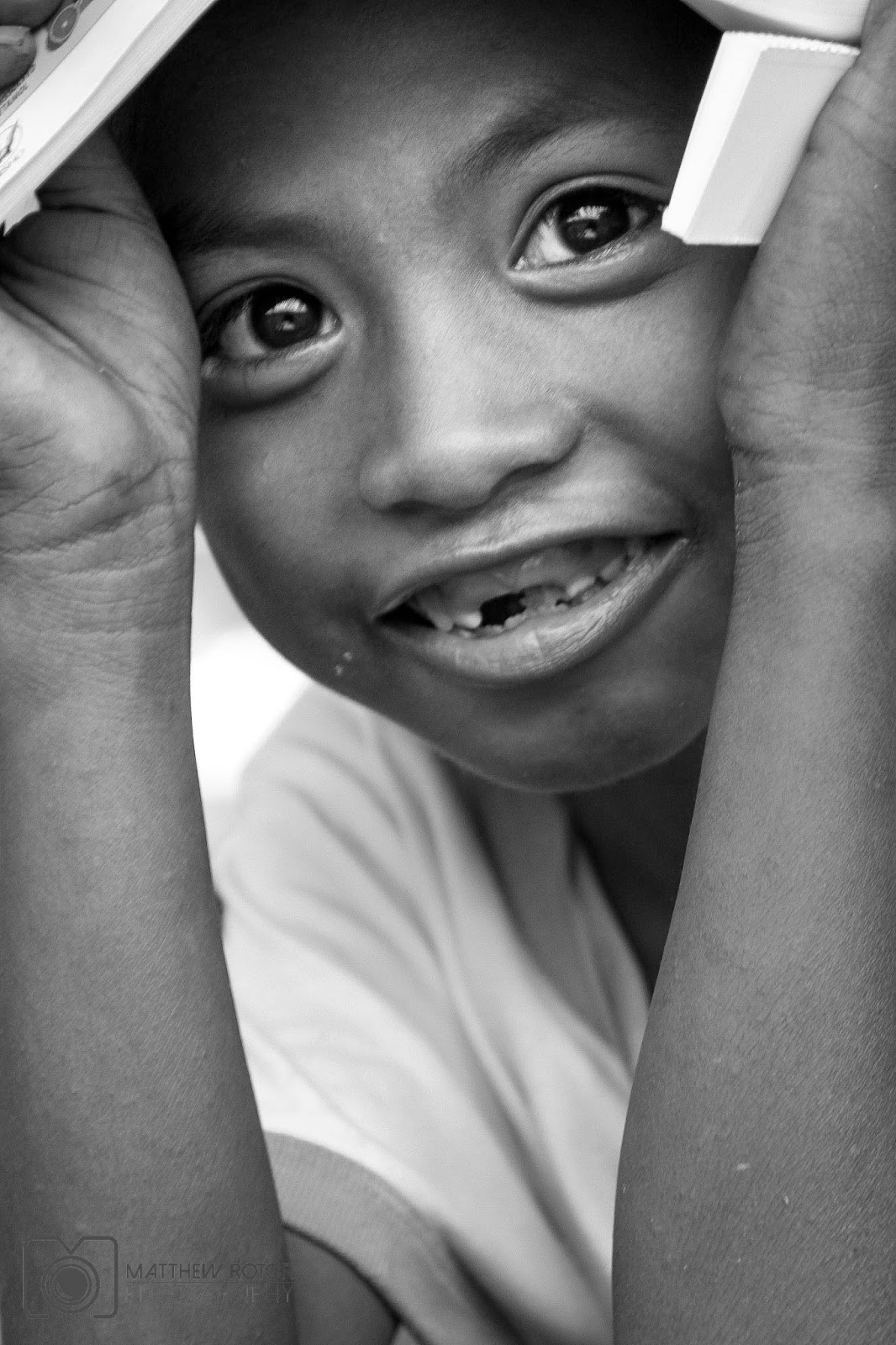
             KEYHOLE OF LIFE
                        Through a keyhole
a child sees life in its dawn,
eager to walk down its hall   
all on his own.     

 MOTHER AND CHILD II
  
Move over Sir Raphael,
your obra maestra is too pure;
and heaven too far from hell,
and life on earth obscure.

LOAFING
 
                          How time flies into air castles,
   fairyland of the mind at ease;
Loafing old and young at peace
     knell the bells in Idleness.

COMFORT
 
Touch is second to none 
of a loving hand
of an old to the young,
daughter or son.

DOCTOR, DOCTOR, I’M SICK
“Doctor, doctor, I’m sick,” the adage would say,
When threat comes along the way;
Warning unheeded drives the doctor away,
And patient and mother but to pray.

TEAMWORK
 
The gene in action for gregariousness,
evolution at work;
From ants to beasts in the wilderness,
to the ever busy stork.

CHECK-UP
 
 A sound mind in a sound body,
that’s the Spartan way
to be happy, healthy and gay
at any hour of day.

 BEFORE A WALL
 
Whatever lies beyond the wall
wouldn’t this duo care to find,
in the idleness of youth and time;
wait ‘til the wall shall fall -
Mercy! woe to their kind!  ~

Sunday, September 10, 2017

More and more medicinal plants are used for common ailments


Home Gardening 
More and more medicinal plants are used for common ailments
In grateful memory of the late Senator and former Health Secretary Juan M Flavier, author of Alternative Medicine law (Republic Act No. 8423* - "Traditional and Alternative Medicine Act (TAMA) of 1997."


       Dr Abe V Rotor  

1. Mutha – Cyperus rotundus (barsanga Ilk)– a grass-like annual plants belonging to Family Cyperaceae, whose rhizomes survive the dry months to resume growth the following season. According to Salamat Dok (ABS TV program) the rhizome is dried and made into tea, a cure for stomach disorder, fresh rhizome is crushed and applied on wound.  
2. Sampa-sampalokan (Phyllantus niruri), a tamarind-like bush, is an effective cure of kidney trouble and in keeping HIV virus dormant. (Salamat Dok, March 19, 2006)
                              
3. Oregano (Coleus amboinicus) is effective for sore throat and as expectorant. Simply crush the leaves, fresh or blanched, mix with fruit juice or sugar and warm water.  
 
 4. Eucalyptus (Eucalyptus globules labillardiere) or bagras yields oil that smells like Vicks. To prepare a tooth drop, get some 30 fresh leaves that are mature, air dry and grind.  Add ethyl alcohol one-fourth the level of the ground leaves in a glass container. The extract is now ready for use as tooth drop and can be kept for months. When someone in the family complains of toothache all you do is to apply a drop on the aching tooth or dip it in cotton and apply on the affected area.  
1.      for the treatment of skin diseases
2.      it relieves stomachache, applied externally (tapal)
3.      leaf extract essence in soap
4.      fruit made into candy 

5. Angel’s trumpet (Datura sp) is reportedly being used by some people as a poor substitute of marijuana.  The while petals are dried and smoke like marijuana or mixed with tobacco.
                             

*Republic Act No. 8423 - AN ACT CREATING THE PHILIPPINE INSTITUTE OF TRADITIONAL AND ALTERNATIVE HEALTH CARE (PITAHC) TO ACCELERATE THE DEVELOPMENT OF TRADITIONAL AND ALTERNATIVE HEALTH CARE IN THE PHILIPPINES, PROVIDING FOR A TRADITIONAL AND ALTERNATIVE HEALTH CARE DEVELOPMENT FUND AND FOR OTHER PURPOSES

 10 Medicinal Plants Recommended by the Department of Health 
  1. Akapulko (Cassia alata) a medicinal plant called "ringworm bush or schrub" and "acapulco" in English, this Philippine herbal medicine is used to treat tinea infections, insect bites, ringworms, eczema, scabies and itchiness.
  2. Ampalaya (Momordica charantia) Common names include "bitter melon " or "bitter gourd " in English. This Philippine herbal medicine has been found to be effective in the treatment of diabetes (diabetes mellitus), hemofrhoids, coughs, burns and scalds, and being studied for anti-cancer properties.
  3. Bawang (Allium sativum) Common name in english is "Garlic". Bawang is a used in Philippine herbal medicine to treat infection with antibacterial, antiinflammatory, anti-cancer and anti-hypertensive properties. It is widely used to reduce cholesterol level in blood.
  4.  Bayabas (Psidium guajava) - "Guava" in English. A Philippine herbal medicine used as antiseptic, anti-inflammatory, anti-spasmodic, antioxidant hepatoprotective, anti-allergy, antimicrobial, anti-plasmodial, anti-cough, antidiabetic, and antigenotoxic in folkloric medicine.
  5. Lagundi (Vitex negundo) - known as "5-leaved chaste tree" in english is used in Philippine herbal medicine to treat cough, colds and fever. It is also used as a relief for asthma & pharyngitis, rheumatism, dyspepsia, boils, and diarrhea.
  6. Niyog-niyogan (Quisqualis indica L.) - is a vine known as "Chinese honey suckle". This Philippine herbal medicine is used to eliminate intestinal parasites.
  7. Sambong (Blumea balsamifera)- English name: "Ngai camphor or Blumea camphor" is a Philippine herbal medicine used to treatkidney stones, wounds and cuts, rheumatism, anti-diarrhea, anti spasms, colds and coughs and hypertension
  8. Tsaang Gubat (Ehretia microphylla Lam.) - English :"Wild tea" is a Philippine herbal medicine taken as tea to treat skin allergies including eczema, scabies and itchiness wounds in child birth
  9. Ulasimang Bato | Pansit-Pansitan(Peperomia pellucida) is a Phillipine herbal medicine known for its effectivity in treating arthritis and gout.
  10. Yerba Buena (Clinopodium douglasii) - commonly known as Peppermint, is used in Philippine herbal medicine as analgesic to relive body aches and pain due to rheumatism and gout. It is also used to treat coughs, colds and insect bites, 

References: Living with Nature Series AVRotor, Living with Folk Wisdom (AVRotor), Philippine Herbal Medicine (Internet); acknowledgement: Photos from Internet

Friday, September 8, 2017

50 Practical Tips for Functional Literary

Functional literary is today's thrust in grassroots education.
Dr. Abe Rotor

1. Lightning spawns mushrooms, and fertilizes the earth through nitrogen fixation. When lightning strikes, nitrogen, which comprise 78 percent of the air is combined with oxygen (21 percent of the air) forming nitrate (NO3). Scientists call this process, nitrogen fixation or nitrification. Nitrate, which is soluble in water, is washed down by rain. Electrical discharge also aids in the fixation of other elements such as sulfur, phosphorus, potassium, calcium and magnesium into soluble compounds. Common species of mushroom growing in the wild are: Volvariella (rice hay or banana mushroom), Plerotus (abalone mushroom), Auricularia (tainga ng daga), and a host of other wild species.

2. Wounding a tree, like mango, induces it to fruit. It is a practice to wound a tree with bolo to induce it to flower – but will the flowers set into fruits? There were five callers; one answered no; the others, yes. Answer: In most instances yes, but severe and repeated wounding may eventually kill the tree or shorten its life.


3. What seaweed is highly regarded, in fact it is called “food for the gods”? Answer: gamet (Ilk) or nori (Porphyra sp) which is cultured in Japan.

4. Lighted candle drives flies away. It is a practice to wound a tree with bolo to induce it to flower but will the flowers set into fruits? There were five callers; one answered no; the others, yes. Answer: In most instances yes, but severe and repeated wounding may eventually kill the tree or shorten its life

5. Kapok laden with pods means there’s going to be a poor harvest.
Ceiba pentandra, or cotton tree, has large secondary roots to compensate for its lack of primary root that can penetrate the deeper source of water. Nature endowed this plant with fleshy trunk and branches to store large amount of water for the dry season. Insufficient rains or early onset of summer triggers flowering, as it is the same case in many species subjected under stress. Thus a fruit-laden kapok tree is an the indicator of poor harvest farmers rely on. It has been observed that a bumper crop of kapok fiber (mainly used for pillow fillers), occurs during El Niño, a climatic phenomenon characterized by prolonged drought.

6. Ring around the moon means a storm is coming.
High humidity in the air causes an optical illusion of a halo around the moon. It is also observed around bright stars. This means the air is heavily laden with water vapors, which is potential rain. Everything is still, not a breeze is felt. There’s an uneasy feeling. Take heed if the barometer reading drops.

7. Red and gray sunsets are signs it’s going to rain. Or a storm is coming.
High relative humidity builds clouds. Suspended water vapors reflect the rays of the setting sun red, orange and crimson in many shades and hues, while the thick clouds form a gray overcast.

8. During full moon crabs are lean.
Crabs feed in the moonlight. They are mainly saprophytic, subsisting on dead organisms, but they are also great hunters and predators. They become fat in preparation for the new moon, living on their food reserve during the dark nights. That is why crabs are fatter just before new moon.

9. In the northern hemisphere a typhoon or storm moves in a circular manner. Is it (a) clockwise, or (b) counterclockwise? There were four callers, two answered clockwise, while the other two answered counterclockwise. The answer is counterclockwise. In the Southern Hemisphere, it is clockwise. This is due to the rotation of the earth influenced by the Corriolis Effect.

10. Land and sea breeze occurs alternately. On a fine day, at around 10 o’clock in the morning, breeze starts to build up. What is the direction of the breeze? (a) from land to sea or (b) sea to land? Five called up, only one got the correct answer – a.
Explanation: Land absorbs heat faster than water does. Since warm air is lighter than cool air, it rises and the cool air from the sea blows in. In the late afternoon and early evening, air movement is exactly the opposite. Land cools off faster than water does, so that the cool air above the land blows out to the sea to replace the rising warm air. (sea breeze). This is the reason many people put up homes along coastlines, and why big cities are located between land and sea, among other reasons. (Manila, Cebu, Davao, Vancouver, New York, Tokyo, Hongkong, etc).

11. Without tasting it, you can tell if lemonade is already sweet or it still needs more sugar. If the seeds of calamansi float it means you need more sugar – true or false? Of the seven callers three got the right answer.

12. In the open sea, where big fish eat small fish, the accumulated pesticide residues and toxic metals is mostly concentrated in the (a) liver, (b) flesh or muscle, (c) fat tissues. Of the seven callers, 3 got the right answer – liver, while 3 answered flesh or muscle. Even fish in lakes and rivers where there is heavy pesticide and fertilizer application carries the poisonous materials mostly in the liver. This is true to animals, domesticated and wild because of toxic wastes they can pick up from agriculture and industry.

13. Which of these families of vegetables is the most sprayed? Cabbage family (Crucifers), Bean family (Legumes), Tomato family (Solanaceae). Squash family (Cucubits)
Answer: Cabbage family which include pechay, lettuce, cauliflower, and broccoli is the most sprayed. Of the seven callers, 5 got the right answer, one answered legumes and one, Solanaceae. All these families of plants received variable amounts of spray chemicals.

14. Crabs – alimango, alimasag, talangka – are fattest during (a) new moon, (b) full moon, (c) all phases of the moon. There were four callers, and no one got the answer, which is new moon. During full moon crabs are lean. Crabs feed in the moonlight. They are mainly saprophytic, subsisting on dead organisms, but they are also great hunters and predators. They become fat in preparation for the new moon, living on their food reserve during the dark nights. That is why crabs are fatter just before new moon.

15. Spirulina is the oldest living vegetable, a one-celled and blue green? Three callers got the term right. The name is Spirulina, meaning small spirals because this blue-green alga appears like a spiral under the microscope. It is Dr. Domingo Tapiador, a former UN-FAO expert who propagated the use of Spirulina in the Philippines and around the world.

16. What is the name of fatless fat in the US market? Olestra. Three callers answered it right. Olestra is a large molecule made up of 7 or more fatty acids around a molecule of glyceride; while normal fat is made up of three fatty acids around a molecule of sugar. Because it is too large, olestra is not absorbed by the small intestine so that it goes straight right through, oftentimes causing embarrassment. Bioethics: Don’t overindulge in food – it causes obesity while it exacerbates starvation and poverty. The problem today is that “half of the world is starving while the other has simply too much food.” (Susan George)

17. What ocean is the ring of fire located? (a) Pacific, (b) Atlantic, or (c) Indian Ocean. There were 5 callers and all got the right answer – Pacific Ocean. The ring of fire, also known as seismic belt is actually a crack of the earth’s crust shaped like a circle that covers mainly southeast Asia – beginning on New Guinea, Indonesia, Philippines, Japan, up to Alaska, down to Oregon in the US (Mount St. Helens) and along the fringes of California to Mexico then to Middle America and crossing the hundreds of Islands in the north and south Pacific and finally reaching Australia. Most earthquakes and volcanic eruptions happen along the ring of fire.

18. There are animals that remain dormant in summer (aestivate) as well as in winter (hibernation). How do we classify the dormancy of mudfish (dalag) ensconced under the mud in carabao wallows? There were 6 callers; two got the right answer which is aestivation

19. When you are angry, does the pitch of your voice go (a) up, (b) down, or (c) remains the same? There were six callers, 3 answered (a) - higher pitch, and the other three, (b) lower pitch. None answered (c) pitch remains the same

20. What is the fastest growing plant, its stem can grow up to 2 meters or more in a day? Answer: Bamboo There were four callers – two got the answer right, one answered kamote tops, and another squash. Other plants grow also very fast such as ube, but none can surpass the bamboo’s rate of elongation..

21. Botanically speaking, is peanut a (a) root, or (b) fruit? Of the eight callers, only two got the answer correct – fruit. Peanut is a product of pollination and fertilization. The flower is bright yellow which after it is pollinated and fertilized will form a juvenile pod that penetrates into the ground and there it fully develops into a nut which we harvest after a month of so.

22. The queen termite can grow to a size of a finger (a) yes (b) no There were six callers, four got the answer correctly. Yes, the queen termite can grow real big. For ceratin species, the queen can even be larger. It is full of eggs, laying all the time to keep the population of soldiers and workers.

23. A macapuno coconut tree usually bears (a) all nuts macapuno, (b) 50-50 macapuno normal nuts, (c) only few macapuno, most are normal nuts. There were five callers, 3 got the answer correct. Only few nuts in a single tree are macapuno. However, UPLB has developed a technique to produce more macapuno nuts in a sigle tree. Macapuno is a diseased condition caused by a virus which fortunately is not harmful to humans. It was Dr. Gerardo Ocfemia, a professor of mine studied the coconut diseases among them the nature of the macapuno nut.

24. Bringing salt under a sour fruit-bearing tree will cause the fruits to fall. True (a) False (b) Answer: Naturally. What goes better than a pinch of salt when eating juvenile sampaloc, kamias, kasoy or green mango?

25. Old folks tell us that before a sea turtle is slaughtered it cries. Is this really true? True (a) False (b) Seven listeners called up, and except for two, they believe the story to be true. The scientific explanation is that a sudden change in environment activates the tear glands to secrete fluid and prevent the eyes from drying up, which we attribute as tears. Such a sight draws pathetic feelings that may save the life of the fated creature. Because sea turtles are endangered species, their tears mean much more to the fate of man. Analogously, “the bell tolls, but tolls for thee.”

26. How do we know if honey is pure? Pure honey does not solidify if refrigerated. If adulterated the sugar will form into crystals. How about vinegar? Natural vinegar is soothing to the nostril, while glacial acetic acid is sharp. Natural vinegar improves with time; glacial acetic acid loses its strength. Glacial acetic acid is banned as food; it is for industrial use only.

27. When buying bagoong the patis may be found at the top (a), at the middle (b), or at the bottom (c). Which one indicates the best kind of bagoong? Answer: when the patis layer is clearly on top.

28. Do not arrange your bed with your head pointed north, otherwise blood will be drawn to your head causing headache and hypertension. True or False? Only one of the four callers believed in it. There is not evidence that the magnetism of the North Pole will have this reported deleterious effect.

29. Antibiotics is not effective in treating cold. cough, and flu. Of the six callers, three believe it is effective. Antibiotics kills only bacteria – not viruses. Flu is cause by virus.

30. Hybrid corn, hybrid rice, hybrid cattle are not GMOs. Of the seven callers, only one got the wrong answer. Hybrids are not GMO; they are products of the conventional breeding process involving the union of the male and female gametes

31. June 22 - Today is the longest day in the northern hemisphere. Is it the same as in the southern hemisphere? Is it also summer in Australia or in New Zealand? Eight callers got the answer right. Seasons in the southern hemisphere are exactly the opposite with those in the northern hemisphere because of the tilting of the globe.

32. The right brain is for creativity while the left is for reasoning, True or False. Of the seven callers two got it wrong. The left brain is for reason and the right for imagination and creativity

33. What is the specialized tool in teaching that delivers a lesson using animals as characters? Who is the great teacher who used this teaching tool? Answer: Fable and Aesop

34. What insect has the most powerful digestive system; it can even feed on natural cellulose? There were 9 callers – 6 got the right answer; 3 answered ant, housefly and locust. Answer: termite. Termites live on wood and other natural cellulose which is digested by protozoa living in their digestive tract while the termite harbors them in return – a relationship developed through co-evolution.

35. How do you know if a diamond is real? Of the six callers, two got the answer correctly. Other answers are: strike the diamond with hammer (It should not break), look at it against the light and creates a prism, diamond emit a bright blue color. Thje right answer is, real diamond scratches glass. That is why glass cutters are made up of diamond in the sun. Diamond-tip cutters and drills last longer. Only diamond can cut diamond because it is the hardest matter on earth. Thus its dust is used to cut itself.

36. What is the kind of fish Christ blessed, which multiplied - and together with bread - fed the people (multitude) assembled around Him on the shore of Galillee? It is the same fish the fishermen caught in abundance when He instructed them to cast their net at the other side of the boat after a catchless night in the Sea of Galillee? Answer: Tilapia (T. nilotica). It was Dr. Deogracias Villadolid who introduced tilapia in the Philippines in the fifties. Today, like the biblical story, it is tilapia that is most abundant and affordable fish for Filipinos. Four callers got the correct answer; one answered bangus, our national fish.

37. Dogs show intelligence over and above mere instinct. A scientist by the name Pavlov tested it this way: Every time he gave food to his dog, he would ring a bell. After sometime, just by ringing the bell the dog began to salivate. What do you call this kind of learning? Answer: Conditioned learning. Does it also apply to humans? Answer: Yes

38. This is a favorite dish of Ilocanos known as “jumping salad.” What is it really? There were five callers who got the correct answer. Except one who said he learned about this rare dish from a friend, the callers apparently Ilocanos, said they have actually tasted jumping salad. This dish is prepared from newly caught small to medium shrimps from the estuaries and rivers, and while they are still very much alive are served right there and then with calamansi and salt, momentarily agitating the fated creatures. Pronto! The shrimps, on removing the cover, frantically jump out of the plate, save the dazed one. You should be skillful in catching them from the table (and even on the floor) deftly picking them by the head, taking caution so as not to get hurt by their sharp rostrum. You can imagine the danger you face as the creature makes its last attempt to escape. You must get a firm hold before putting the struggling creature into your mouth, tail first and quickly bite off the head, severing the sharp dagger in your hold. The creature wriggles in the cave of your mouth and you can actually feel its convulsion fading as it undergoes the initial process of digestion. Being an Ilocano myself, eating jumping salad is an adventure and rarely do you experience having one nowadays, unless you are living near the sea, river or lake, or a good friend brings live shrimps to town in banana stalk container to keep them alive. Try it; it’s one for the Book of Guinness.

39. Only the female mosquitoes bite for blood. Males feed on plant juices and exudates. Four out of six callers got the answer correct.

40. The British named their bombers and reconnaissance planes in World War II, Mosquito, so with the Italians for their anti-tank rockets – a tribute to the superb agility of this pesky minutia.

41. It’s a word for thrift, frugal, named after a people who actually practice it. It’s also a term which means KKB (kanya-kanyang bayad). Answer: Dutch. The Dutch are real frugal people mainly because of the extreme condition of their environment – “a land borrowed from the sea.” They are however very progressive and their country is among the most developed industrialized countries in Europe. The counterpart of the Dutch when iy come to frugality are the Ilocanos.

42. He is the teacher of Alexander the Great who said, “It is easier to make war than peace. Always strive to make peace.” Answer: Aristotle Of the six callers, one answered Socrates, another Plato, while the rest got the correct answer.

43. Who is the most famous violin maker in the world? There are only very few violins he made which carry his name. Lately the price paid for a 300-year old original violin he made was $3.5 million, the highest ever for a musical instrument sold in auction. Of the seven callers, four got the correct answer

44. What is the world’s number one vegetable? Answer: Onion, a close relative of garlic, Family Liliaceae.

45. Can you breed a carabao with a tamaraw and make a hybrid? True or false Answer: No. The tamaraw has completed speciation (the process of species formation which takes hundreds if not thousands of years), having originated with a common stock with the carabao. One of the tests whether or not related organisms have reached complete speciation is that they have lost the ability of interbreeding.

46. The three scientific breakthroughs are
• Splitting of the atom (nuclear power, atomic bomb);
• Invention of the microchip (electronics, computers); and
• Cracking the DNA code (Human Genome Project, genetic engineering).

47. It is a laboratory procedure in separating and reading the chromosomes of man (and other organisms, too). Answer: Karyotyping. This method has been used in determining chromosomal aberrations and gene- as well as sex-linked abnormalities. What is the name of a bold project to map the chromosomes, and therefore the genes and the traits they carry, in man. Answer: Human Genome Project (HGP). In the near future man will be carrying his “gene map” which will show his genetic makeup to doctors, employers, insurance agents, to his chosen mate. HGP opened a new field of medicine – Gene Therapy. Even before a disease is expressed, through the gene map, the defective gene undergoes repair.

48. What wildlife species was named after Rizal? Describe this creature. Answer: Flying lizard – Draco rizali - a small relative of the monitor lizard that glides from tree to tree. Rizal found this in the forest of Dapitan where he was exiled.

49. There are persons prone to mosquito bites. Generally, they are those who
• Don’t take a bath regularly
• Wear dark clothes, especially black,
• Have relatively higher body temperature,
• Have relatively thin and tender skin,
• Love to stay in corners and poorly lighted places, and
• Are not protected by clothing, screen and lotion
Aedes mosquito, dengue vector 
50. Dogs eat grass for self-medication, so with parrots eat clay. Dogs eat grass – it sounds strange. But they do once in a while to get rid of toxins from their body. Thus we see them browsing on grass and herbs which induce vomiting. These also act as expectorant and laxative. Many birds, like the parrot, eat clay after eating poisonous fruits. ~