Usapang Bayan October 6, 2026
Literacy, Education and Values in 7 Stories
"It's time to move up from bedtime to wakeup call stories."
Dr Abe V Rotor

(Malala Yousafzai is a Pakistani female education activist, and producer of film and television. She is the youngest Nobel Prize laureate in history, receiving the Peace Prize in 2014 at age 17, and is the second Pakistani and the only Pashtun to receive a Nobel Prize.)
1. Functional Literacy: Story of Pedro and Jose2. “I cannot feel.” - Computer3. The Mystery Child4. Parable of the Five Trees5. Death of Narcissus6. Sibyl’s Wish7. The Fourth Wise ManANNEX A - Effective Teaching through Story Telling
ANNEX B - AI Overview on Literacy, Education and Values
World Teachers' Day has been celebrated since 1994. It is a day to celebrate how teachers are transforming education but also to reflect on the support they need to fully deploy their talent and vocation, and to rethink the way ahead for the profession globally. UNESCO
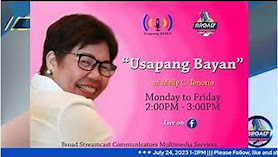

Ms Melly C Tenorio, host, and Dr Abe V Rotor, Guest
1. Functional Literacy: Story of Pedro and Jose
Here is a story* about Pedro and Jose I read in my elementary days.
One day Pedro approached his boss and complained why his partner Jose is receiving a higher pay when both of them have the same nature of work.
“Ah, Pedro,” sighed the boss with a sheepish smile. “You will come to know the reason.”

After some time, Pedro returned, “Someone is looking for you, sir.”
“Ask who he is.” Pedro went to the gate again, and reported back.

“He is a certain Mr. Carlos, sir.”
“Ask him what he wants.” Pedro went to the gate for the third again, and then returned.
“I did not get it well, sir. But he said he sells home appliances…promotion, something like that. He would like to meet the manager.”
“Tell him we do not need appliances.”
The next day the doorbell rang again. This time, both Pedro and Jose were in the office of their boss. Jose promptly rose from his seat to attend to the visitor at the gate. After a while he returned and reported back.
“Our visitor is an insurance agent, sir. He was offering insurance for our building, and knowing that it is already covered, I told him we do need his offer for the moment. He gave me his business card.” Jose handed the card and excused himself for another call.
“Now you understand,” said the boss to Pedro with a sheepish smile.
2. “I cannot feel,” Computer
A teacher gave a home assignment to her students: first, what is love, and second, what does it feel to be truly in love.
A teacher gave a home assignment to her students: first, what is love, and second, what does it feel to be truly in love.

So Johnny or Jon-jon, as Juan likes to be called, typed the first question: What is love? Immediately the computer responded with a hundred definitions. And he chose the easiest and shortest one. It’s just an assignment, he thought. His teacher may not have time to read it. She is loaded with school activities other than teaching.
Next, he entered, What does it feel to be in love? The computer printed: WAIT. Johnny was impatient. He had to hurry up, otherwise he’ll miss his favorite TV program. He tried again. The computer finally answered: I CANNOT FEEL.
And here we have our youth with their best friend the computer, who cannot feel, spending hours every day, 365 days a year, and most likely throughout their lives.
We seem to be locked up with a robot, our intelligence is no longer a natural one. We are becoming slaves of the robot. Modern industries are run by robots (automation). War is fought by robots (drones). Robots beat us in Chess. They steal our time, peep into our room, and trace us on the street (CCTV). They rob us of our privacy. We have indeed enslaved ourselves with our inventions, a new kind of slavery.
Computers gather and store huge amounts of information, information we do not really need, mixing up important and trivial, genuine and fake information materials. This is the newest kind of pollution today – information pollution or “infollution.” We are sinking into a quagmire of information waste alarmingly increasing every day. We lose our sense of judgement and priorities. Computers cannot truly think and feel, they have no capacity for love, and faith. Without love and faith we break our interrelationship as humanity, the interconnection of the human spirit and creation, and our sacred relationship with God.
3. The Mystery Child

Finally the drawing was completed and the participants returned to their seats. What make a dream house, an ideal house? A lively “sharing session” followed and everyone was happy with the final drawing – indeed a dream house.
Just then a child was passing by and peeped through the open door. He saw the drawing of the house on the blackboard and entered the classroom, and stood there for a long time looking at the drawing. The teacher approached him, the participants turned to see the unexpected visitor. The child pointed at the drawing on the board and exclaimed, “But there are no neighbors!”
In the same village there was a similar workshop exercise, but this time the participants were to draw an aerial view of an ideal community. The participants formed a queue before the blackboard and after an hour of working together, they came up with a beautiful drawing of a community. There are houses, a church, a school, village hall, and plaza. A network of roads and bridges shows the sections of the village. People are busy doing their chores, especially in the market place. Indeed it appeared as an ideal village.
“What constitute a community?” It was a lively discussion and everyone was so delighted with their “masterpiece” that the teacher even wrote at the corner of the blackboard “Save.”
Just then a child was passing by. When he saw the drawing on the backboard through the open door, he entered the classroom. He went close to the drawing and looked at it for a long time. The teacher and participants fell silent looking at their very young guest.
The child exclaimed, “But there are no trees, no birds; there are no mountains, no fields, no river!”
Some days passed since the two workshops. No one ever bothered to find out who the child was or where he lived. Then the whole village began to search for the child, but they never found him – not in the village, not in the neighboring village, not in the capital, not even in the church. Not in any known place.
Who was the child? Everyone who saw him never forgot his kindly beautiful and innocent face, bright eyes, radiant smile, and pondered on his words which became the two greatest lessons in life. ·
- But there are no neighbors of the beautiful house!
- But there are no trees, no birds; there are no mountains, no fields, no river in the ideal community!
4. Parable of the Five Trees
Trees, like humans, also talk. They talk to one another everyday.

Actually the breeze passing through their leaves carry their conversations and even their songs and messages.
Parable of the Five Trees in acrylic by AVR
Only that we do not understand what they are saying, so we can only make inferences. For example, the rustling of their leaves and their outstretched branches touching one another, or some trees leaning to get close to others undoubtedly vouch this belief to the level of phenomenon.
The communication of trees runs through a network that enhances the unity and harmony of the ecosystem they form. Sometimes this kind of communication is perceived as queer, unintelligible sounds which made our ancestors believe there are spirits guarding the place like the deity Maria Makiling guarding the forest that is named after her.
Old folks advise us trespassers just to utter reverently "Bari-bari... Or tabi-tabi, po." when going through the forest or thicket.
One day five juvenile narra trees were engaged in a conversation.
Said one, "When I grow up and reach my fate to be cut down, I wish that I be made into a beautiful bed fit only for a king or queen."
The four trees began to have their own wishes, too.
Said the second narra, "I would like to be the mast of the tallest ship that travels fast and wide on the ocean."
Said the third, "I will make a fort, a strong fort, no invader can break through."
The fourth narra tree took sometime to think, then said, "I'll be a tower to carries a big bell."
The fifth was the last to speak, but not outwitted. "Oh, in my case I would like to give all my wood to make the biggest temple of worship."
Years and years passed, and the trees finally reached full maturity. The woodsmen came and cut them down.
Guess what happened to the trees. Did all their wishes come true?
o The first tree did not become a beautiful bed, but only a manger, actually a feeding trough in a secluded barn.
o The second tree did not become part of a tall ship, it was made into a simple boat.
o The third tree was not made into a strong fort, only a stem of it the size of a pencil became a writing tool of sort.
o The fourth tree was not made into a belfry, but just one branch of it was made into a fine shepherd's crook.
o The fifth tree failed to provide materials to build the largest temple of worship, two limbs were made into a cross.
So when Christ came into this world, he was born on a manger. It was comfortable enough on a wintry night?
When He became a shepherd, He looked for a crook and found a sturdy one to tend His sheep.
As a Preacher He rode on a dinghy on which he delivered his sermons and told parables before the throng along the shores of Galilee.
When people were about to stone a sinner to death, He took a stick and wrote something on the ground, and on rising said, "He who has no sin cast the first stone." No one did.
Alas! When Christ was condemned to die, He carried a wooden cross and on it he was crucified. The cross became the symbol of Christianity.
When I went to see for myself the alleged part of the forest where the five trees once grew, I found nothing but grass. There was complete silence as a beam of light from the sky shone on the spot where I stood. ~
Acknowledgement with gratitude: Parables in the Barrio.by Dr Juan Flavier Internet images, About Malala Yousafzai. ~
5. Death of Narcissus
Narcissus, a very handsome man in his youth, loved himself so much he spent hours day after day looking at his reflection on a lake, until one day he fell and drowned. The nymph Echo who was deeply in love with Narcissus but was never reciprocated, wept together with other nymphs over the dead Narcissus. So with the animals in the forest, the wind, the trees, and all those who had known him, except, the lake.

“Why aren’t you weeping?” the nymphs asked the lake. The lake answered, “It’s because Narcissus never saw me, he saw only himself. Every day he came to see his beautiful face, but he never saw a bit of beauty in me - I, who gave him the reflection of himself.”
This story tells us of a common weakness of men and women today, a malady doctors call Narcissism or Narcissistic Syndrome. Time magazine featured the millennials in a special issue as Me, Me, Me Generation. The relevance of this story to you is far reaching. Don’t be an “I” specialist. Never adore yourself. Don’t be conceited. Learn to reciprocate, especially in matters of genuine relationships, of true love. Had Narcissus reciprocated the love of the nymph Echo, and remained humble with his beauty the story wouldn’t be a tragic one, but one with an ending, “and they lived happily ever after.”
The lessons that can be derived from these stories, I believe are important in facing 12 major challenges of our ultramodern world, or postmodern world, as may be referred to.
- · Threat of Nuclear Armageddon
- · Global Terrorism.
- · Drugs and Vices
- · Territorial Conflicts
- · Tragedy of the Commons
- · Environmental Degradation.
- · Loss of Privacy
- · Auto-toxicity.
- · Amorality and Neutral Morality
- · Institutional Breakdown
- · Pandemic Diseases
- · Consumerism
I have another story to tell, also from Greek mythology. It’s about Sibyl, a version from the original myth.

Sibyl was a young, beautiful woman of high intelligence; in fact she was regarded as a prophet. One day Apollo, god of music and intelligence, asked Sibyl. “What is your wish in life?” Shy and naive Sibyl simply declined. “Come on Sibyl, every mortal has a wish.” “Well, if you insist, I wish to live forever.” Apollo knew she wanted to be a goddess. “Oh, foolish Sibyl, but your wish will be granted.”
So Sibyl lived on and on. But she was losing her youthfulness and beauty, because she inadvertently missed in her wish the word young. “I wish to live young forever.”
One day, a young man met Sibyl, now long past her youth, a very old woman. “And what do you wish this time Sibyl?” Wryly she said, “I only wish to die.”
How many mortals wish to be immortal? Corpses in cryogenic tanks await science to resurrect them in the future. The pyramids and other ornate tombs were built for the afterlife. People search for the fountain of youth believed to be somewhere in Shangri-La in Tibet.
The message about Sibyl is clear: “We – all of us – pass this way but once.” A missionary once said, “I shall pass this way but once; any good that I can do or any kindness I can show to any human being; let me do it now. Let me not defer nor neglect it, for I shall not pass this way again.”
7. The Fourth Wise Man

I have yet another story. Have you heard of the Fourth Wise Man, a novel written by Henry van Dyke. It is about a fourth “king” who lost his way and got separated from his three friends – the three wise men or three kings who succeeded in seeing the new born Holy Infant, whom they lavishly gave personal gifts. After that they were never heard of again. On the other hand, Artaban, their lost companion, never saw the Holy Infant. All along the way he did not ignore people in need of help, in the process spent all the gifts intended for the Holy Child. He had “wasted” 33 years.
Unexpectedly news reached him that a holy man was condemned to die on the cross. He gathered his last strength and went to Jerusalem. There he saw the person he was looking for nailed on the cross on top of a hill (Golgotha). Artaban was gravely shocked and suffered a heart attack. As he lay in a corner dying Christ appeared to him. “I am very sorry, my Lord, I lost my way. I have nothing to give You now.”
“You have given me more than your gifts. You have not lost your way or time. For I was hungry and you gave me something to eat, I was thirsty and you gave me something to drink, I was a stranger and you invited me in. I needed clothes and you clothed me, I was sick and you looked after me, I was in prison and you came to visit me. What you have done to the least of your brethren you have done it to me.”
The fourth wise man took his last breath; his face turned heavenward bearing a divine smile of peace and fulfilment.
If you can’t be one of the three wise men who paid a visit to the holy Infant, then be that fourth wise man. Be like Albert Schweitzer who became a missionary to fill up what the three wise men failed to do.
Think and aim high to the point of idealism. Aim at a goal, more than that, aim at a cause. Dedicate your work to that noble cause, live your life for it. Peace, integrity, freedom, have no measure, because they belong to the realm of the human spirit. It is said that great men and women fought not only for their philosophy in life, but for their faith. Our own national hero Jose Rizal fought for freedom and dignity of the Filipinos, Mahatma Gandhi for independence of India, Abraham Lincoln for the abolition of slavery, Mother Teresa, now a saint, for love for the poorest among the poor.
---------------------
"Philosophy takes us to the highest plane of reason, whereas theology
takes us to the highest plane of faith." - avr
--------------------

When Albert Einstein, the greatest mind in modern times, was asked, “What else can you not understand, Dr. Einstein?” The man behind the splitting of the atom, and adjudged Man of the Twentieth Century, answered in all humility, “I understand just a little about the atom; all things in the universe, only God can understand.” It is a manifestation of deep faith in the Higher Principle, over and above that of science.
On the other side of the coin, when Pope Francis was bombarded with questions on ethico-morals confronting our postmodern world, he answered calmly and hushed the audience, “Who am I to be your judge?” And he led the faithful to a prayerful meditation. It is deep wisdom humbling everyone with the biblical lesson, “He who has no sin throws the first stone.”

Lesson: We are all storytellers. Everyday we love telling, and listening to stories. Stories come in anecdotes, fables, parables, folklore, humorous quips, and simply short accounts of an experience or about the surroundings. But how good are we in this art of story telling? Our aim is to hone this talent and to express it well.


In the context of Dr. Abercio v. Rotor’s School and related blog writings, the phrase “literacy, education and values” is a core educational mission statement that outlines the three pillars of the school’s philosophy and goals.
1. Literacy
Here, literacy goes beyond basic reading and writing skills. It refers to the ability to access, interpret, and use information effectively aross different contexts — including digital literacy, critical thinking, and communication skills. In the school’s vision, literacy ensures that students can understand and apply knowledge in academic, civic, and personal life, preparing them for both formal education and real-world challenges Github.
2. Education
This component emphasizes comprehensive, quality learning that is not limited to academic subjects. It includes:
In the blog writings, “education” is often linked to the school’s commitment to holistic development — equipping students with the knowledge, skills, and attitudes needed to thrive as individuals and citizens Github.
3. Values
Values refer to the moral, ethical, and social principles the school aims to instill in its students. These may include:
In the context of Dr. Abercio V Rotor’s school, values are the guiding principles that shape the school culture, ensuring that learning is not just about acquiring knowledge but also about becoming responsible, ethical, and socially conscious individuals Github.
Why these three together?
The combination of literacy, education, and values reflects a holistic educational approach:
In short:
“Literacy, education and values” in Dr. Abercio v. Rotor’s School’s context means a balanced focus on skill acquisition, quality learning, and moral development, all working together to form well-rounded, responsible, and informed citizens Github. Academia.edu
On the other side of the coin, when Pope Francis was bombarded with questions on ethico-morals confronting our postmodern world, he answered calmly and hushed the audience, “Who am I to be your judge?” And he led the faithful to a prayerful meditation. It is deep wisdom humbling everyone with the biblical lesson, “He who has no sin throws the first stone.”
ANNEX A - Effective Teaching through Story Telling
Yes, you can be a good story teller.
Dr Abe V Rotor
Living with Nature - School on Blog [avrotor.blogspot.com]
Lesson: We are all storytellers. Everyday we love telling, and listening to stories. Stories come in anecdotes, fables, parables, folklore, humorous quips, and simply short accounts of an experience or about the surroundings. But how good are we in this art of story telling? Our aim is to hone this talent and to express it well.
Jose Rizal and the moth. He wrote My Last Farewell with the symbol of the moth which singed into the flame – martyrdom.
Guy de Maupassant, French short story writer. His works are wide read in school in different languages. Ernest Hemingway, novelist and short storyteller, Nobel Prize awardee. Camilo Osias books were extensively used in the elementary schools during the Commonwealth and Post Commonwealth Period. Abraham Lincoln, Father of American Anecdotes.
Story telling is an art. Strive for the “state-of-the-art of story telling”
It is characterized by
• Witticism
• Humor
• Inspirational, positivism
• Informative and educational
It is a combination of these elements that make a good story, depending on the topics and application.
Application
• As a speaker/ resource person
• Presiding in meetings and conferences
• Informal gatherings /parties
• Writing, news, features
• Broadcasting – radio and TV
Stories are used as tool in
• Driving a point indirectly, diplomatically
• Hitting the nail on the head, so to speak
• Friendly advice and reminder
• Admiration of a person, institution or place
• Tapping a shoulder in words, kudos, congratulations
A good story / anecdote is never
• Moralism (Even a homily should strive not to proselytizing)
• Criticism, especially on persons
• Bulgarism – use kind words be, discreet, dignified
• Familiarism – not all too familiar topics
• Fatalism – bato bato sa langit syndrome
• Propagandism – like politicizing
Selected Anecdotes of the Great

Christopher Columbus waited for seven long years for the King of Spain to decide on his plan to search a new land West. King of Portugal refused to help him. Henry the VII refused. Charles VIII of France also refused. All hopes gone … then the queen of Spain through Juan Perez her chaplain, sent money to buy clothes and hose, to see the Queen Queen Isabella received Columbus. Condition to be promoted to Admiral and entitled one-tenth of all the wealth, He was refused. A messenger overtook him. And Columbus once more went to the Court . Got the nod of the King and Queen but actually cost them nothing. Port of Palos under displeasure for unpaid taxes and liable of heavy fines. Palos was ordered to provide Columbus his needs. Three ships and men from the town. Came the Pinzon brothers provided Pinta, Nia and Santa Maria.
Magnetic North – is not the true north, and its direction varies from different places on the earth’s surface. But Columbus told the worried crew that it’s not the compass that is wrong but the north star which moved from time to time. And the sailors were satisfied – and they headed into the unknown. It took five long weeks to see land. West Indies (Columbus believed it was part of India) part of Cuba.
David Livingstone – After 4 and 1/2 years no news about him, thought to have been dead, a young man by the name of Stanley was sent by an American newspaper. There at Ujiji, he found Livingstone. Stanley took off his hat.
“Dr Livingstone, I suppose?”
“Yes,” he said with a kind smile, lifting his cap slightly and shook hands. It was one of the most famous meetings in history.

David and Goliath the boy. Everyday for 6 weeks Goliath was challenging the Israelites to a duel. David arrived carrying food for the soldiers. David was not afraid and said, “Who does this great boaster think he is?” His brothers scolded him. But Saul the king heard him. David offered to fight Goliath.
"But you are not even a soldier."
"Back home I took care of my father’s sheep... fought lions, bears. I chased and killed them."
"But put your armor first." It was too big and heavy. David took his staff and sling, picked five smooth stones from a stream, and walked confidently to meet Goliath.
It was Goliath's last laugh of his life.

Florence Nightingale – In the night hours, sometimes long after midnight, Florence used to walk through the quiet wards to see that all was well, carrying a little lamp to light her way.
Such was her love for her patients. And soldiers loved, even the rough soldiers, used to kiss her shadow as she passed. Thus she was called The Lady with the Lamp.
She received the highest award from Queen Victoria – a diamond brooch with “Crimea, Blessed are the merciful” engraved on it. ~

Napoleon Bonaparte took the crown from the hands of the Pope and he crowned himself as Emperor of France Dec 2, 1804 church of Notre Dame. He owed the crown to no one except himself. His mother shook her head and murmured, “If only it lasts.”
After a series of victories, even after the battle of Trafalgar (combined Spanish and French fleet defeated by Nelson), he tried to govern all of Europe.
He met his defeat at Waterloo in the hands of the Duke of Wellington. Today, Waterloo is the inevitable downfall of a person.

Joan of Arc did not use her sword. She led the attack on New Orleans with shining armor and banner, and rallied the French forces. On seeing her army, the English soldiers were terrified - The Maid, The Maid! Believing in witchcraft, they fled headlong.
Wounded by an arrow in the shoulder at Tourelles after New Orleans, the French soldiers retreated, until she reappeared. And the French won.~
NOTE: These anecdotes were purposely contracted as outline for speech or similar presentation. The reason is to discourage reading before the audience, and to allow spontaneity and flexibility in telling the story.~
It is characterized by
• Witticism
• Humor
• Inspirational, positivism
• Informative and educational
It is a combination of these elements that make a good story, depending on the topics and application.
Application
• As a speaker/ resource person
• Presiding in meetings and conferences
• Informal gatherings /parties
• Writing, news, features
• Broadcasting – radio and TV
Stories are used as tool in
• Driving a point indirectly, diplomatically
• Hitting the nail on the head, so to speak
• Friendly advice and reminder
• Admiration of a person, institution or place
• Tapping a shoulder in words, kudos, congratulations
A good story / anecdote is never
• Moralism (Even a homily should strive not to proselytizing)
• Criticism, especially on persons
• Bulgarism – use kind words be, discreet, dignified
• Familiarism – not all too familiar topics
• Fatalism – bato bato sa langit syndrome
• Propagandism – like politicizing
Selected Anecdotes of the Great
Christopher Columbus waited for seven long years for the King of Spain to decide on his plan to search a new land West. King of Portugal refused to help him. Henry the VII refused. Charles VIII of France also refused. All hopes gone … then the queen of Spain through Juan Perez her chaplain, sent money to buy clothes and hose, to see the Queen Queen Isabella received Columbus. Condition to be promoted to Admiral and entitled one-tenth of all the wealth, He was refused. A messenger overtook him. And Columbus once more went to the Court . Got the nod of the King and Queen but actually cost them nothing. Port of Palos under displeasure for unpaid taxes and liable of heavy fines. Palos was ordered to provide Columbus his needs. Three ships and men from the town. Came the Pinzon brothers provided Pinta, Nia and Santa Maria.
Magnetic North – is not the true north, and its direction varies from different places on the earth’s surface. But Columbus told the worried crew that it’s not the compass that is wrong but the north star which moved from time to time. And the sailors were satisfied – and they headed into the unknown. It took five long weeks to see land. West Indies (Columbus believed it was part of India) part of Cuba.
David Livingstone – After 4 and 1/2 years no news about him, thought to have been dead, a young man by the name of Stanley was sent by an American newspaper. There at Ujiji, he found Livingstone. Stanley took off his hat.
“Dr Livingstone, I suppose?”
“Yes,” he said with a kind smile, lifting his cap slightly and shook hands. It was one of the most famous meetings in history.
David and Goliath the boy. Everyday for 6 weeks Goliath was challenging the Israelites to a duel. David arrived carrying food for the soldiers. David was not afraid and said, “Who does this great boaster think he is?” His brothers scolded him. But Saul the king heard him. David offered to fight Goliath.
"But you are not even a soldier."
"Back home I took care of my father’s sheep... fought lions, bears. I chased and killed them."
"But put your armor first." It was too big and heavy. David took his staff and sling, picked five smooth stones from a stream, and walked confidently to meet Goliath.
It was Goliath's last laugh of his life.
Florence Nightingale – In the night hours, sometimes long after midnight, Florence used to walk through the quiet wards to see that all was well, carrying a little lamp to light her way.
Such was her love for her patients. And soldiers loved, even the rough soldiers, used to kiss her shadow as she passed. Thus she was called The Lady with the Lamp.
She received the highest award from Queen Victoria – a diamond brooch with “Crimea, Blessed are the merciful” engraved on it. ~
Napoleon Bonaparte took the crown from the hands of the Pope and he crowned himself as Emperor of France Dec 2, 1804 church of Notre Dame. He owed the crown to no one except himself. His mother shook her head and murmured, “If only it lasts.”
After a series of victories, even after the battle of Trafalgar (combined Spanish and French fleet defeated by Nelson), he tried to govern all of Europe.
He met his defeat at Waterloo in the hands of the Duke of Wellington. Today, Waterloo is the inevitable downfall of a person.
Joan of Arc did not use her sword. She led the attack on New Orleans with shining armor and banner, and rallied the French forces. On seeing her army, the English soldiers were terrified - The Maid, The Maid! Believing in witchcraft, they fled headlong.
Wounded by an arrow in the shoulder at Tourelles after New Orleans, the French soldiers retreated, until she reappeared. And the French won.~
NOTE: These anecdotes were purposely contracted as outline for speech or similar presentation. The reason is to discourage reading before the audience, and to allow spontaneity and flexibility in telling the story.~
*Lesson on former Paaralang Bayan sa Himpapawid (People's School-on-Air) with Ms Melly C Tenorio 738 DZRB AM, [www.pbs.gov.ph] 8-9 evening class Monday to Friday
-------------------------------
ANNEX - AI Overview/Internet
Meaning of “Literacy, Education and Values"
in Dr. Abercio v. Rotor’s Context
1. Literacy
Here, literacy goes beyond basic reading and writing skills. It refers to the ability to access, interpret, and use information effectively aross different contexts — including digital literacy, critical thinking, and communication skills. In the school’s vision, literacy ensures that students can understand and apply knowledge in academic, civic, and personal life, preparing them for both formal education and real-world challenges Github.
2. Education
This component emphasizes comprehensive, quality learning that is not limited to academic subjects. It includes:
- Formal education (curriculum-based learning in core and elective subjects)
- Life skills and character development
In the blog writings, “education” is often linked to the school’s commitment to holistic development — equipping students with the knowledge, skills, and attitudes needed to thrive as individuals and citizens Github.
3. Values
Values refer to the moral, ethical, and social principles the school aims to instill in its students. These may include:
- Integrity, responsibility, and respect
- Citizenship and community engagement
In the context of Dr. Abercio V Rotor’s school, values are the guiding principles that shape the school culture, ensuring that learning is not just about acquiring knowledge but also about becoming responsible, ethical, and socially conscious individuals Github.
Why these three together?
The combination of literacy, education, and values reflects a holistic educational approach:
- Literacy equips students with the tools to understand and use knowledge.
- Education provides the structured, comprehensive learning experience.
- Values ensure that learning is grounded in ethical and social responsibility.
In short:
“Literacy, education and values” in Dr. Abercio v. Rotor’s School’s context means a balanced focus on skill acquisition, quality learning, and moral development, all working together to form well-rounded, responsible, and informed citizens Github. Academia.edu


No comments:
Post a Comment