
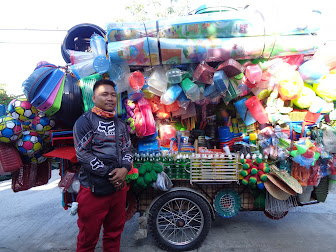
1. The first plastic was made by Alexander Parkes in 1862, after whom it was named: Parkesine. Actually it was an organic material derived from cellulose. Once heated, it could be molded, retaining its shape when cooled.
2. Soon, the first completely synthetic man-made plastic was formulated by a New York chemist, Leo Baekeland, hence the name Bakelite. This material does not burn, boil, melt, or dissolve under any commonly available acid or solvent. It also retains its shape. Bakelite could be added to almost any material, making the new substance more durable, light, heat-resistant and shatterproof. War machinery and automobile manufacturing made use of this new product to great advantage.
3. Other forms of plastics were then discovered. These include rayon (man-made silk), and cellophane (the first glass-clear, flexible and waterproof plastic). These materials have many uses today.
4. By 1920, the “plastic craze” spread out. Du Pont, one of the leaders of the industry developed nylon, replacing animal hair in toothbrushes. By 1940, the world saw the development of acrylic, polyethylene, and many more polymers, which replaced natural materials such as cotton, fiber, wood and steel.
5. DuPont later introduced Teflon, favored for lining cooking utensils for its acid and heat resistant while its non-stick properties make the utensils easy to clean.
6. Dow, another plastic manufacturer, on the other hand, came up with polyvinylidene chloride, better known as “Saran”, a perfect material for food packaging and storage.
7. Polyethylene, introduced in 1933, is currently the largest volume plastic in the world for making soda and milk bottles, grocery bags, and plastic food storage containers. This is the kind of plastic the goat ate and which made her sick. See Part 4 (below): The Case of the Goat that Ate Plastic.
8. There is virtually no end to the discovery of other forms of plastics. We have plastic putty developed by Velcro. This material is similar to rubber, but has a 25 percent higher rebound power. Its property of not being able to maintain a constant shape is compensated by its high flexibility, stretching many times its length without tearing. Initially, it was used in the manufacture of toys, but now many potential uses are seen.
A World Without Plastics?

Today’s world is incomprehensible without plastics. Plastics contribute to our health, safety and peace of mind. They are part of our dwellings, cars, toys, appliances, even body parts such as heart valves and prosthetics. There are countless uses in all aspects of our lives.
On the other hand, the biggest dilemma with plastics is its proper disposal. It has become a major waste handling challenge all over the world. While we see its virtually endless uses, we are also witness to its accumulation exacerbated by its inability to biodegrade. As a result, its rate of accumulation is alarmingly enhanced, creating an issue of concern to environmentalists, and citizens of the world.


1. Plastic sack which has replaced the jute or gummy sack
2. Nylon rope and filament, which have replaced Manila hemp and cotton threads. Filament is used for fish net.
3. Plastic simulated leather used in shoes, canvas and bags. There are other kinds of artificial leather.
4. Styropore for packing and containers, replacing banana leaves, straw and paper.
5. Foam mattresses, slippers and furniture. Natural sponge is now a rare commodity. Foam has replaced coconut coir and kapok.
6. Plastic bottles, jars and containers. Glass is still the best material when it comes to food storage.
7. Plastic sachets, bags and wrappers have largely taken over the use of paper and cardboard.
These plastic materials are familiar to us. We see them at home and on store shelves. They are evidences of our modern, throw-away culture.

While gathering the garbage to help clean up the shore, my students found trapped fish fry in plastic bags. Wanting to find out how this happened, we looked for clues.
We have seen plastic materials stuck at the bottom of reefs preventing juvenile seaweeds from developing. Plastics also trap the polyps of corals, and microsopic zooplankton eliminating a major food source for marine life.
That evening, along the shores of Morong, we asked ourselves what each can do to rid the shores of plastics. While we reflected in silence, the tranquil waves washed ashore a plastic bottle.
Here are some things we can do with plastics.
1. Re-use plastic bags and bottles at home. Remember that plastics are durable. Be sure to clean them properly before using.


4. Keep plastic materials away from your bedroom. As plastics age, they emit gaseous substances which may cause allergy, asthma and other ailments when inhaled.
6. Be part of a community environmental project. Attend seminars and workshops that talk about the environment. Read about ecology; learn to be a leader in this area; know about re-cycling, values formation, and the like. Be an ecologist yourself.


The case of the goat that ate plastic, and fish fry trapped in a plastic bag can spur us to develop a second generation of biodegradable plastics. This is the essence of good stewardship of this planet, for our own good, as well as for those who will follow us. ~
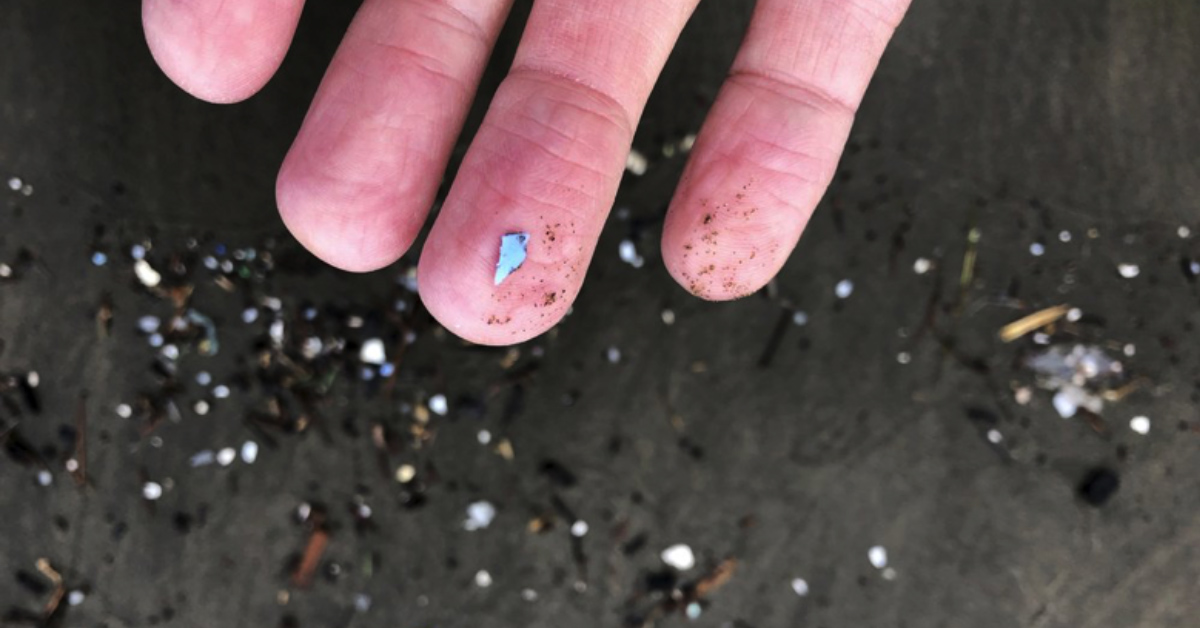
Plastic pollution is an urgent and global problem. Most of the environmental attention to date has been focused on household and packaging waste. But scientists have found that tiny fragments known as microplastics make up significant amounts of ocean plastic pollution. Scientists have recently been scrambling to find solutions to deal with our growing microplastics problem. Microplastic debris found on Depoe Bay, Oregon in January 2020. Photo credit: Andrew Selsky/Associated Press. This time, they turned to tiny bacteria for help.
Microbiologists at the Hong Kong Polytechnic University (PolyU) devised a sustainable way to remove polluting microplastics from the environment.
Their partners in crime are bacteria called Pseudomonas aeruginosa. Capable of grouping microplastics floating around in wastewater, these microbe nets trap microplastics and sink them. The plastic blobs can then be disposed of or recycled.
Other research efforts include exploring different novel materials as filters to remove microplastics before they reach large water bodies. Nanocellulose structures are highly effective in capturing extremely small microparticles that our eyes can’t see.
Researchers at the VTT Technical Research Centre of Finland envision that these inexpensive components could be installed directly at the point of microplastic generation. This way, the pesky particles won’t be able to make it to important waterways, where removal would be many times tougher.
But wait… How are microplastics different from the ubiquitous plastic products we use daily?We have seen horrific posts related to plastic waste circulating the web. While these dangers are visible to the naked eye, some are left undetected until fairly recently – microplastics.
With sizes ranging from as small as one-tenth the width of human hair, to twice the size of fine beach sand, these microparticles are so small that they can be carried by the wind.
Recent studies highlight the seriousness of this issue. 1000 metric tons – easily the weight of 120 million plastic bottles – rained on protected areas across western US. 84% of microplastics originate from road sources, while the rest come from agricultural dusts and oceans.
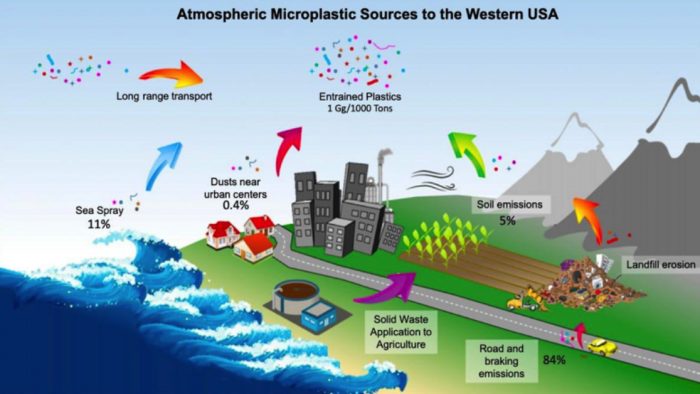
Plastic materials (think your bags and bottles) left out in the environment disintegrate gradually into smaller and smaller pieces.
Even doing your laundry releases microplastics – tiny microfibres slough off your synthetic clothes and get flushed to wastewater treatment plants.
Researchers also accidentally discovered huge numbers of tiny microplastic specks in their plastic container while prepping their lunch.
Tyres driving over roads break down deposited plastic particles into finer microplastics, enabling them to be launched back into the atmosphere, just like how oceans recirculate microplastics.One-way ticket around the globe.
What’s even more disconcerting is that microplastics can be transported to distant and pristine locations such as Antarctica, despite being so far away from actual sources of microplastics.
This just shows that microplastics are already spiraling through Earth’s recirculation system. And because of their astounding chemical longevity, microplastics spend many years cycling through different circulatory systems such as air, land and sea, ultimately ending up somewhere far from where they came from.
You could be taking in a deep breath of “fresh” air at Joshua Tree National Park, while tiny flakes of acrylic polymer – that could have come from someone’s laundry in Japan – land imperceptibly on your nose.Effects on humans still unclear.Ingestion of microplastics by small creatures lead to blockages in their intestinal tract. The ingested plastics could move up the food chain, leading to a plastic accumulation in organisms at the top of the food chain, akin to heavy metal bio-accumulation.
Some sea creatures exposed to microplastics even displayed difficulties in growing, severely affecting their ability to survive.
You’re also likely to be eating microplastics every day without even noticing it.
Microplastics were revealed in the placentas of unborn babies just a couple of months ago, most probably shed when shaking up plastic baby bottles filled with hot baby formula.
Assuming that the microplastics would somehow hamper foetal growth and cause long-term damage to its immune system, the researchers have yet to determine their exact health impacts on the human body.
But it’s reasonable to assume that having tiny bits of plastic lodged in your lungs or in your unborn child are hardly good things. Eliminating microplastics requires global effort.An overall picture on the consequences of microplastics to us and the ecosystem in general is still unclear. But such repercussions are inescapable in the immediate future.
Returning to the pre-plastic era is unimaginable, unless we come up with materials as great as plastic, but not as environmentally upsetting.
Perhaps one of the most effective ways to end this microplastic scourge, aside from inventing innovative methods of removal, is to cut out single-use plastics.
Just like how we cast a dry spell on acid rain, we too, can put an end to this toxic microplastic cycle. ~


First of all, let’s study the eating habit of this herbivore. When feeding, it pulls and tears off at anything its teeth come in contact with. It prefers seedlings and succulent tissues. But when food is scarce it feeds on older leaves, stems and roots. Goats in town may even devour wrappers of sweets and kitchen refuse. There are cases ingested plastics can cause slow death to the animals.
I gave a pet kid to my youngest son when he was small. He would allow the animal to lick his fingers. I discovered tiny lacerations inflicted by the developing milk teeth of his pet. “Was it not painful?” I asked. Leo told me it was only after some time that he felt tingling sensation of pain. I believe that the saliva of a goat contains anesthesia, which could be the thing old people call “hot.” Is this the active principle that kills plants?
But plants have their ways of defending themselves, such as the presence of thorns (e.g., Mimosa or makahiya), high level of impregnated silica (e.g., Imperata cylindrica or cogon), and obnoxious odor or taste (e.g., Lantana or bangbangsit Ilk). There are plants that respond to injuries caused by the feeding of animals. They produce poison to discourage, if not kill, the voracious feeder.
This is a classical case. In the African Savannah a species of acacia is the favorite of browsing animals like the giraffe. When the acacia trees are threatened by overgrazing, they send signals like pheromones to warn each other, including the unaffected acacia trees, to produce higher level of tannic acid, similar to mimosin in ipil-ipil. This substance, other than being unpleasant to the taste, is extremely acrid and may cause discomfort to the feeder.
I had an experience at home when I was a farmhand which is quite similar to this case. Goats after the rice harvest are usually left stray in the field but now and then they trespass into backyards and gardens. I noticed our neighbor's goat coming over to browse on wild patani (Phaseolus lunatus). My dad simply didn't mind, to think that entire borders are covered with the viny plant. Then the goat stopped visiting us.
We went to our friendly neighbor and saw the goat, its stomach bloated as if it were in its last stage of pregnancy. Tata Melecio had to slaughter the animal. We found out that its stomach was stuffed with undigested patani leaves, and emitting the characteristic bean odor which I found in later years to be that of tannic acid.
Did the patani plant, like the acacia tree, produce "toxin" to defend itself from excessive feeding by the animal? If this is so, then nature extends to both plants and animals protective mechanisms through the production of chemical compounds that directly confront extreme threat - indeed an effective means of survival not only to the organism, more so, to the species.
But this does not adequately answer why plants bitten by goats are likely to die. I attribute this observation to the manner goats feed.
Firstly, uprooted plants have little chance to recover especially in extreme dry season.Secondly, plants in general die when their biomass above the ground is severed, even if their roots remain intact. It is because the roots will subsequently starve for lack of manufactured food coming from the leaves.Thirdly, goats prefer plants in the flowering and fruiting stages, thus depriving the plant from producing offspring, even those that reproduce vegetatively.And lastly, in the absence of fresh feeds, goats forage on the dormant parts of plants in summer (aestivation), and in winter (hibernation), thus preventing the plants to re-emerge come growing season.
Reference: Living with Folk Wisdom, AVRotor UST

The main Plastic Vortex as big as the state of Texas - and growing - lies north of Hawaii off the coast of Canada and the US. "Islands" of plastics coalesce into the vortex. Dutch scientists propose to convert the floating debris into a livable environment.

NOTE: There are other gyres, three in the south hemisphere, all potential spawning grounds of floating garbage.


- Refuse
- Reduce
- Reuse
- Refill
- Repair
- Refit
- Recycle
- Repeat
- Reform (our ways)
- Revere (Reverence for Life)


to a Messiah when the world seeks for peace and rest;
call it a tree of Conscientization* in shrouded light and truth,
in a modern world deluged with technology and progress.


Call it waste turned beautiful by small and innocent hands
into a thousand-and-one stars on a pylon rising to the sky
what we grownups simply throw away and pollute the earth,
and the manufacturers reap profits while the young ones cry.
Call it Christmas Tree, call it tree of nativity and offering,
to a Messiah when the world seeks for peace and rest;
call it a tree of Conscientization* in shrouded light and truth,
in a modern world deluged with technology and progress. ~
Lesson on former Paaralang Bayan sa Himpapawid Dr Abe V Rotor and Ms Melly C Tenorio 738 DZRB AM, 8 to 9 evening class, Monday to Friday.
Relate these events with the following:
1. Pope Francis Laudato Si (Praise Be), a call to save the Earth2. Canada exporting trash to the Philippines3. Earth Summits - review and prospects4. Culture of Consumerism5. Waste management models6. Autotoxicity - myth of fact?7. Global Warming - Erratic Climate and Weather8. Rising of the Sea Level - Global Flooding9. Global Leadership challenge10. Personal concern and action
Part 8 - The 7 Different Types of Plastic

The world is full of plastics. Whether you realize it or not, practically everything you see and use on a daily basis is entirely or partly plastic material. Your television, computer, car, house, refrigerator, and many other essential products utilize plastic materials to make your life easier and more straightforward. However, all plastics are not made alike. Manufacturers utilize a variety of different plastic materials and compounds that each possess unique properties.
Below is 7 of the most popular and commonly used plastics: Acrylic or Polymethyl
- Methacrylate (PMMA)
- Polycarbonate (PC)
- Polyethylene (PE)
- Polypropylene (PP)
- Polyethylene Terephthalate (PETE or PET)
- Polyvinyl Chloride (PVC)
- Acrylonitrile-Butadiene-Styrene (ABS)
Let’s take a look at each of these distinctive plastics in more detail.
1. Acrylic or Polymethyl Methacrylate (PMMA)
Well-known for its use in optical devices and products, acrylic is a transparent thermoplastic used as a lightweight, shatter-resistant alternative to glass. Acrylic is typically used in sheet form create products such as acrylic mirrors and acrylic plexiglass. The transparent plastic can be made colored and fluorescent, abrasion-resistant, bullet-resistant, UV-tolerant, non-glare, anti-static and many more. In addition to being than glass and polycarbonate sheeting, acrylic is seventeen times more impact resistant than glass, easier to handle and process, and has endless applications.
2. Polycarbonate (PC)
Tough, stable, and transparent, polycarbonate is an excellent engineering plastic that is as clear as glass and two hundred and fifty times stronger. Thirty times stronger than acrylic, clear polycarbonate sheets are also easily worked, molded, and thermo-formed or cold-formed. Although extremely strong and impact-resistant, polycarbonate plastic possesses inherent design flexibility. Unlike glass or acrylic, polycarbonate plastic sheets can be cut or cold-formed on site without pre-forming and fabrication. Polycarbonate plastic is in a wide variety of products including greenhouses, DVDs, sunglasses, police riot gear, and more.
3. Polyethylene (PE)
The most common plastic on earth, polyethylene can be manufactured in varying densities. Each different density of polyethylene gives the final plastic unique physical properties. As a result, polyethylene is in a wide variety of products.
Here are the four common polyethylene densities: Low-Density Polyethylene (LDPE)
This density of polyethylene is ductile and used to make products like shopping bags, plastic bags, clear food containers, disposable packaging, etc. Medium-Density Polyethylene (MDPE)
Possessing more polymer chains and, thus, greater density, MDPE is typically in gas pipes, shrink film, carrier bags, screw closures, and more. High-Density Polyethylene (HDPE)
More rigid than both LDPE and MDPE, HDPE plastic sheeting is in products such as plastic bottles, piping for water and sewer, snowboards, boats, and folding chairs. Ultra High Molecular Weight Polyethylene (UHMWPE)
UHMWPE is not much denser than HDPE. Compared to HDPE, this polyethylene plastic much more abrasion resistant due to the extreme length of its polymer chains. Possessing high density and low friction properties, UHMWPE is in military body armor, hydraulic seals and bearings, biomaterial for hip, knee, and spine implants, and artificial ice skating rinks.
4. Polypropylene (PP)
This plastic material is a thermoplastic polymer and the world’s second-most widely produced synthetic plastic. Its widespread use and popularity are undoubted because polypropylene is one of the most flexible thermoplastics on the planet. Although PP is stronger than PE, it still retains flexibility. It will not crack under repeated stress. Durable, flexible, heat resistant, acid resistance, and cheap, polypropylene sheets are used to make laboratory equipment, automotive parts, medical devices, and food containers. Just to name a few.
5. Polyethylene Terephthalate (PETE or PET)
The most common thermoplastic resin of the polyester family, PET is the fourth-most produced synthetic plastic. Polyethylene Terephthalate has excellent chemical resistance to organic materials and water and is easily recyclable. It is practically shatterproof and possesses an impressive high strength to weight ratio. This plastic material is in fibers for clothing, containers for foods and liquid, glass fiber for engineering resins, carbon nanotubes, and many other products that we use on a daily basis.
6. Polyvinyl Chloride (PVC)
The third-most produced synthetic plastic polymer, PVC can be manufactured to possess rigid or flexible properties. It is well-known for its ability to blend with other materials. For example, expanded PVC sheets are a foamed polyvinyl chloride material that is ideal products like kiosks, store displays, and exhibits. The rigid form of PVC is commonly in construction materials, doors, windows, bottles, non-food packaging, and more. With the addition of plasticizers such as phthalates, the softer and more flexible form of PVC is in plumbing products, electrical cable insulation, clothing, medical tubing, and other similar products.
7. Acrylonitrile-Butadiene-Styrene (ABS)
Created by polymerizing styrene and acrylonitrile in the presence of polybutadiene, ABS is robust, flexible, glossy, highly processable, and impact resistant. It can be manufactured in a range of thicknesses from 200 microns to 5mm with a maximum width of 1600mm. With a relatively low manufacturing cost, ABS plastic sheeting is typically used in the automotive and refrigeration industries but is also in products such as boxes, gauges, protective headgear, luggage, and children’s toys.
9. PLASMOG: Plastic-Smoke-Fog
Triumvirate in the Air


ANNEX - National Research Council of the Philippines (NRCP)
The World Bank estimates that the Philippines use an overwhelming 163 million pieces of sachets per day. A staggering 2.3 million tons of plastic waste are generated in the country annually. Unfortunately, only 28% of key plastic resins are being recycled while the rest are simply discarded. So, where does the remaining 72% of these plastics go? To find it, one no longer needs to go to the nearest scrap shop but they can simply open their refrigerators.
In celebration of the National Science and Technology Week (NSTW) 2022, the National Research Council of the Philippines made the call to increase awareness in the growing threat of microplastics and plastics on food security, environment, and health by featuring NRCP-funded Projects on plastics in the marine environment and microplastic contamination among marine species.
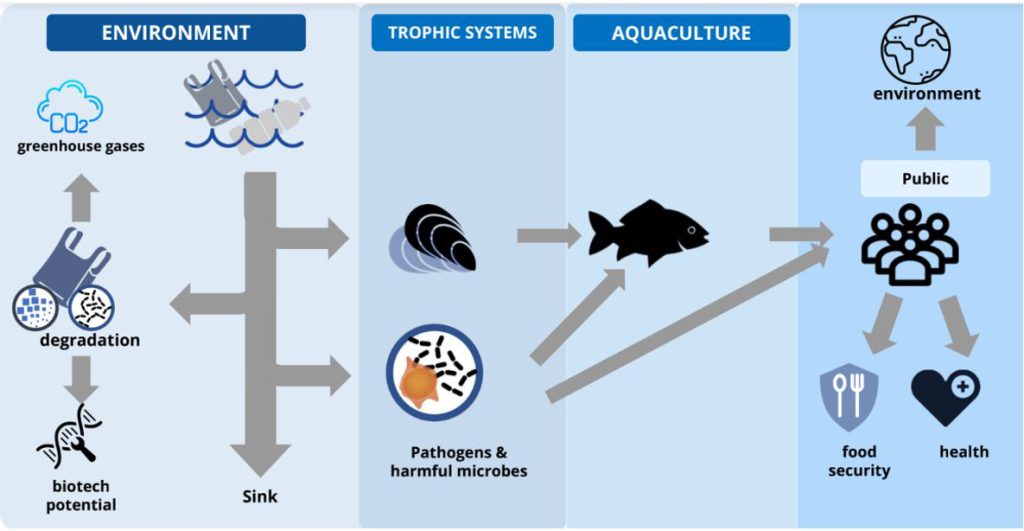
Despite the convenience and other benefits brought about by the invention of plastics, shown above is the general flow of how these materials negatively affect our environment, food security, and health. A presentation of NRCP-funded project titled, Marine Microbes and Plastic Debris: Research Status and Opportunities in the Philippines by Balik Scientist and UP Diliman Associate Professor in Marine Science Institute Dr. Deo Florence Onda, the plastic-microbe interactions in marine environments and its implications with the unresolved plastic pollution issues in the country was discussed.


Dr. Onda’s team sampled 240 mussels in eight (8) study sites such as the wet market in Marikina, fish port in Navotas, fish landing center in Bacoor, riverside in Obando, aquaculture farms in Antique, Bayabay, Macelelon, and Bicol. Dismally, 100% of the samples have tested positive for microplastics. Most of the plastics found in their study are type 4 plastics such as thin plastic wraps, labels, packaging, foamed fragments, fishing lines, nets and ropes, bags, straws, and pipettes.
The Balik Scientist speaker, Dr. Onda, reiterated that there is a need to support and strengthen plastic research in the Philippines given the implications of plastics and microplastics in various aspects of our lives.
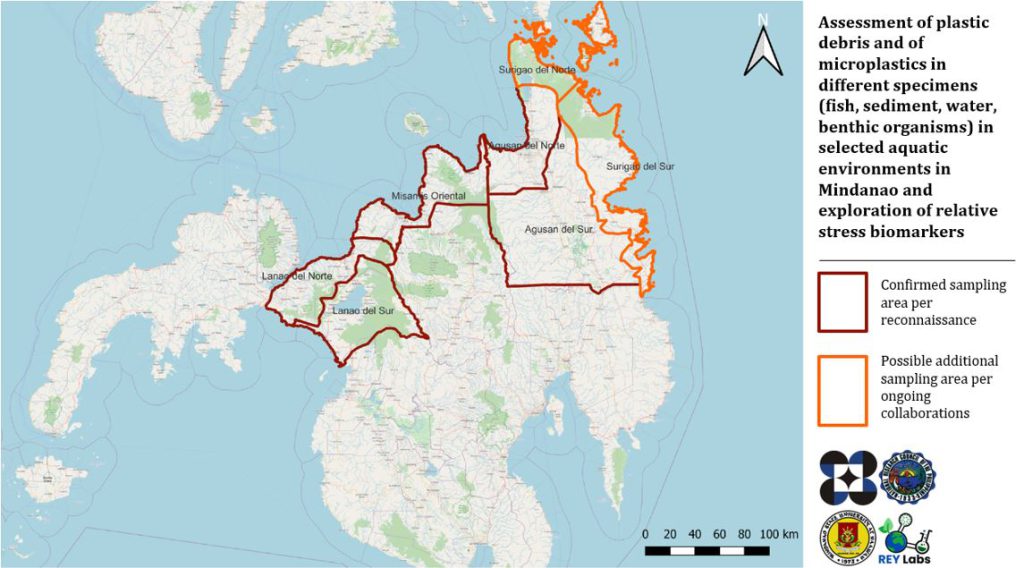
Through the NRCP-funded project titled, Assessment of plastic debris and of microplastics in different specimen (fish, sediment, water, benthic organisms) in selected aquatic environments in Mindanao and exploration of relative stress biomarkers, Dr. Capangpangan and his research team discovered that “microplastics are found in cultured and in wild and in nekton and benthos organisms.”
Of the 383 extracted particles collected from 30 bangus samples in Butuan and Nasipit Fish Cage, 235 were confirmed to be microplastics. Meanwhile, out of 163 extracted particles from 135 individual mud clams in mangrove stations along Butuan Bay, 30 were also confirmed as microplastics.
DOST Secretary Dr. Renato U. Solidum, Jr. stated the importance of the NRCP’s NSTW webinar as this is a step to ensure that while we profit from our natural resources, we should also ensure its sustainability for the benefit of Filipinos in the future.

Indeed, “Big threats come in small particles” National Research Council of the Philippines’ Executive Director Dr. Marieta Bañez-Sumagaysay emphasized as she closed the hybrid event.
Written By: Regine Pustadan, Information. THE GROWING THREAT OF MICROPLASTICS AND PLASTICS.
* Plastic Free July is a global movement encouraging people to reduce single-use plastic waste throughout the month of July and beyond. Plastic Free July is an annual campaign that began in 2011 in Western Australia, founded by Rebecca Prince-Ruiz and a small team in local government. It encourages individuals, communities, schools, and workplaces to refuse single-use plastics such as bags, bottles, straws, and coffee cups, and to adopt sustainable alternatives The initiative has grown into a global movement, with over 100 million participants in 190 countries, making it one of the largest environmental campaigns worldwide. Internet


No comments:
Post a Comment