Tuesday, July 20, 2021

New Normal and New Future 2 - Exploring the World of the Minutiae

New Normal  and New Future 2        

Exploring the World of the Minutiae 

"Science in the neighborhood, extension of the school.
All you need is a microscope and a guide to explore
the wonderful world of the living minutiae and matter,
outdoor learning, understanding Nature - and more." - avr

Dr Abe V Rotor  

Microscopy for kids - community summer workshop, Lagro QC, circa 2015
- a revival of pre-pandemic activity in lieu of computer games and loafing.
 (New Normal to New Future series 2) ~


Saturday, July 17, 2021

Oh! If only man's wisdom can bring back Paradise lost a long time ago.

Trees for Peace 

Oh! If only man's wisdom can bring back Paradise lost a long time ago.

Floor-to-Wall Mural by Dr Abe V Rotor
 

A wall is empty no more, it dissolves into forest and stream
running down soft under the feet, spilling onto the street;
where once a city of steel and concrete, of dust and smog
reigned, where the forces of human frailty and nature meet,
rekindling wonders and adventures of childhood little known
to the city-bred whom the Good Life in disguise would cheat!


The wall is alive in three dimensions in make-believe perspective,
progeny of primary colors - red, blue and yellow, bold and mellow,
azure sky, deep blue-green sea, prism of every dewdrop bead,
sparkle of every star at night, crystalline water Narcissus saw;
if only walls can speak to mirror human longing of a happy world,
if only man's wisdom can bring back Paradise lost a long time ago! ~


NOTE: Kim Laurence and Sophia on Christmas Day 2017 at the author's residence in Lagro QC.

Food Crisis Series 11 - Live Natural, 3 Ways

Food Crisis Series 11
  Live Natural, 3 Ways

    • Go for Fresh, Natural, and Locally Produced Food
    • Adopt Natural Farming Models
    • Live Natural and Simple in your Home
                                                           Dr Abe V Rotor

Part 1: Go for Fresh, Natural, and Locally Produced Food
It's not enough that we produce food. We must produce food that ensure good health, reduce risks to diseases and ailments, and prolong life. We must produce food that also insures the health of our environment and the stability of the ecological system.

Typical fruit stand, UP Diliman QC

While science and technology continue to explore new ways to increase food supply with genetic engineering, people are yearning for organic food – or naturally grown food.

Here are issues raised by the proponents of organic farming.

1. Many ailments and abnormalities are traced to the food we take. Cancer for instance, is often related to carcinogenic substances. High uric acid leads to kidney trouble. High cholesterol and high sugar levels are associated with high blood pressure and diabetes. Aftatoxin causes cirrhosis of the liver. Ulcers are food-related, so with many allergies.

2. Proper nutrition and balanced diet can be attained by eating the right kind and amount of natural food without fortification with vitamins and minerals, and other forms of altering food value. Thus there is no need to process food unless it is really necessary. Fresh foods – vegetables, fish, and the like – are still the best. And why modify the genetic composition of crops and animals? Leave that to nature. Nature knows best.

3. Taking excess foods rich in animal fat and protein, and foods high in calories foods has predisposed many people to overweight conditions. Gaining unnecessary weight leads obesity now an epidemic sweeping many countries today particularly in cities where there is a proliferation of fast foods and junk foods. Or simply there is too much of the “good life” – excess in food and pleasure. In the US today one out of five Americans is an obese, two are overweight.

4. There are natural substances that keep our body always alert to fend off stress due to overwork and diseases. They are known as probiotics. We get probiotics from fruits and vegetables. We also get them from seaweeds, mushrooms, yoghurt, algae such as Chlorella, and Cyanobacteria such as Spirulina. And there are many more sources that occur in nature. We are beginning to realize that eating foods rich in probiotics and antibiotics (substances that directly kill germs) makes us healthier and live longer.

These are the rules set by the advocates of organic farming.

Best for health: fresh fruits and vegetables

1. It is always better to eat foods grown under natural conditions than those developed with the use of chemicals.
This statement can be captured with one term "natural food". All over the world this is a label found in food grown without chemicals. People are afraid of becoming ill because of chemicals introduced into the food. There are banned pesticides still in used such as methyl parathion, endosulfan, DDT, BHC, among others. These are also harmful to all living organisms and to the environment.

2. People are avoiding harmful residues of antibiotics and pesticides.
Poultry, hogs and cattle are given high levels of antibiotics to safeguard the animals from diseases. As a result, the antibiotics are passed on to the consumers. Unless we are ill, the body does not need supplemental antibiotics. We have adequate natural sources. Every time we eat commercial eggs, chicken, pork chop, steak, and the like, we are taking in antibiotics which accumulate in our body, shutting off our immune systems, punishing our kidney and liver. To many people, antibiotics cause allergic reactions.

3. People are getting scared of food contaminated by radiation. Nuclear reactors are being built in many countries as a fallback to fossil fuel.
With the recent nuclear plant meltdown in Fukushima, Japan, the Chernobyl nuclear incident in Russia, and that of the Three-Mile Island nuclear plant in the US, people have become wary about the consequences of fallout. A trace of radiation can be absorbed by grass in the pasture, finds its way to milk, then to infants. Radiation can remain active for hundreds of years. People are still dying today in Nagasaki and Hiroshima, more than sixty years since the bombing of the two cities with the first atomic bomb.

4. People are becoming aware of the deleterious effects of toxic metals, such as lead, mercury and cadmium. These find their way through the food chain and ultimately reach humans. They escape to the air and enter our lungs, as in the case of dusts from old paints. Since they are in soluble compounds, they are easily absorbed by plants and animals. Kangkong (Ipomea reptans) for example absorbs lead. Tuna has high mercury in its tissues and liver. Cadmium from batteries is absorbed by crops.

5. People are becoming more conscious of the nutritional value of food rather than its packaging and presentation.
More and more people are shunning away from junk foods, in spite of their attractive packaging. Soft drinks have taken the backseat, courtesy of fruit juices and mineral water. People have even learned that different plant varieties have different levels of food value. Beans grown on naturally fertile soil have higher calorie and protein content than those grown on poor soil, or with chemical fertilizers. This is also true with animals. Animals raised with proper nutrition give meat, milk and eggs with higher protein, minerals notwithstanding.

6. Freshness is the primordial rule in choosing a perishable food.
There is no substitute to freshness. While freshness is a function of efficient handling and marketing, the farmer must enhance farm-to-market freshness. By keeping his standing plants healthy, his produce will stay longer on the shelf life. Products that are free from pest and diseases also stay fresher and longer. Too much water or fertilizer reduces shelf life of the commodity.

Buko is a complete food

7. Food processing must be efficient and safe.
Food processing, such as drying, milling and manufacturing is key to higher profits. Whenever feasible, food must reach the table fresh. But processing is designed to extend the shelf life of perishable commodities. There are products that require processing before they are used. These food items include vanilla, coffee, cacao, wine and vinegar, soya, fish sauce and the like. Profits generated through processing are value-added to production.

8. Food must be free from pest and diseases.
By all means, food must be free from insects and pathogens. There are cases of food poisoning as a result of food deterioration, or contamination. Take salmonella and E. coli. Khapra beetle in grains may even cause death to animals. Weevils hasten the deterioration of the food.

9. Food preservation must ensure quality, and above all, safety.
Be aware of the fish that is stiff, yet looks fresh. It is easy to detect the odor of formalin. Salitre is harmful, so with vetsin or MSG (Monosodium glutamate). Too much salt (sodium) is not good to the body. Some puto makers add lye or sodium hydroxide to aid coagulation of the starch. We wary of sampaloc candies enticingly made red with shoe dye. The same diluted dye is used with ube manufacture to make it look like the real violet-colored tuber.

10. Beware of GMOs. 
Many countries warn of the potential dangers of genetically modified food and food products, popularly called Frankenfood, after the novel Frankenstein, a mad scientist who created a monster. This move is not only to safeguard health, but also the environment. Genetically modified plants and animals – as well as bacteria, protists and even viruses – are now a threat to the natural gene pool, giving rise to a new kind of pollution - genetic pollution. Once a gene pool of a certain species is contaminated with a GMO genetic material, the genic pollutant cannot be eliminated, even in subsequent generations. Thus, it also disturbs natural evolution.

No GMO, please, for the sake of the children.

Next time you go to market, remember these guidelines. Why not convert that idle lot to raise food that is safe to your health and the environment? That little corner could be the start of a new green revolution.

Part 2: Natural Farming Models

The other name of natural farming is organic farming. In the United States and Europe, the trend now is for people to reach for organically grown food. In malls and large groceries, we find rice labeled "organically grown."

Mere substitution of fertilizer from chemical to organic is not enough. The organic fertilizer must be free from pathogens, toxic waste and metals.

The crops and animals must not be products of genetic engineering, meaning they should come from natural gene pools.

Natural farming also requires the absence of chemical spraying. If it cannot be avoided, the spray must be biodegradable, using botanical derivatives like derris, neem and chrysanthemum.

Here are scenarios of natural farming in the country.

1. Payatak method (Samar) - This is a local version of zero tillage. No plowing, no harrowing is done. A herd of carabaos trample over the soil until it turns into puddle, then the one-month old rice seedlings are transplanted. There are no sprays or fertilizers. This is natural farming in the marginal sense, a carryover of age-old tradition.

2. Mixed orchard (Zambales) – This is a stand of several kinds of trees, where orchard, firewood trees and forest trees grow together. These trees follow a natural pattern of arrangement. They have no common pest and need soil fertility differentially. The trees have their own niche and grow into layers resembling storeys. Management is simple and practical.

3. Multiple cropping model (Sta. Maria. Bulacan) - The farmer engages in the production of three commodities. A two-hectare farm may produce fruits, vegetables and rice, plus several heads of carabao and cattle. A pond supplies irrigation and produces tilapia and hito.

Why three commodities? It is because these commodities are closely integrated. First, the animals produce, other than meat and milk, manure for the plants. The plants produce food for the family and market. Plant residues are made into animal feeds and compost. The pond is source of irrigation. It is a waterhole for wildlife conservation, too. Because of its integrated structure and management the farm becomes a balanced system. This is the key to sustainable agriculture, otherwise known as ecological farming.

4. Sloping agricultural land technology or (SALT in Bohol). Call this natural farming even if the farm is a logged over area. The idea is for the farmer to revert the land to its natural state as much as possible. How does he do it? If one sees the model, the land has a slope of around 20 degrees. The steeper the grade the more difficult it is to apply the system. It does not work for slopes above 30 degrees.

In SALT, the contour of the slope is marked and outlined. The contours are spaced uniformly, and the rows that follow the contour are planted at intervals with annual and permanent crops. The idea is for the permanent crops (like fruit trees and firewood trees) to be sandwiched with annual crops (like peanut, rice, corn, and vegetable). The ipil-ipil herbage is used as organic fertilizer. The Neem tree is used for pesticide, while Lantana (L. camara) is a natural pest repellant, so with Eucalyptus. Legume intercropping and crop rotation replenish the soil of Nitrogen and other elements.

5. Modified models (rice and corn areas). Rice farming can be modified to suit the conditions of natural farming. There are farms today that rely entirely on homemade or commercial organic fertilizers. An equally important aspect of successful farming is cleanliness. This means effective weed removal, trimmed waterways, properly disposed of farm wastes, efficient drainage, well arranged rows, and properly scheduled farming activities. All these activities require low technologies that are also affordable. Together they contribute to good health for both the producer and consumer - and the environment.

As more people go for organically-grown food, agriculture becomes more environment-friendly, which is the essence of ecological farming.

Part 3: Live Natural and Simple in your Home

Home gardening and landscaping take us into the realms of happy living. They take us closer to nature in our waking hours and in our sleep, in our private and solemn moments, as well as moments with our family, and when celebrating an event. This is the place we call home.

Rustic scene of peace, a respite from city life. Acknowledgement, Internet photo

1. Aesthetic beauty – Beauty and function must go hand on hand. There is a saying, “useless each without the other.” In science, morphology (form) enhances physiology (function), and vice versa. Maganda na, napapakinabangan pa. You need the sensitivity of an artist, and the green thumb of a gardener.

2. Food Security – It is having food grown in our garden, and processed in our kitchen. The concept of food security is in our hands, and in anticipation to our needs. All year round you can plan out what to plant and process, as how many times you can raise these products. Consult the planting calendar, practice effective techniques such as crop rotation, intercropping, and storey cropping. Plant those known to be best adapted in the area.

3. Livelihood – What you produce more than yourself and your family, you sell to the community and to the market, if the volume warrantees. These are produced directly from the garden – vegetables, fruits, fish, meat and eggs. Or these are products of cottage processing like salted eggs, patis and bagoong, wine and vinegar, toge, pickles, jam, jelly and the like.

4. Ecological Sanctuary – Offer a home for the homeless - the orphans and the endangered organisms which humans have driven or displaced. Make your home their sanctuary, maybe their last bastion. Your home is an extension of the wildlife, of a ecosystem, or a natural park, so that if the whole community adopts the same concept, we would in effect create a contiguous areas large enough to be considered a prototype ecosystem.

5. Buffer Zone – Keep your home free of dusts and unburnt carbon, and obnoxious gases mainly CO2, CO and SO2. Trees and other plants serve as buffer to direct light and ultraviolet rays. They also buffer sound waves, reducing the extreme decibels generated by traffic and electronics.

6. Mini climate – A garden surrounding a home does not only reduce temperature, buy moderates its extremes and sudden changes. They generate of O2 , while absorb CO2 which they need for photosynthesis. Relative humidity is regulated, and deadly rays such as those emitted by communication transmission towers are reduced to a safe level.

7. Sense of Permanence – The home offer a permanent abode, opposite to transience, rootlessness, and impermanence. People tend to move from place to place – a neo-nomadic trend today. We establish our genetic and cultural “roots” not only of one generation but of the next and future – if we have a home we really call home. It reminds me of the beautiful poem and song, Home Sweet Home. I remember my dad who planted seedlings of trees when he was already very old. These trees, he said, will be for you and my grandchildren, his eyes twinkling with a sense of pride. Can you imagine an old, old mango or mabolo tree in your backyard? How many passersby have found comfort under its shade? How many tenants did it serve – in its roots to its leaves?

8. Recreating a Lost Garden – A recreation of Paradise Lost, the foundation of many faiths, is a key to attain spirituality. It is in the loss of a once beautiful world that challenges us – whatever our religion is – to be able not only to survive without it, but to be inspired and guided to rebuild it. It is yet the greatest prayer we can offer to that Higher Principle.

9. Family Unity – A family that lives together in unity and harmony with Nature stays together. This has a basis found in biology and ecology. Only when the members of a system know their roles and respect each other can we really find peace and unity.

10. Community Involvement – No man is an island. In the city we can live without even knowing our neighbors. Condominiums are but multiple compartments. There is no sense of neighborhood or community. Each to his own. And we do not know if the occupant of one compartment will be the same next week.

 
American bungalow, most copied home design (Internet photos)

Sketch on a bond, an aerial view of a home garden you have in mind, and if there is one
that already exists, study and analyze which aspects are applicable in your particular situation. Definitely the house and the garden should be contiguous in the sense that, like the concept of the American bungalow, “one step is in the garden while the other is in the house.”

How aptly stated; the imagery needs little explanation. The level of the floor is the level of the garden. Not necessarily. It means, you have but one lifestyle whether you are in the house or in its surroundings. Better said, you are at home whichever part of your home you are in. Of course some people would like their house to be treated apart of the surroundings, but if you adopt the Bahay Kubo concept and adjust it to fit into the basic amenities of living today, then our model is like the American bungalow but Filipino style.~

Saturday, July 10, 2021

Troubled Signs Leading to Juvenile Violence

Troubled Signs Leading to Juvenile Violence

Dr Abe V Rotor

Do you have children who love guns and bombs? Be aware that this is an indicator, an early sign, a tendency in later years to becoming violent. And it may come in their teen years.

Take these cases. A 17-year old who killed his father and mother and fatally shot two classmates with rifle (October1997 Mississippi), A 15-year old who fatally shot two students, wounding 18 others, both parents, and attacked an arresting officer with knife. And a 14-year old who killed three girls with a 22 semi-automatic pistol (Dec 1997 Kentucky).


It is utterly shocking for very young people committing heinous crimes!

Adolescence indeed may lead to the wrong road. But how do we explain younger boys involved in similar crimes? Just at the crossroad of childhood? Here is a case of a 11-year old and a 13-year old who attacked their school killing five with handguns and rifles. (March 1998, Arkansas)

Observe your boys (and girls), other kids as well if they exhibit the following
Troubled Signs
Torturing animals
Dressing in Black
Vowing grim imaginings like - “I’m going to blow something.”
- “I’ll start World War III.”
- “I’m going to kill somebody.”
-------------------------
“A child might be defiant at school. What a teacher might not know is that the student spent the morning feeding a younger sibling or taking care of a drug-addicted parent. The child, raised with cruelty, violence and hunger, turns on those around him.” - Pat Kennedy (Erie County Chief Public Defender)
------------------------
  • What can we do as parents, teachers, leaders of our community?
  • Keep your family solid, live in peace and harmony
  • Restrict toy guns and war toys, including violent games on the computer
  • Guide their programs on TV, cinema, computer, including magazines.
  • Check your kid’s company. Guard your kid from joining violent groups
  • Communicate with your kids
  • Give quality time with them. (E.g. Participate in their school activities.
  • Show good examples of growing up, live up with these examples
  • Don’t spoil or pamper them
  • Take them to Nature
  • Get proper advice
Youth violence: Contributing factors
  • Poor parenting
  • Drugs
  • Poverty
  • Hopelessness
  • Poor environment
  • Lack of education and training
  • Genetic tendency
----------------------------
"There is a void created when parents are not doing their job. That void has to be filled." - Judge WR Cunningham, Poor Parenting: Why it hurts.
----------------------------

A Case Study of a 16-year-old boy

The musician -- in town for a concert by Erie native Pat Monahan's band Train -- strolled along East 12th Street at about 10 p.m. on a Saturday night in August.

He had just come from the Country Fair on Parade Street and was headed back to Tullio Arena.

A 16-year-old boy spotted him from his aunt's front porch, where he sat playing with a BB gun he had stolen from Walmart.

He darted from the porch.

"Hey man, hey man," he said, as he approached the musician from behind.

The musician turned to see a young man holding what looked like a handgun.

"You better empty that wallet for me, man," the youth said. The musician ran, reaching for his phone to call 911.

Moments later, police found the boy with a friend, pushing a bicycle along the street. He had shoved the gun in his friend's backpack.

The boy is only 16 but has been offered what is likely his last chance at "care, treatment and supervision" by the state juvenile justice system.

His parents, who never married, split before he was born in Erie. He has been raised by his mother and his grandmother.

When he got up off the porch to try the robbery in August, he had already been in and out of placement multiple times in the Pittsburgh area and here in Erie County.

His mother and grandmother, standing with him in court in October, want to reach him.

"I am just afraid for him," his mother tells the judge. "He is my son. I love him. I want him to do the right thing."

The boy said he wants help.

"I don't want help like people bossing me around. I want help, like, people actually talking to me," he told the judge.

The boy prefers crime, his lawyer, Assistant Public Defender Ian Murray, said.

"He does not want to go to school and get bossed around. ... The streets have got him right now. He is glorifying criminal behavior."

Brabender asked the teen what he wants for his future.

"I want to play baseball," the teen answers. When Brabender looks dubious, he said he wants to go to college.

For him to have any of that, Brabender said, he will have to, at a minimum, graduate from high school. "No drugs and alcohol," he tells him. "If you ever get a job, you need to keep it. Somebody like you, I don't know if you are going to make it or not."


"I know your family," Brabender continued. "There are a lot of good people in it. You can be a good person. You can be a criminal. It is up to you." -- Lisa Thompson

"Children raised in poor, disadvantaged families are at greater risk for offending than children raised in relatively affluent families." -- "Child Delinquency," U.S. Department of Justice, bulletin series

"Lost kid” - is there hope?

Yes, here’s one successful case. Jose took part in a violent fight, allegedly gang-related, in which one person was killed and another injured. Although tried as an adult, he served his sentence in Juvenile Hall, and by all accounts has turned his life around. To those who worked with him, Jose represents how kids, even those charged with violent offenses, can change when given a chance. To those who worked with him, Jose represents how kids, even those charged with violent offenses, can change when given a chance.
--------------------
Reference: Internet, Time

Sunday, July 4, 2021

Beware of Rosary Pea, it is poisonous

Beware of Rosary Pea, it is poisonous

Dr Abe V Rotor

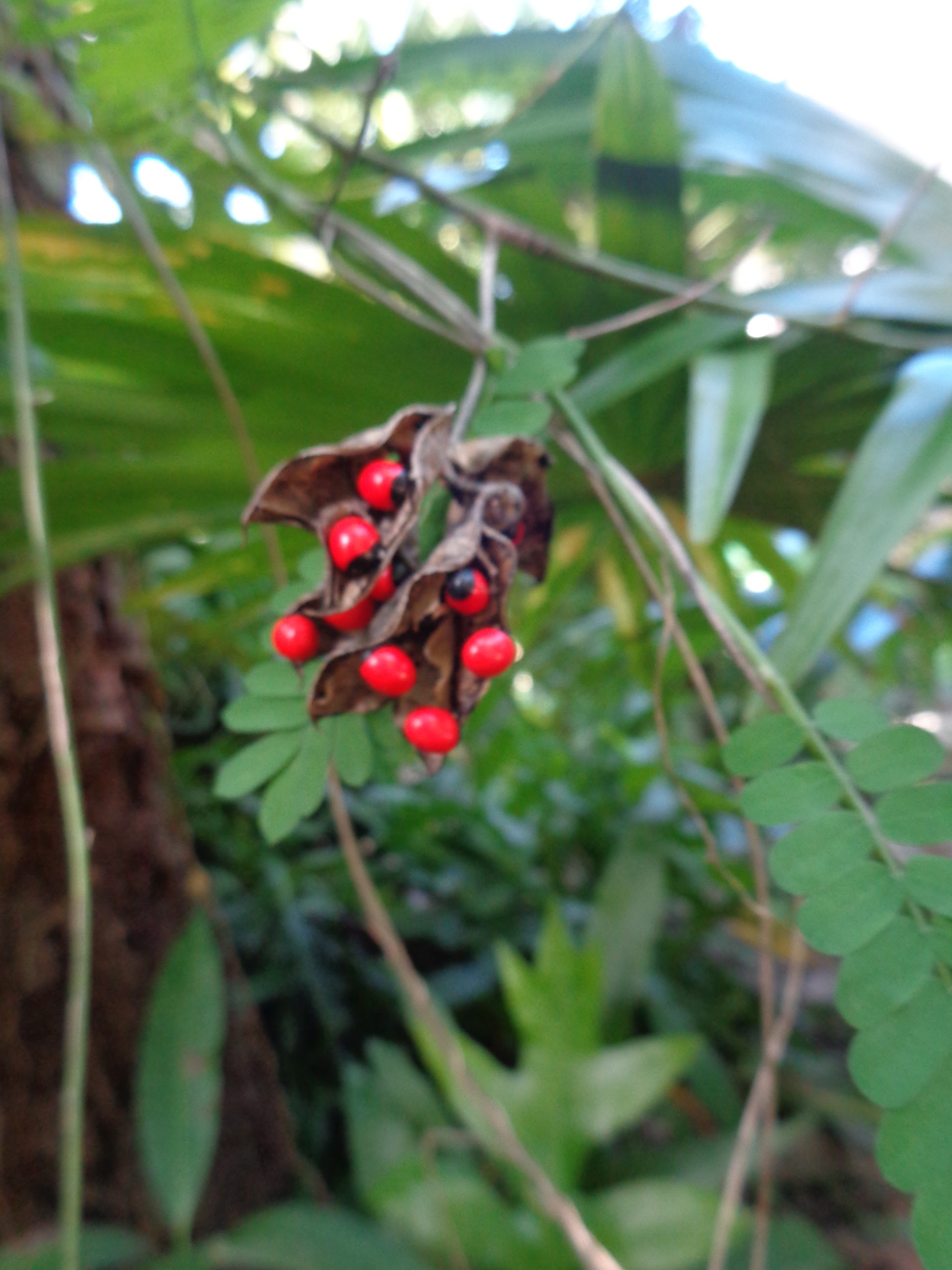
Rosary Pea (Abrus precatorius) Family Fabaceae. 
 Photos by the author, taken at San Vicente, Ilocos Sur Botanical Garden,
Abrus precatorius, commonly known as jequirity bean or rosary pea, is a herbaceous flowering plant in the bean family Fabaceae. The plant is best known for its seeds, which are used as beads and in percussion instruments, and which are toxic because of the presence of abrin*. The entire plant is toxic, but the beans are highly toxic to humans. If eaten, A. precatorius seeds can cause symptoms such as nausea, vomiting, abdominal pain, and diarrhea.
---------------------

About Abrin
The rosary pea, which is the source of abrin, is common to many tropical areas throughout the world and is sometimes used as an herbal remedy.
  • The seeds of the rosary pea have been used to make beaded jewelry, which can lead to abrin poisoning if the seeds are swallowed.
  • Abrin is a natural poison that is found in the seeds of a plant called the rosary pea or jequirity pea. These seeds are red with a black spot covering one end. 
  • Abrin is used in medical research because of its potential as a treatment to kill cancer cells.  It has some potential medical uses, such as in treatment to kill cancer cells. 
Abrin is similar to ricin, a toxin that also is found in the seeds of a plant (the castor bean plant - Ricinus communis). PHOTO

Reference: Centers for Disease Control and Prevention
Saturday, July 3, 2021

Rare Philippine Plants: Kamagong, Indigo, and Gogo

 Trees for Peace

Rare Philippine Plants: Kamagong, Indigo, and Gogo

Dr Abe V Rotor
 Living with Nature School on Blog

Lesson on former Paaralang Bayan sa Himpapawid (People's School-on-Air) with Ms Melly C Tenorio  738 DZRB AM Band, 8 to 9 evening class Monday to Friday

Kamagong, the wood of mabolo (Diospyros discolor) is perhaps the hardest wood on earth. This is followed by the exquisite black wood, ebony or balatinao. Old wooden houses have stood for decades because of their sturdy posts made of solid molave or sagat (Vitex parviflora). Wood planks that make the broad, shiny floor of Spanish houses in Vigan are made of molave, guijo (Shorea guiso, and yakal (Shorea sp), which are all species of local hard wood. The chin rest and fingerboard of old classical violins are made of ebony. Furniture made of ebony is specially made and very expensive.

These kinds of wood have withstood the elements of time and the strong mandibles of termites, the nemesis of wood materials. Beside their genetic makeup, they grow very slowly so that their lignin cells are firm and compact. Seldom can we find these woods anymore. They are now in the list of endangered species and our laws prohibit their cutting.

Ripe fruits of mabolo or kamagong has a sweet taste with pleasant aroma.

Whenever we hear the analogy, “like a molave,” we imagine how strong and determined that leader is – now an endangered species. Why not plant one of these trees today?

Añil or azul makes white clothes whiter.
When we were kids studying in a catholic high school in Vigan, our rector was very particular with the whiteness of our uniform. Our old folks did not find it a problem at all, even without today’s detergents and whitening agents. All they did was to add a little añil or azul to the final rinse, and presto, our uniforms would be gleaming white in the sun.
Indigo plant
Añil or azul is a natural dye derived from Indigofera hirsuta or I. tinctoria, which farmers plant as green manure. It is from the plant that the dye is also called indigo. During the Spanish period, añil was commercially produced in the Ilocos and exported to Mexico and Europe via the Galleon Trade. Today, the ruins of giant fermenting vats are still found.

Indigofera (tayum Ilk) is a large genus of over 750 species of flowering plants belonging to the family Fabaceae. They are widely distributed throughout the tropical and subtropical regions of the world. 

There is a revival of natural dye which include indigo, tumeric or yellow ginger (Curcuma longa), and pomegranate (Punica granatum). A relatively unknown group – Handloom Weavers Development in Kerala, India, has discovered natural dyes as a solution to sufferers of allergies such as skin disorders, and asthma. Natural dyes even have direct medicinal value. A common practice in Ilocos to relieve mumps is to paint añil on the swollen area.

Old folks have been using gogo plant  long before commercial shampoo was developed. Here is an account of Dr. William H. Brown, a botanist during the commonwealth era concerning Entada phaseoloides (gogo).

“Gogo is used extensively in the Philippines and other Oriental countries for washing hair and sold as an ingredient for hair tonics. It is prepared by cutting the mature vine in lengths of 10 to 100 centimeters. It is then pounded into thin, flat strips and dried. When soaked in water and rubbed, gogo produces a lather which cleanses the scalp very effectively. The active principle is saponin.”

Today gogo has great business potential as people are shifting from commercial shampoo to natural ones. The “battle of shampoos” has instead driven people to look for natural, cheap and reliable alternatives, among them gogo, rice straw shampoo, alovera (Aloe vera) and the old reliable coconut oil (now coconut virgin oil). Gogo strips can be bought in herbal shops and around Quiapo church in Manila. Commercial planting of gogo has started in the uplands of Cavite and Batangas. ~

Friday, July 2, 2021

July 1, 2021 - International Joke Day Celebration

                   July 1, 2021 - International Joke Day Celebration

Take a break with jokes

Dr Abe V Rotor 
Living with Nature School on Blog 


Light moments, Amadeo, Cavite, author and graduate students of UST

1. When the Creator gave out brains, I thought he said trains - and I missed mine! When He gave out good looks, I thought he said books - and I didn't want any! And when He said noses, I thought he said roses - and I ordered a big red one.

 2. A fellow in a lunatic asylum sat fishing over a flower bed.  A visiting doctor, wishing to be friendly asked.
"How many have you caught?"
Answered the not-so-dumb fisherman, "You are the ninth."

Here are two kinds of jokes: witty but biting (left); and humor built on homonyms - words that sound the same but have different meanings.. 


3. Not so long three lunatics escaped from a large asylum. Search officers combed the surrounding countryside for twenty-four hours, and they finally brought in five.

4. A grade-school student was having trouble with punctuation. "Never mind, sonny," said the visiting school board president, consolingly. "It's foolish to bother about commas; they don't amount too much, anyway." "Elizabeth Ann," said the teacher, "please write this sentence on the board: "The president of the board says the teacher is misinformed." "Now," she continued, "put a comma after the board and another after teacher."

5. It often happens that I wake at night and begin to think about a serious problem and decide I must tell the Pope about it. Then I wake up completely and remember that I am the Pope. (Pope John Paul XXIII)

6. Here's a story about smart kids. "I wonder why people say Amen and not Awomen?" Bobby questioned. His little friend replied, "Because they sing hymns and not hers, silly."

7. Motorist: "Your honor, I was not drunk.  I was only drinking."  Judge: "Well, in that case I an not going to send you to jail for one month - only for 30 days." 

 8. Here's a story for the political candidate for the coming election. Voter: "Why, I wouldn't vote for you if you were Saint Peter himself." Candidate: 'if I were Saint Peter, you couldn't vote for me - you wouldn't be in my district."

9. In prehistoric times, cavemen had a custom of beating the ground with clubs and uttering spine-chilling cries. Anthropologists call this a form of primitive self-expression. When modern men go through the same ritual, they call it golf.

10.  Here is a "sick" joke 
A young woman boarded a crowded bus. A tired little man got up and gave her his seat. There was a moment of silence. "I beg your pardon?" said the tired man. "I didn't say anything," replied the young woman. "I'm sorry," said the man. "I thought you said 'Thank you.'"


 Sick and sadistic joke 

Acknowledgment: Jokes, Quotes and One-Liners for Public Speakers by Prochnow H V and HV Prochnow Jr; Speaker's Encyclopedia of Humor by Jacob Braude, Prentice-Hall