Friday, May 12, 2017

Wednesday, May 10, 2017
Tuesday, May 9, 2017
Sleep paralysis

Dr Abe V Rotor
People who have experienced sleep paralysis mistake it as bangungot. It is because of its very nature as a near death experience and it is indeed very scary. I have experienced it myself in a number of times at least in two ways.
The most common is when you are dreaming, say of running but you can’t run, box someone but you can’t raise your arm. Imagine you are being chased by a wild animal and you are glued in your place! There’s one thing you can do: panic and talk incoherently or shout.
You wake up tired, panting, perspiring, trying to decipher whether the experience is true or just a dream. It is so vivid that when you are back to your senses you can relate perhaps the whole story.
The other kind of sleep paralysis is more frightening. It is one that may or may not be preceded by a dream. On waking up, you can’t move. You feel totally paralyzed with perhaps only your brain is functioning. Panic seizes you, as you attempt to move but cannot. Frantically you try to move any part of your body. In my experience the first to respond are the fingers and toes, then the limbs, and as blood begins to circulate perked by adrenaline, you find yourself finally “back to the living.”
Sleep paralysis is nature’s way of protecting us during our unconscious moments. Otherwise we become another Hercules who killed his wife and children in his sleep. This safeguard is not absolutely foul proof though. Take the case of sleepwalking and some cases of violence that occur during sleeping. Well, whatever way there is to assuage you, sleep paralysis really scares you to death. Just don’t give up. ~
(Acknowledgement: Internet photo)
Friday, May 5, 2017
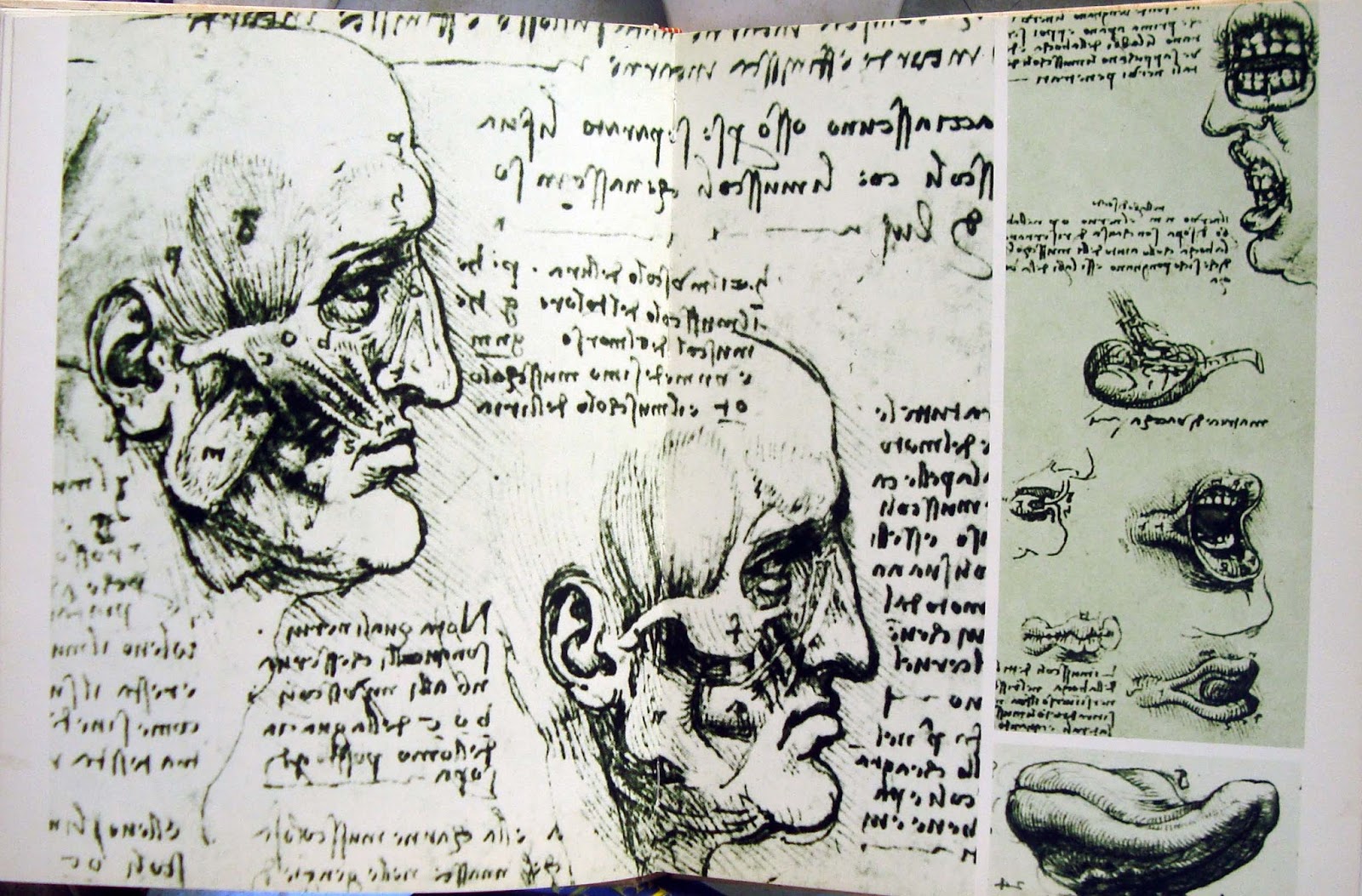
Contribution of Leonardo Da Vinci's Drawings on Human Anatomy to Science and Medicine.
Leonardo’s anatomical studies were among the most significant achievements of Renaissance science. However, during his lifetime, Leonardo’s medical investigations remained private. He did not consider himself a professional in the field of anatomy, and he neither taught nor published his findings.
Dr Abe V Rotor

Leonardo made many important discoveries. For instance, he produced the first accurate depiction of the human spine, while his notes documenting his dissection of the Florentine centenarian contain the earliest known description of cirrhosis of the liver. Had he published his treatise, he would be considered more important than the Belgian anatomist Andreas Vesalius, whose influential textbook On the Fabric of the Human Body appeared in 1543. But he never did.


Leonardo discovered several extraordinary things about the heart. Up until and after his time, the heart was believed to be a two-chambered structure. Leonardo drew the heart with four chambers. Moreover, he discovered that the atria or filling chambers contract together while the pumping chambers or ventricles are relaxing, and vice versa. He observed the heart’s rotational movement. The heart is a complex cone that empties itself with a twisting motion – it wrings itself out, like the wringing out of a towel. In heart failure it loses this twist, which Leonardo may have understood.
Not only as an artist and anatomist, Leonardo experimented as a scientist comparable to modern technique today. Perhaps most impressive of all, were Leonardo’s observations about the aortic valve, which he made while experimenting with an ox’s heart.
This is how Alastair Sooke* describes Leonardo's finding.
"Intrigued by the way the aortic valve opens and closes to ensure blood flows in one direction, Leonardo set about constructing a model by filling a bovine heart with wax. Once the wax had hardened, he recreated the structure in glass, and then pumped a mixture of grass seeds suspended in water through it. This allowed him to observe little vortices as the seeds swirled around in the widening at the root of the aorta. As a result, Leonardo correctly posited that these vortices helped to close the aortic valve. Yet because he never published his far-sighted research, this remained unknown for centuries."
Alastair Sooke looks through
the ultimate Renaissance man’s anatomical sketchbooks – scientific masterpieces
full of lucid insights into the functioning of the human body.
·




Leonardo's study of the human skeleton, and a dissection of the human fetus.
Another contribution of Leonardo is the development of artificial limbs and synthetic organs. His studies on how limbs and organs work have influenced scientists today to create “replacements” of body parts in order for people to function normally..
To think that contact lens is a recent invention, is not accurate, Leonardo was the first to think up the idea of the contact lens - he invented it himself, The model was drawn in his notebook in 1508 which led to the invention of the contact lens in 1808. Today, millions of people use contact lenses, as they are convenient in certain activities like sports, fashion, and studies.
Leonardo was the first to describe atherosclerosis and hepatic cirrhosis. He used molten wax to define the anatomical cerebral ventricles, and made a model glass aorta to study the flow of blood across the aortic valve, using water containing grass seeds to observe patterns of flow. He described the coronary sinuses almost 200 years before Valsalva gave them his name, and, 120 years before Harvey, was surely only a heartbeat away from grasping the idea of the circulation of the blood.


Leonardo compiled a series of 18 mostly double-sided sheets exploding with more than 240 individual drawings and over 13,000 words of notes. He dissected some 30 corpses for his anatomical drawings and studies.
References and Readings
Medical Impact - Leonardo Da Vinci
leonartodavinci.weebly.com/medical-impact.html
Leonardo da Vinci's groundbreaking anatomical sketches - BBC
www.bbc.com/culture/story/20130828-leonardo-da-vinci-the-anatomis
History of Medicine: Leonardo Da Vinci and the Elusive Thyroid ...
columbiasurgery.org/news/.../history-medicine-leonardo-da-vinci-and-elusive-thyroid...
Leonardo da Vinci: anatomist - NCBI - National Institutes of Health
https://www.ncbi.nlm.nih.gov › NCBI › Literature › PubMed Central (PMC)
by R Jones - 2012
Leonardo da Vinci's Vetruvian Man remains as the Ideal Human Figure .

The Vitruvian Man describes the proportions of the human body based on ancient Roman architect Vitruvius’ treatise De architectura on the correlations of ideal human proportions with geometry the human figure as being the principal source of proportion among the classical orders of architecture. Leonardo's drawing is traditionally named in honor of the architect.
Dr Abe V Rotor
A drawing by Leonardo da Vinci around 1490 is accompanied by notes based on the work of the architect Vitruvius depicts a man in two superimposed positions with his arms and legs apart and inscribed in a circle and square. The drawing and text are sometimes called the Canon of Proportions or Proportions of Man. In his illustration of this theory, the so-called Vitruvian Man, Leonardo demonstrated that when a man places his feet firmly on the ground and stretches out his arms, he can be contained within the four lines of a square, but when in a spread-eagle position, he can be inscribed in a circle.
This image demonstrates the blend of mathematics and art during the Renaissance. It demonstrates Leonardo's deep understanding of proportion. In addition, this picture represents a cornerstone of Leonardo's attempts to relate man to nature. He believed the workings of the human body to be an analogy for the workings of the universe."
According to Leonardo's preview in the accompanying text, written in mirror writing, it was made as a study of the proportions of the (male) human body as described in Vitruvius. The text is in two parts.
The first paragraph of the upper part reports Vitruvius: "Vetruvio, architect, puts in his work on architecture that the measurements of man are in nature distributed in this manner, that is:
· a palm is four fingers
· a foot is four palms
· a cubit is six palms
· four cubits make a man
· a pace is four cubits
· a man is 24 palms
The second paragraph reads: "if you open your legs enough that your head is lowered by one-fourteenth of your height and raise your hands enough that your extended fingers touch the line of the top of your head, know that the center of the extended limbs will be the navel, and the space between the legs will be an equilateral triangle".
The lower section of text gives these proportions:
· the length of the outspread arms is equal to the height of a man
· from the hairline to the bottom of the chin is one-tenth of the height of a man
· from below the chin to the top of the head is one-eighth of the height of a man
· from above the chest to the top of the head is one-sixth of the height of a man
· from above the chest to the hairline is one-seventh of the height of a man.
· the maximum width of the shoulders is a quarter of the height of a man.
· from the breasts to the top of the head is a quarter of the height of a man.
· the distance from the elbow to the tip of the hand is a quarter of the height of a man.
· the distance from the elbow to the armpit is one-eighth of the height of a man.
· the length of the hand is one-tenth of the height of a man.
· the root of the penis is at half the height of a man.
· the foot is one-seventh of the height of a man.
· from below the foot to below the knee is a quarter of the height of a man.
· from below the knee to the root of the penis is a quarter of the height of a man.
· the distances from below the chin to the nose and the eyebrows and the hairline are equal to the ears and to one-third of the face.

The points determining these proportions are marked with lines on the drawing. Below the drawing itself is a single line equal to a side of the square and divided into four cubits, of which the outer two are divided into six palms each, two of which have the mirror-text annotation "palmi"; the outermost two palms are divided into four fingers each, and are each annotated "diti". Leonardo is clearly illustrating Vitruvius' De architectura which reads:
For the human body is so designed by nature that the face, from the chin to the top of the forehead and the lowest roots of the hair, is a tenth part of the whole height; the open hand from the wrist to the tip of the middle finger is just the same; the head from the chin to the crown is an eighth, and with the neck and shoulder from the top of the breast to the lowest roots of the hair is a sixth; from the middle of the breast to the summit of the crown is a fourth. If we take the height of the face itself, the distance from the bottom of the chin to the under side of the nostrils is one third of it; the nose from the under side of the nostrils to a line between the eyebrows is the same; from there to the lowest roots of the hair is also a third, comprising the forehead. The length of the foot is one sixth of the height of the body; of the forearm, one fourth; and the breadth of the breast is also one fourth. The other members, too, have their own symmetrical proportions, and it was by employing them that the famous painters and sculptors of antiquity attained to great and endless renown.
Similarly, in the members of a temple there ought to be the greatest harmony in the symmetrical relations of the different parts to the general magnitude of the whole. Then again, in the human body the central point is naturally the navel. For if a man be placed flat on his back, with his hands and feet extended, and a pair of compasses centred at his navel, the fingers and toes of his two hands and feet will touch the circumference of a circle described therefrom. And just as the human body yields a circular outline, so too a square figure may be found from it. For if we measure the distance from the soles of the feet to the top of the head, and then apply that measure to the outstretched arms, the breadth will be found to be the same as the height, as in the case of plane surfaces which are perfectly square.
Leonardo's drawing combines a careful reading of the ancient text with his own observation of actual human bodies. In drawing the circle and square he correctly observes that the square cannot have the same center as the circle, the navel, but is somewhat lower in the anatomy. This adjustment is the innovative part of Leonardo's drawing and what distinguishes it from earlier illustrations. He also departs from Vitruvius by drawing the arms raised to a position in which the fingertips are level with the top of the head, rather than Vitruvius's much lower angle, in which the arms form lines passing through the navel.
The drawing itself is often used as an implied symbol of the essential symmetry of the human body, and by extension, of the universe as a whole.
It may be noticed by examining the drawing that the combination of arm and leg positions actually creates sixteen different poses. The pose with the arms straight out and the feet together is seen to be inscribed in the superimposed square. On the other hand, the "spread-eagle" pose is seen to be inscribed in the superimposed circle. (Acknowledgement: Wkipedia)

The Vitruvian Man describes the proportions of the human body based on ancient Roman architect Vitruvius’ treatise De architectura on the correlations of ideal human proportions with geometry the human figure as being the principal source of proportion among the classical orders of architecture. Leonardo's drawing is traditionally named in honor of the architect. This composite drawing shows the enormous range of application of the Vitruvian Man in both man-made structures and the natural order of the universe.
--------------------------------------
Leonardo envisaged the great picture chart of the human body he had produced through his anatomical drawings and Vitruvian Man as a cosmografia del minor mondo (“cosmography of the microcosm”). He believed the workings of the human body to be an analogy, in microcosm, for the workings of the universe. Leonardo wrote: “Man has been called by the ancients a lesser world, and indeed the name is well applied; because, as man is composed of earth, water, air, and fire…this body of the earth is similar.” He compared the human skeleton to rocks (“supports of the earth”) and the expansion of the lungs in breathing to the ebb and flow of the oceans.
In his illustration of this theory, the so-called Vitruvian Man, Leonardo demonstrated that when a man places his feet firmly on the ground and stretches out his arms, he can be contained within the four lines of a square, but when in a spread-eagle position, he can be inscribed in a circle. (Internet)
Grandmother and Child Before a Wall Mural of Nature
Grandmother and Child Before a Wall Mural of Nature
Dr Abe V Rotor 


Wall mural of Nature by the author at his residence in QC is often visited for respite or photo, for the sake of art to make-believe imagination. Among the recent visitors is a grandmother and her grand daughter from the neighborhood. May 1, 2017
Time has changed - and continues to change:
Mother and Child to Grandmother and Child -
image at the altar to scenario of Nature.
prayer to friendly relationship with Creation.
real to the senses, yet only by imagination. ~
Where have the father and mother gone,
the grandfather too, other members as well?
where is this living stream, this pristine view?
wonder this little child in her youth and power
to chart change as seen in this I'll corner. ~
Monday, May 1, 2017
Thoughts for Today: Baobab and Genie
Dr Abe V Rotor


Trees are a symbol of unity and might;
Rising to touch the sky altogether;
A lone tree loses its majestic height,
And soon disappears forever.
Few trees live in isolation. One of them is the baobab (Adansonia digitata) found in South Africa claimed to be 6000 years old (1000 years at least by Carbon dating). In The Little Prince by Antoine de Saint- Exupery, the baobab is feared because it could destroy the small planet of the little prince. The tree was also featured in the movie The Gods Must be Crazy.
A Genie rises but does it have a soul?
I, a teacher, all knowing and tall
With experience and schooling full;
But do I really know my goal?


Trees are a symbol of unity and might;
Rising to touch the sky altogether;
A lone tree loses its majestic height,
And soon disappears forever.
Few trees live in isolation. One of them is the baobab (Adansonia digitata) found in South Africa claimed to be 6000 years old (1000 years at least by Carbon dating). In The Little Prince by Antoine de Saint- Exupery, the baobab is feared because it could destroy the small planet of the little prince. The tree was also featured in the movie The Gods Must be Crazy.
A Genie rises but does it have a soul?
I, a teacher, all knowing and tall
With experience and schooling full;
But do I really know my goal?
A magic spirit that looks like a person, often lives in a lamp or bottle, and serves the person who calls it.
Subscribe to:
Posts (Atom)