Tuesday, November 4, 2014

UST-AB Photography 2: Santo NiƱo Shrine Cebu - a photo study

Living with Nature School on Blog
Paaralang Bayan sa Himpapawid 738 DZRB AM Band with Ms Melly C Tenorio
8 to 9 evening class, Monday to Friday 
Special Lesson 

Matthew Marlo R Rotor
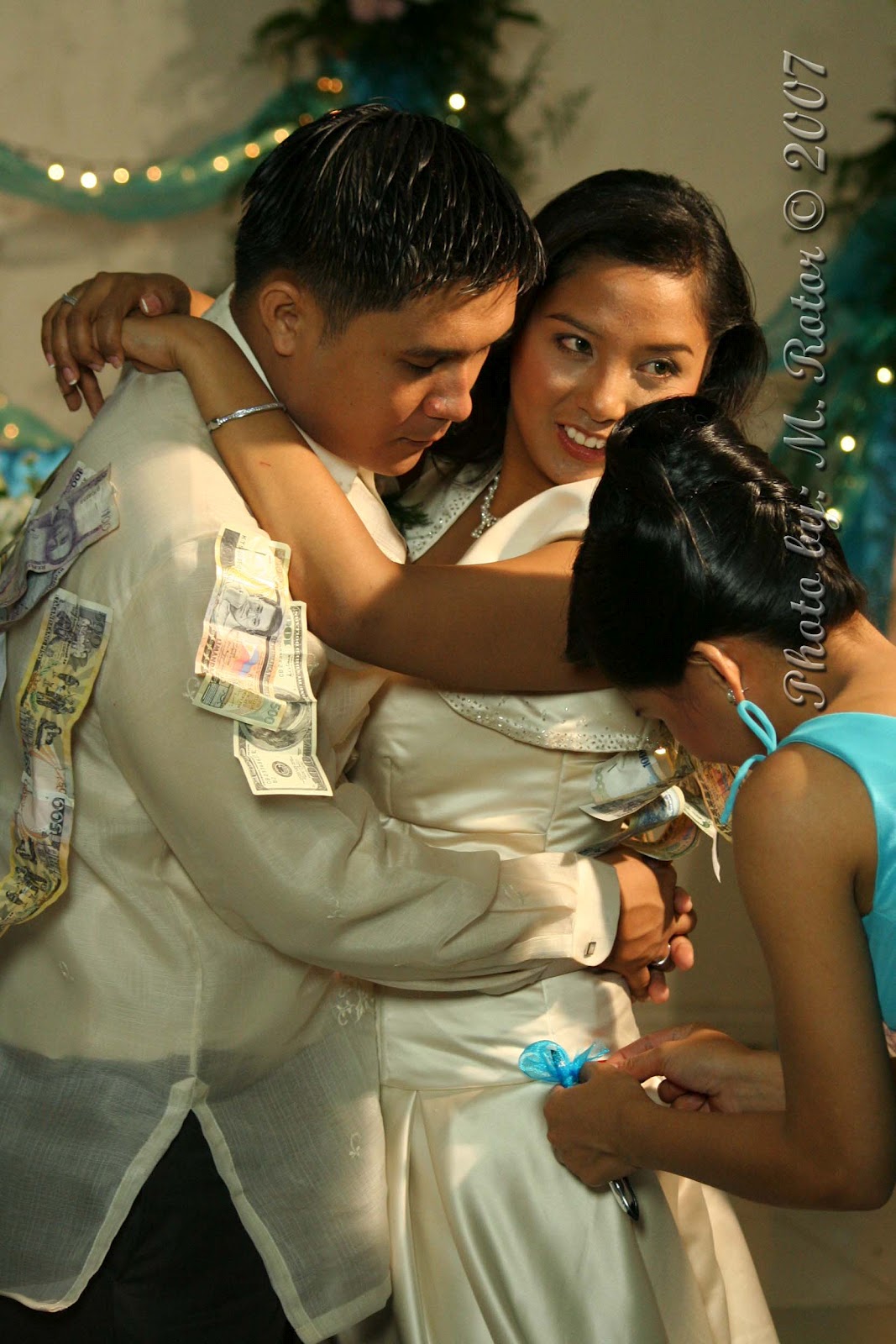
Lesson in Photography: These are raw photos and candid shots.  Not scripted, and no editing was made. Critique  the set of photos as part of your course requirement.   


UST- AB Photography 3: Colorful Balloons

Living with Nature School on Blog
Paaralang Bayan sa Himpapawid 738 DZRB AM Band with Ms Melly C Tenorio
8 to 9 evening class, Monday to Friday 
Special Lesson 

Matthew Marlo R Rotor
Lesson in Photography: These are raw photos and candid shots.  Not scripted, and no editing was made. Critique  the set of photos as part of your course requirement.   


Twelve Reasons I Love Philippine Literature

Dr Abe V Rotor 
Living with Nature School on Blog 
Paaralang Bayan sa Himpapawid with Ms Melly C Tenorio 
738 DZRB AM, evening class 8 to 9, Monday to Friday. 

1. Philippine Literature takes me to the domain of the gods and goddesses, to the kingdom of the Great Maker of Malakas at Maganda, in respect and awe to their power over mortals for which man submits himself through fear and dedication in the name of Bathala - the counterpart of Odin to the Norse andZeus to the Greeks . For literature started at the dawn of civilization in epics, songs and chants, myths, riddles, legends and folktales passed on from generation to generation.

2. Philippine Literature brings back the sweet days of childhood when children believed in the kapre (hairy giant) that lives in big tree, dwende in punso (anthills), the manananggal (half-bodied vampire) peeping through thatch roofs. The whole experience is distilled during adolescence, the courageous parting of childhood to adulthood, leaving the imprints of the unknown world always remaining enigmatic and entertaining in adult life. Sarangola ni Pepe, (The Kite of Young Jose), lyrical and typical of a ballad, takes one back in time, up to the sky, with the lilting laughter of a child that he was.

3.Philippine Literature unveils the world of the minutiae that provides bounty and source of merriment – honeybees converting nectar into the sweetest substance on earth – pukyutan (honey), caterpillars making the purest fabric ever – sutla or seda (silk), bubod (natural yeast) brewing the best wine in buried burnay (earthen jar) –basi, tuba, tapoy, bahalina, layaw, lambanog, and mead, the drink of the gods – these bring Bacchus and Dionysius into the midst of celebration. Sober they listened to a sage recount Biag ni Lam-ang (The Life of Lam-ang), Hudhod and Alim (Ifugao), Kumintang (Tagalog), Maragtas and Hinilawod (Panay-Bisaya) in like manner Homer related the Iliad and Odyssey to the Greeks hundreds of years ago.
      
 4. Philippine Literature is never passive and prosaic, it has moved on with the times, dating with post-romanticism and emerging with contemporary subjects, among them the glamorous Philippine Jeepney, converted surplus jeep into passenger vehicle, which introduced a different concept of beauty, overbearing in decorative accessories; the Bahay Kubo (Nipa Hut) romantic symbol of rural life, and now common feature in parks, and satellite of modern homes. It retains its coziness and quaintness in the midst of modern environment. Contemporarily, literature diverged from the traditional book and theater to cinema and television, making it accessible at homes, cinema houses and viewing centers – and now with hand-held electronic gadgets (tablets). Literature has entered a global trend of “ hybridization” enriched it in the process, with history, photography, ecology, archaeology, documentary, science, and other disciplines. Jules Verne’s Twenty Thousand Leagues Under the Sea, has a local version of submarine adventure, Spyri’s Heidi is typical of televovela theme. This is a global trend that brings “literature to the people, and not people to literature.” Noli, the Musical brought Rizal’s serious political novel to the grassroots, in performing arts shown on screen and electronic monitor with state-of-the-art technology.

5. Philippine Literature, on the other side of midnight, so to speak, portrays the dark, the painful and sorrowful events and conditions of life, yet gives a sense repentance and hope usually ending up with renaissance which is the foundation of ancient religions and later, Christianity. Man still believes that he can do so little without the intercession of the gods  and godesses – Anianihan (God of Harvest), Cabuyaran (Goddess of Healing) of the Cordilleras, and other deities like Maria Makiling (Legend of Mt Makiling) and Daragang Magayon (Legend of Mt Mayon) who guard our forests and fields. Probably there is no place without stories of spirits and ghosts, pastime of storytelling and subject of worship and superstition.


6. Philippine literature succeeded in toppling the pedestal of classicism and romanticism of Renaissance Europe in the 16th century with the discovery and subsequent colonization of the Philippines by Spain for almost 400 years. Towards the end, we gained from the toppling of aristocracy in Europe that gave way to proletarian and agrarian life – which is characterized by everyday drama of the people. It took several pathways to the grassroots – komiks (comics), popular magazines like Liwayway and Bannawag (Dawn, in Ilocano and Tagalog), and stage play, the Zarzuela (melodrama), and ramifying through multimedia today.Telenovela (TV drama) draws millions of viewers into tears and laughter. It is responsible in early closing shops and going home so as not to miss the excitement of every episode, reminiscent of the 1001 Arabian Nights when Scheherazade held the Sultan in suspense with her stories as a tactic in postponing her execution.

7. Philippine Literature exults beauty often envisioned in the Filipina, now a melange of Oriental and Occidental lineages, the subjects of stories, poems and songs, and while the Maria Clara image has fused with contemporary culture, still it captures the essence of womanhood and the role of women in present society. Decada 70, Tinimbang Ka Ngunit Kulang, OFW, and other related movies may still project the suffering Sisa in Rizal’s Noli, except that she is also a Gabriela, independent and militant. Literature would not be complete without the Filipina at the center of the story, notwithstanding her dual role in the workplace and the home. Carmen Guerrero Nakpil tells more in The Filipino Woman, so with Paz Mendez, The Principal Role of the Home in Making a Filipino.

8. Philippine literature produced not only great works but projected before the eyes of the world the greatness to the Filipino nation and people: Rizal’s Noli Me Tangere and El Filibusterismo inflamed the Revolution led by Andres Bonifacio who penned the Kartilya, Graciano Lopez Jaena’s La Solidaridad, Carlos P Romulo’s Pulitzer winning essay, “I Saw the Philippine Fall; I Saw the Philippines Rise.” Florante at Laura by Francisco Baltazar (Balagtas) earned him the counterpart of Shakespere. And the stories for children gathered and compiled by the Grimm Brothers, and Hans Anderson in Medieval Europe - these too, have a local version in Mga Kwento ni Lola Basyang by Severino Reyes.

9. Philippine Literature is rich in mythology, largely influened by ethnic and Greco-Roman mythology, albeit the myths and legends of other foreign lands, for which reason our literature has gained rich diversity, from local versions of Medusa (woman with hair of snakes), centaur (half man, half beast - tikbalang), the balete as alleged hanging tree of the repentant Judas Escariot. The fact is, Philippine legends trace the mythological origins of places, objects, and events. Gaudencio V Aquino’s book of Philippine Legends gives us a glimpse of the fertile imagination engrained in our culture. Mythology is the core of our supertitious beliefs, rituals, prayers, and festivities, that largely comprise Philippine Literature.

10. Philippine Literature has a holistic nature, encompassing native songs like Paruparong Bukid (Butterfly in the Field), Ang Maya (Brown Finch), Bakya Mo Neneng (girl’s wooden clog), Bahay Kubo (nipa hut); music played by the Rondalla (string ensemble), dallot (skirt dance), prayers and adoration like pasyon (Passion of Christ), dung-aw (dirge). Florentino Hornedo’s Pagmamahal and Pagmumura (Love and Curse) shows the extremes of our human nature. Goodness always prevails as shown by bayanihan (cooperation), lamayan (wake), and the annual fiesta to commemorate a significant event or feastday of a patron saints. And if the incantations of the herbolario, (quack doctor), and the spiritista (faith healer), together with the lullaby (Ugoy ng Duyan, a cradle song), as well as other rituals to bring man closer to his creator - if these were to be retrieved deep from the remote sitio or purok (unit of barangay) in the twelve regions of the country - certainly these will further enrich the treasure of our literature and culture.


11. Philippine Literature needs to advance, over and above its present confines, to “come down to earth” in order to become relevant to the issues and concerns of the times. By so doing it keeps distance from cheap soap opera, blind devotion, and latent scholarship. “Get out of the house” cried the late national poetess Ophelia Dimalanta, “Bond with Nature,” a subject that has stirred all disciplines today on the subject of ecology. Literature must use the modern tools of communication - photography , the Internet and multimedia, because, literature as a medium of communication must exercise the power of the pen - the electronic pen with cyberspace to write on today.

 12. Philippine literature challenges both young and old, Quo vadis? (Where are you going?), to set the direction of change, to move out of the comfort of fraternity and shield of arrogance, to tap talents, especially among the young, and catalyze their expression, to make literature, technical writing and journalism compatible, a triumvirate in a vernacular language understood and appreciated by the people, not so much for stylistic quality but for advocacy towards a better life and a better world. Of equal importance, Philippine Literature must strive to be always vigilant and true, in the protection of its integrity from the trappings of the Good Life – pornography, violence, acculturation, materialism, institutional decline, particularly the family and village community. The homogenization effect that globalization poses is the biggest challenge not only in the Philippines but in other countries as well: the preservation of literature which is the precursor of culture, making it relevant and significant in our present age of postmodernism.~

Monday, November 3, 2014

Dr Juan M Flavier was known as “Doctor to the Barrios”.

Paaralang Bayan sa Himpapawid Special Topic in honor of the late Dr Juan M Flavier, Health Secretary and two-time Senator.  President, International Institute for Rural Reconstruction.  True Filipino and hero.
--------------------------
" Dr Flavier is one of those rare persons who is actually at home in the barrio and among the leaders of the nation.  In one day he may spend the morning discussing methods of family planning with barrio women; in the afternoon, he may confer with mountaineers from Vietnam about land reform; in the evening he may be found working with the Department of Social Welfare on strategy for national development." Quoted from the back cover of his first book Doctor to the Barrios 1970, New Day Publishers. Before his second book, My Friends in the Barrio, came out four years after, Doctor to the Barrio's printing reached 24,000 copies, and was translated in Indonesia and other countries. To date, 44 years after, Dr Flavier's books (7 major ones) are still in great demand.     
------------------------
Quoted from My Friends in the Barrios 
Dr Flavier introduces the reader to some of the friends in the barrios - and soon they become his friends also.  They come alive as, with deft, down to earth strokes, the authors paints them on his canvas of rural life.  Readers discover the answers to such intriguing questions as "Do eggs die?" "Why does operating a poultry lead to having many children?"  "How does a rural swain woe his girl?"  "Who gets rich in rice production?" "How do you explain the IUD in the barrio?"
----------------------
Quoted from Back to the Barrios
"For the sophisticated Metro Manilan or any other city-bred reader the stories about his friends in the barrios that Dr Flavier relates in his books are refreshing.  We can all achieve fresh insights by every so often, going back to the barrios." 
---------------------
Born in Tondo, Manila on June 23, 1935, Flavier grew up in Baguio City where he attended his elementary and secondary years. He attended medical school at the University of the Philippines where he graduated in 1960.


Former health secretary and senator Juan M. Flavier. FILE PHOTO

Shortly after he obtained his medical degree, he chose to be an educator through the Philippine Rural Reconstruction Movement (PRRM) and the International Institute of Rural Reconstruction (IIRR), organizations which served Filipinos in the provinces through education and training. He later led the organization from 1977 to 1992.

As health secretary, Flavier introduced effective public health campaigns such as curbing smoking and combating HIV/AIDS.

After leading the PRRM and IIRR, Flavier was designated by former president Fidel V. Ramos as the health secretary. By being the health secretary, Flavier was known as “Mr. Let’s DOH It!” which was derived from the DOH campaign slogan under his term.

He instituted campaigns such as the “Yosi Kadiri” campaign, ‘Sangkap Pinoy”, a campaign addressing micronutrient malnutrition, and the “Oplan Alis Disease”, a nationwide immunization campaign.

Under his helm, the Department of Health became an active government agency and became the number one government office under the Ramos presidency.

Flavier is a two-termer senator who championed health and rural development issues.

After serving as the nation’s health secretary, Flavier won as a senator in 1995. As a neophyte senator during the 10th Congress, he was recognized as the senator who attended the most number of committee hearings and did not incurred any absences in Senate sessions.

He won a second term as senator and served until 2007.

Some of the landmark legislations he authored and sponsored include: the Traditional Medicine Law, Poverty Alleviation Law, Clean Air Act, Indigenous People’s Rights Act, Anti-money Laundering Act, Dangerous Drugs Act, Philippine Nursing Act, and the Tobacco Regulation Act.

He was once called an “agent of Satan” by Manila archbishop Jaime Cardinal Sin.

When he was the health secretary, Flavier implemented the first anti-HIV/AIDS campaign in the country. Part of his campaign includes the distribution of condoms to Filipinos. Due to this particular effort, he was described by then Manila archbishop Jaime Cardinal Sin as an “agent of Satan”


Sources: Reprint from the Internet; Inquirer archives, Senate website, DOH website

Here is a typical story characteristic of the style of Dr Flavier as a storyteller.  It is picturesque, a travelogue to a real setting, and meeting real people at the grassroots.  The writer's seeming light style, humorous and witty, lessens the seriousness of the topic, yet retains the objective for which the story is written. It is an interesting approach to Philippine literature today, which I personally endorse as 
an important aspect in Popular Literature, a chapter in a forthcoming book Philippine Literature Today (Rotor AV and KM Doria, C &E Publishing Co.)


The Power of the Camatchile
Juan M Flavier

It was a fairly common situation. The couple wanted to stop bearing children but so far their children were only of one sex. So they kept having one more hoping the next would be of the opposite sex.
           
One family reached thirteen offspring in an attempt to have a boy. Another couple had eight boys in a row while trying for a girl.

This is the reason why beliefs about how to procreate a particular sex are rampant. As a farmer said to me, “If you discover how to enable a woman to deliver a child of a particular sex, you will become a millionaire and make family planning more acceptable.”

One of the most common beliefs is that each of the two ovaries gives rise to a particular sex, the right for males and the left for females. Following this belief, the woman is advised to recline on the side according to sex desired after the sex act to enable the sperms to gravitate to the correct ovary.

Another popular advice states that a woman will bear a male if the husband is always tired from work. If the husband has ample time for physical rest then the offspring will be a female.

Still another notion states that the sex of the child depends on whether the sex act occurs before or after midnight.

In a sense I had this problem as my wife had three boys in arrow. We had agreed to have just one boy or one girl. But as I explained to my friends, “My wife did not cooperate!”

Since my wife has a caesarean operation at each delivery, we decided to stop on the third try for a baby girl. I was content to say, “I have two boys and one son!”

Then five years after our youngest son, someone made the mistake of telling my wife that one would have a girl if a couple has had three boys in a row in the Philippines and goes to a cold place like the United States. I was persuaded by my wife to try out trip to America with my family and true enough, the fourth and last was a most welcome baby girl!

To this day, I still have to live down the incident in the hospital. I was so overjoyed with the baby girl. When asked whether the child was a boy or a girl as I got out of the delivery room, I answered with the immortal words, “It’s a baby!”

Of course, when I went to the barrios, my farmer friends eagerly inquired about the secret formula. I had to give some explanation, so I invented one.

There is a simple secret,” I would say. “The trick is to make a baby on the top of camatchile tree.” Camatchile (Pithecolobium dulce) is a common barrio fruit known for its profuse spines and small fragile branches.

“That’s difficult,” the farmers would growl.

“Well, if you want a baby girl badly enough, then you have to do the difficult,” I usually answered and we would all laugh.

One day, Dencio happened to pass by our house.”Naku, duktor, talagang epektibo iyong sistema ninyo (Wow, doctor, your system is really effective)!” he literally shouted to me even before we could exchange greetings.

“Which one?” I inquired.

“Remember the camatchile system? I tried it. Now I have a very healthy girl after five boys in a row,” Dencio explained excitedly.

I was more dumbfounded than pleased. I had only made up the system as a joke and here was Dencio verifying its efficacy. But more surprising was how he could do the impossible. For him and his wife to climb a spiny fragile tree!

“How did you do it?” I asked with avid curiosity.

Dencio stopped a moment as though considering whether to reveal the secret or not. “I cheated a little,” he confessed reluctantly.

“Tell me about it,” I urged.

“I knew we could not do it on top of the camatchile tree,” Dencio explained. “So I cut off a camatchile brach and placed it under our bamboo bed. It is effective, I tell you. We have a girl!”

I have since stopped telling about the camatchile system to the other farmers lest I be credited with powers beyond my fertile imagination.~ 

Sunday, November 2, 2014

Mayon Volcano - Gentle but Fiery

Mayon is a paradox. Tourists flock while residents escape danger; lava destroys but in the long run fertilizes the field, so with volcanic ash; it is self-destruct and self-healing. People curse, people revere.
Dr Abe V Rotor 
Living with Nature - School on Blog
Paaralang Bayan sa Himpapawid (People's School-on-Air) with Ms Melly C Tenorio
738 DZRB AM, 8-9 evening class Monday to Friday

This is how close I got over the crater of Mayon Volcano on Cebu Pacific flight from Manila to Iloilo in 2012. It was a bright morning with a spray of rainbow dramatically unveiling  the majestic cone.

Old photos (August 14, 1928) showing the ruins of the church and belfry of Cagsawa after the 1814 eruption. (Acknowledgement: Internet) 
 
Mayon is a paradox. Tourists flock while residents escape danger; lava destroys but fertilizes the field, so with volcanic ash; it is self-destruct and self-healing.  People curse, people revere.  Beauty begets beauty only after an episode of disaster. Science versus superstition; technology versus unpredictability; impermanence versus balance. Enigma is the word.   (Acknowledgement: Internet, Wikipedia, National Geographic)    

And what is peace and harmony?  Perfection and symmetry? Gentleness and majesty?  Ask the artist, the native of the place, the tourist, a survivor of eruptions, big and small.  Ask a child, a balikbayan. (Acknowledgement: Internet, Wikipedia)   


Left: This is how fire and water meet on the slope, cascading through gullies and solidifying in the process to become part of the volcano's perfect cone. Left:  Before the catastrophic episode, the volcano groans as magma in its vowels expands and rises until the volcano can no longer contain the tremendous pressure.  Result: eruption, a cyclic phenomenon that draws awe and fear, mystery and respect to this beautiful, enigmatic creation.  (Paintings in acrylic by the author)