
National Heroes' Day, August 31, 2026
Dedicated to the Unsung Heroes
Theme: "Kabayanihan ng Pilipino sa Panahon ng Pagbabago"
(Filipino Heroism in Times of Change)
Shared history: The public remembers brave fighters, quiet workers, and everyday citizens. They all gave their time and lives for justice and peace.
Researched by Dr Abe V Rotor
Living with Nature School on Blog
avrotor.blogspot.com
18th year, 5230 posts/lessons, 7432370 views, to date

Initially National Heroes' day was celebrated on 30th of November as it was the birthday of Andres Bonifacio, founder of the Katipunan. Later this day moves to the fourth Monday of August, to pay tribute to all other known or unknown men and women who sacrificed their lives for Philippine freedom.
The Philippines achieved its identity due to the noble deeds made by numbers of people, known as National Heroes. People of Philippines celebrate this day with a great enthusiasm. This is a perfect day to remember the life and work of all these great people.
The Philippines achieved its identity due to the noble deeds made by numbers of people, known as National Heroes. People of Philippines celebrate this day with a great enthusiasm. This is a perfect day to remember the life and work of all these great people.
National Heroes Day of Philippines is celebrated annually on the last Monday of August to honor and remember the unknown and valiant heroes who fought for the freedom and pride of the Philippines from Spain, the U.S., and Japan.


José Rizal: Writer and physician whose nationalist writings inspired the reform and independence movement. Andres Bonifacio: Founder of the revolutionary society Katipunan that started the 1896 revolution. Emilio Aguinaldo: Revolutionary leader and first president of the Philippine Republic.

Apolinario Mabini: Political thinker and adviser known as the "Brains of the Revolution". Marcelo H. del Pilar: Reformist writer and editor of the propaganda newspaper La Solidaridad. Sultan Dipatuan Kudarat: 17th-century Sultan of Maguindanao who fought against Spanish colonial forces.
Melchora Aquino: Revolutionary supporter known as "Tandang Sora," who aided Katipuneros. Gabriela Silang: Female revolutionary leader who led an uprising against Spanish rule in Ilocos. Internet
ANNEX - 1
OBLIQUE OBSERVATIONSThe heroes we do not always see
By Atty. Gilberto Lauengco, J.D.
National Heroes Day is for all the heroes. Perhaps a hero is just someone who chooses to do what is right when doing right is difficult or misunderstood. This Heroes Day, let us honor not just the ones in history books or the news. Let us look around at the heroes we do not always see.
On Monday, Aug. 31, the country will celebrate National Heroes Day. On this day, we will remember all the names that have become permanently etched in our collective memory.
We remember Jose Rizal, Andres Bonifacio, Apolinario Mabini and many other Filipinos who sacrificed a lot for the country. National Heroes Day, however, is not just about the famous heroes. It is also about the other heroes whose names do not appear on any monument or memorial.
There are already many in our past conflicts or disasters who gave their lives who are either remembered only by a few or none at all. In my mother’s family alone, we have an uncle who fought in World War 2 as a guerrilla and was beheaded for his efforts. We have another uncle who survived the infamous Death March only to die because of the illnesses he got from the grueling experience. My late father once told me of his classmate from the Ateneo in the early 50s who, as an ROTC cadet, volunteered to join the Philippine Expeditionary Forces in Korea during the said conflict and was killed in action. There are probably thousands of Filipinos whose sacrifices are on the verge of being forgotten.
In recent events, we have the story of Chris Lorenz Fabian, who, on that tragic day of the shooting at the San Jose National High School in Tacloban, courageously held a classroom door shut to prevent an armed assailant from entering and suffered gunshot wounds. He died saving 30 lives, allowing them time to hide and flee. This Monday is also for all these other heroes.
There are the thousands of government workers and officials who continue to do their job and the right thing despite temptations and bashing. There are the hundreds of thousands of overseas Filipino workers who have left their homes and families to work.
There are the millions of people who, in their everyday life, work hard to provide food on the table. There are the people who simply trudge on despite everything. Their heroism is rarely dramatic. Often, it is simply the decision to keep going.
National Heroes Day is for all the heroes. Perhaps a hero is just someone who chooses to do what is right when doing right is difficult or misunderstood.
This Heroes Day, let us honor not just the ones in history books or the news. Let us look around at the heroes we do not always see.
Editor’s note: The opinions expressed in the foregoing article are solely the author’s and do not reflect the opinions and beliefs of the Philippine News Agency (PNA) or any other office under the Presidential Communications Office.
ANNEX 2 - Famous Filipinos
From the Internet August 2, 2026


Manny Pacquiao Maria Ressa Alex Eala
1788-04-02 Francisco Balagtas, Filipino poet (Florante at Laura), born in Barrio Panginay, Balagtas, Bulacan (d. 1862)
1812-01-06 Melchora Aquino, Filipino revolutionary hero, born in Caloocan, Philippines (d. 1919)
1818-03-15 Mariano Álvarez, Filipino revolutionary general and statesman, born in Noveleta, Cavite (d. 1924)
1837-02-09 José Burgos, Filipino Catholic priest (advocated for greater Filipino self-determination), born in Vigan, Philippines (d. 1872)
1812-01-06 Melchora Aquino, Filipino revolutionary hero, born in Caloocan, Philippines (d. 1919)
1818-03-15 Mariano Álvarez, Filipino revolutionary general and statesman, born in Noveleta, Cavite (d. 1924)
1837-02-09 José Burgos, Filipino Catholic priest (advocated for greater Filipino self-determination), born in Vigan, Philippines (d. 1872)
1856-12-18 Graciano López Jaena, Filipino journalist (La Solidaridad), orator, social reformist, and national hero, born in Jaro, Captaincy General of the Philippines, Spanish Empire (d. 1896)
1860-08-06 Fernando Canon, Filipino revolutionary general, poet, and the Philippines 1st National Chess Champion, born in Biñan, Laguna, Captaincy General of the Philippines (d. 1938)
1861-06-19 José Rizal, Filipino nationalist and novelist ('Noli Me Tángere', 'El Filibusterismo'), born in Calamba City, Laguna, Philippines (d. 1896)
1863-11-30 Andrés Bonifacio, Filipino revolutionary leader of 1896 Philippine revolt against Spain, born in Manila, Philippines (d. 1897)
1864-07-23 Apolinario Mabini, Filipino political theoretician and 1st Prime Minister of the Philippines, born in Tanauan, Batangas, Philippines (d. 1903)
1860-08-06 Fernando Canon, Filipino revolutionary general, poet, and the Philippines 1st National Chess Champion, born in Biñan, Laguna, Captaincy General of the Philippines (d. 1938)
1861-06-19 José Rizal, Filipino nationalist and novelist ('Noli Me Tángere', 'El Filibusterismo'), born in Calamba City, Laguna, Philippines (d. 1896)
1863-11-30 Andrés Bonifacio, Filipino revolutionary leader of 1896 Philippine revolt against Spain, born in Manila, Philippines (d. 1897)
1864-07-23 Apolinario Mabini, Filipino political theoretician and 1st Prime Minister of the Philippines, born in Tanauan, Batangas, Philippines (d. 1903)
1868-04-04 Felipe G. Calderon, Filipino lawyer, politician, educator, and co-author of Malolos Constitution (of the First Philippine Republic), born in Santa Cruz de Malabon, Cavite, Philippines (d. 1908)
1873-12-18 Francis Burton Harrison, American-Filipino statesman, Governor General of the Philippines (1913-21), born in New York City (d. 1957)
1875-11-14 Gregorio del Pilar, Filipino general known as the 'boy general' during the Philippine-American War, born in Bulakan, Philippines (d. 1899)
1875-12-15 Emilio Jacinto, Filipino poet and revolutionary, born in Tondo, Manila (d. 1899)
1877-04-18 Vicente Sotto, Filipino politician and author (Sotto Law, Republic Act No. 53), born in Cebu City, Spanish Empire (d. 1950)
1877-10-29 Narcisa de León, Filipino film mogul, born in San Miguel, Bulacan, Philippines (d. 1966)
1879-09-25 Lope K. Santos, Filipino writer and Father of the Philippine National Language and Grammar, born in Pasig, Philippines (d. 1963)
1883-01-21 Eulogio "Amang" Rodriguez, Filipino politician, President of the Senate of the Philippines (1954-63), born in Montalban, Philippines (d. 1964)
1886-05-10 Felix Manalo, Filipino minister, Founder and 1st Executive Minister of the Iglesia ni Cristo, born in Taguig, Philippines (d. 1963)
1889-01-29 Francisco Santiago, Filipino pianist, composer (Taga-ilog Symphony), conductor, and pedagogue, born in Santa Maria, Bulacan, Philippines (d. 1947)
1890-02-08 Claro Mayo Recto, Filipino politician, nationalist (opponent of US colonialism) and poet, born in Tiaong, Philippines (d. 1960)
1891-11-28 Gregorio Perfecto, Filipino jurist (48th Associate Justice of the Philippine Supreme Court) and politician, born in Mandurriao, Iloilo, Captaincy General of the Philippines (d. 1949)
1892-05-30 Fernando Amorsolo, Filipino painter nicknamed the "Grand Old Man of Philippine Art", born in Manila, Philippines, Spanish Empire (d. 1972)
1893-02-07 Nicanor Abelardo, Filipino classical music and kundiman song composer, born in San Miguel de Mayumo, Bulacan, Captaincy General of the Philippines (d. 1934)
1894-12-26 Antonio Molina, Filipino composer, conductor and music administrator (Ana Maria, Hatinggabi), born in Quiapo, Manila, Captaincy General of the Philippines (d. 1980)
1895-03-23 Encarnación Alzona, pioneering Filipino historian, educator, and first Filipino woman to obtain a Ph.D., born in Biñan, Philippines (d. 2001)
1896-07-08 Alfredo Carmelo, Filipino aviator, lithographer, and painter, born in Manila, Philippines (d. 1985)
1898-02-08 Andrés Soriano, Spanish Filipino industrialist (San Miguel Brewery, Philippine Airlines), born in Manila, Spanish Philippines (d. 1964)
1901-08-01 Pancho Villa [Francisco Guilledo], Filipino world boxing champion, born in Ilog, Negros Occidental, Philippine Islands (d. 1925)
1902-01-25 Pablo Antonio, Filipino modernist architect, born in Manila, Philippines (d. 1975)
1902-01-31 Salvador Araneta, Filipino lawyer, educator, businessman, and philanthropist, born in Manila, Philippines (d. 1982)
1902-08-19 J. B. L. Reyes, Filipino jurist, Associate Justice of the Supreme Court, born in Manila, Philippines (d. 1994)
1902-10-21 Hilarion Rubio, Filipino composer, born in Bacoor, Cavite, Philippines (d. 1985)
1903-06-15 (Carlos) "Charlie" Gemora, Filipino-American film make-up artist and actor who specialized in playing gorillas (Murders in the Rue Morgue; The Chimp & Swiss Miss; At the Circus; Road to Zanzibar), born in Negros, Philippine Islands (d. 1961)
1904-01-28 Canuplin, Filipino magician and bodabil entertainer, born in Tondo, Philippine Islands (d. 1979)
1905-03-24 Pura Santillan Castrence, Filipino writer and diplomat (As I See It: Filipinos and the Philippines), born in Manila, Philippines (d. 2007)
1905-09-05 Justiniano Montano, Filipino politician, born in Tanza, Cavite, Philippines (d. 2005)
1906-02-17 Ramon Tapales, Filipino composer and conductor, born in Baybay, Philippines (d. 1995)
1906-08-26 Ceferino Garcia, Filipino boxer (World Middleweight champion 1939-40), born in Naval, Biliran, Philippine Islands (d. 1981)
1907-02-13 Catalina "Katy" de la Cruz, Filipino jazz and torch song singer, born in Bustos, Bulacan, Philippine Islands (d. 2004)
1907-12-12 Fred Elizalde, Spanish Filipino composer, born in Manila, Philippines (d. 1979)
1908-02-20 Leon Lontoc, Filipino-American character actor (The Ugly American; Burke's Law - "Henry"), born in Manilla, Philippines (d. 1974)
1908-06-30 Lucino Tinio Sacramento, Filipino composer, born in Licab, Nueva Ecija, Philippines (d. 1984)
1909-05-15 Rodolfo Cornejo, Filipino classical pianist, composer, and conductor, born in Manila, Philippines (d. 1991)
1910-04-30 Levi Celerio, Filipino songwriter, lyricist ("Sa Ugoy ng Duyan", "Ang Pasko ay Sumapit"), musical leaf player, actor, and poet, born in Tondo, Philippines (d. 2002)
1911-11-27 Fe del Mundo, Filipino pediatrician and National Scientist of the Philippines, born in Manila, Philippine Islands (d. 2011)
1912-05-01 Felipe Padilla de León, Filipino composer, born in General Tinio, Nueva Ecija, Philippine Islands (d. 1992)
1912-09-10 Mary Walter, Filipino actress (Shake, Rattle and Roll, Tatlo, Dalawa, Isa), born in Sorsogon, Philippine Islands (d. 1993)
1912-12-26 Arsenio Lacson, Filipino journalist and politician (Mayor of Manila, 1952-62), born in Talisay, Philippines (d. 1962)
1913-02-11 Lucio San Pedro, Filipino composer ("Sa Ugoy ng Duyan"), born in Angono, Philippines (d. 2002)
1915-03-31 Eliseo Pajaro, Filipino composer (The Life of Lam-Ling/Lam-ang; Marilag Fantasy), pedagogue, and school administrator, born in Badoc, Philippines (d. 1984)
1915-09-08 N. V. M. González, Filipino novelist, short story writer, and, poet, born in Romblon, Philippines (d. 1999)
1915-10-11 Florence Finch, Filipino-American war hero who fought against the Japanese occupation of the Philippines during World War II, born in Santiago, Philippines (d. 2016)
1916-11-12 Rogelio de la Rosa, Filipino actor (The Sword of Avenger) and politician, born in Lubao, Philippines (d. 1986)
1917-01-31 José Maceda, Filipino composer and ethnomusicologist, born in Manila, Philippines (d. 2004)
1918-01-21 Chichay [Amparo Robles Custodio], Filipino comedienne and actress (Bilangguang puso, Ngitngit ng pitong whistle bomb), born in Tondo, Manila (d. 1993)
1918-07-16 Bayani Casimiro, Filipino dancer and actor (Okey Ka Fairy Ko!), born in San Pablo, Laguna, Philippine Islands (d. 1989)
1921-10-08 Abraham Sarmiento, Sr., Filipino Supreme Court jurist (1987-91), born in Santa Cruz, Ilocos Sur, Philippine (d. 2010)
1922-05-11 Ameurfina Melencio-Herrera, Filipino Supreme Court jurist, born in Cabanatuan, Philippines (d. 2020)
1922-09-03 Rosendo Ejercito Santos, Filipino composer, born in Caridad, Cavite City, Philippines (d. 1994)
1924-02-14 Juan Ponce Enrile [Juanito Furagganan], Filipino lawyer and politician known for withdrawing his support of President Ferdinand Marcos, born in Gonzaga, Philippines (d. 2025)
1924-10-15 Henry Sy, Chinese- Filipino businessman known as the "Philippines' Retail King", born in Jinjiang, Fukien, Republic of China (d. 2019)
1924-12-03 F. Sionil José, Filipino novelist (Rosales Saga) and Philippine National Artist for Literature, born in Rosales, Pangasinan, Philippine Islands (d. 2022)
1927-02-03 Blas Ople, Filipino journalist, politician, Senate President (1996-2001), and Secretary of Foreign Affairs (2002-03), born in Hagonoy, Philippine Islands (d. 2003)
1928-03-18 Fidel V. Ramos, Filipino general and 12th President of the Philippines (1992-98), born in Lingayen, Pangasinan, Philippines (d. 2022)
1928-07-25 Mario Montenegro, Filipino actor (The Rites of May), born in Pagsanjan, Philippines (d. 1988)
1928-08-31 Jaime Sin, Filipino cardinal and the Roman Catholic archbishop of Manila (1974-2003), born in Panay, Philippines (d. 2005)
1928-10-16 Rosa Rosal [Florence Gayda], Filipino actress and humanitarian described as "original femme fatale of Philippine cinema", born in Manila, Philippine Islands
1928-11-18 Salvador Laurel, Filipino lawyer and politician (Vice President of the Philippines, 1986-92), born in Paco, Manila, Insular Government of the Philippine Islands (d. 2004)
1929-07-02 Imelda Marcos (née Romuáldez), Filipino politician and First Lady of the Philippines (1965-86) who famously collected over 1,000 pairs of shoes, born in Manila, Philippines
1929-07-23 Danny Barcelona, Filipino-American jazz drummer (Louis Armstrong's All-Stars), born in Waipahu, Territory of Hawaii (d. 2007)
1929-09-05 Ildefonso P. Santos Jr., Filipino landscape architect (National Artist of the Philippines in Architecture, 2006), born in Malabon, Philippines (d. 2014)
1929-09-30 Leticia Ramos-Shahani, Filipino Senator, lawmaker and women's rights activist who led the drafting of the international women’s bill of rights, born in Lingayen, Philippine Islands (d. 2017)
1931-11-23 Oscar C. Yatco, Filipino violinist and conductor, born in Tanuan, Batangas, Philippines (d. 2014)
1932-02-20 Adrian Cristobal, Filipino writer and playwright known for his "Breakfast Table" newspaper column, born in Philippines (d. 2007)
1933-04-06 Eduardo Malapit, American Democratic politician, first US Filipino mayor as Mayor of Kauai, born in Kauai, Hawaii (d. 2007)
1933-09-04 Palito [Reynaldo Hipolito], Filipino slap-stick comedian and actor, born in Calamba, Laguna, Philippines d. 2010)
1933-12-11 Aquilino Pimentel, Jr., Filipino politician (President of the Senate of the Philippines. 2000-01; Senator, 1987-92 and 1998-2010), born in Claveria, Misamis Oriental, Philippine Islands (d. 2019)
1934-04-23 George Canseco, Filipino songwriter of Tagalog and English pop songs, and politician, born in Naic, Philippine Islands (d. 2004)
1934-07-17 Lucio Tan, Chinese-born Filipino businessman (head of Philippine Airlines and Asia Brewery Inc.), born in Amoy, China
1934-08-25 Eddie Ilarde, Filipino radio and television host (Student Canteen), and politician (Philippine Senate, 1972; House of Representatives, 1965-69), born in Iriga, Philippines (d. 2020)
1935-03-25 Gabriel 'Flash' Elorde, Filipino boxer (featherweight and super featherweight champion), born in Bogo (d. 1985)
1935-06-27 Ramon Zamora, Filipino martial arts actor, born in San Juan, Rizal, Philippines (d. 2007)
1935-10-06 Charito Solis, Filipino actress known for "Okay Ka, Fairy Ko!", born in Manila, Philippines(d. 1998)
1935-10-16 Sugar Pie DeSanto [Umpeylia Balinton], Filipino-American R&B singer-songwriter ("Soulful Dress", "In the Basement"), and dancer, born in Brooklyn, New York City (d. 2024)
1937-04-19 Joseph Estrada, Filipino actor and 13th President of the Philippines (1998-01), born in Tondo, Philippines
1939-02-08 José Maria Sison, Filipino writer, poet, and founder of the Communist Party of the Philippines (Philippine Society and Revolution), born in Cabugao, Commonwealth of the Philippines (d. 2022)
1939-04-03 Catalino "Lino" Brocka, Filipino film director (Macho Dancer, Jaguar), born in Pilar, Sorsogon, Philippines (d. 1991)
1939-08-20 Fernando Poe Jr., Filipino actor and politician (2004 presidential candidate), born in Manila, Commonwealth of the Philippines (d. 2004)
1939-10-05 Consuelo Ynares-Santiago, Filipino Supreme Court jurist, born in Binangonan, Rizal, Philippines
1941-02-19 Francisco Feliciano, Filipino conductor and composer (Pokpok Alimpako), born in Morong, Rizal, Philippines (d. 2014)
1941-02-25 Ramon Pagayon Santos, Filipino contemporary classical composer, etno-musicologist, and pedagogue, born in Pasig, Philippines
1941-06-19 Conchita Carpio-Morales, Filipino Supreme Court Justice and Ombudsman of the Republic of the Philippines (2011-18), born in Paoay, Philippines
1942-11-24 Bayani Mendoza de Leon, Filipino-American musician and composer (Batong-Buhay), born in Manilla, Philippines (d. 2013)
1943-09-05 Dulce Saguisag, Filipino politician and former DSWD Secretary, born in the Philippines (d. 2007)
1945-06-15 Miriam Defensor-Santiago, Filipino politician, scholar, judge, and Senator of the Philippines (1995-2001, 2004-16), born in Iloilo City, Philippines (d. 2016)
1947-04-07 Eliseo Soriano, Filipino televangelist, born in Pasay, Philippines
1948-11-04 Heber Bartolome, Filipino folk-rock singer-songwriter, guitarist, bandurria and kubing player (Banyuhay - "Nena"), born in Cabanatuan, Philippines (d. 2021)
1949-09-17 Didith Reyes [Maria Avenila], Filipino pop singer, born in Manila, Philippines (d. 2008)
1950-06-05 Abraham Sarmiento, Jr., Filipino journalist and political activist, born in Sta. Mesa, Manila, Philippines
1951-04-18 Ricardo Fortaleza, Australian-Filipino boxer, born in Malate, Manila, Philippines
1951-09-29 Mike Enriquez, Filipino broadcast journalist, born in Santa Ana, Manila, Philippines (d. 2023)
1952-01-22 Ace Vergel, Filipino actor known for "Bomba Ariend", born in the Philippines (d. 2007)
1952-04-01 Tirso Cruz III, Filipino comedian, singer and actor (Bilangin ang bituin sa langit, Honor Thy Father), born in Manila, Philippines
1953-02-13 Rico J. Puno, Filipino pop singer, born in Manila, Philippines (d. 2018)
1953-03-17 Filemon "Ka Popoy" Lagman, Filipino Communist revolutionary, born in Philippines (d. 2001)
1953-11-05 Florentino V. Floro, Filipino judge (suspended from the Philippine judiciary in 2006 due to mental illness), born in Manila, Philippines
1954-01-15 Jose Dalisay Jr., Filipino writer, born in Romblon, Philippines
1954-05-04 (Raymundo) "Ryan" Cayabyab, Filipino music director, composer, conductor, and pianist, born in Santa Cruz, Manila, Philippines
1954-08-26 Efren Reyes 'The Magician', Filipino professional pool player, born in Mexico, Philippines
1955-10-29 Boy Abunda, Filipino journalist and television personality, born in Borongan, Philippines
1957-01-22 Rene Requiestas, Filipino actor and comedian, born in Tondo, Philippines (d. 1993)
1958-12-30 Lav Diaz, Filipino film critic and director (Season of the Devil; Magellan), born in Datu Paglas, Philippines
1959-08-27 Leila de Lima, Filipino lawyer, Senator, Chair of the Philippine Senate Electoral Reforms and People's Participation Committee, born in Iriga, Philippines
1959-12-30 Alfie Anido, Filipino model and actor (Temptation Island), born in Calamba, Laguna, Philippines (d. 1981)
1960-04-16 Wahab Akbar, Filipino politician and Congressman, born in Lantawan, Basilan, Philippines (d. 2007)
1962-02-17 Lou Diamond Phillips, Filipino American actor (La Bamba; Stand & Deliver), born at Subic Bay Naval Station, Philippines
1962-04-06 Pol Medina Jr., Filipino cartoonist (Pugad Baboy), born in Phillippines
1962-12-18 Renaldo Lapuz, Filipino-American singer, born in Manila, Philippines
1963-10-02 Maria Ressa, Filipino-American journalist (co-founder of Rappler, 2021 Nobel Peace Prize), born in Manila, Philippines
1963-12-29 Francisco Bustamante, Filipino billiard player, born in Tarlac, Philippines
1964-10-03 Lisa Macuja-Elizalde, Filipino prima ballerina, 1984-2014 (Kirov Ballet; Philippine Ballet Theatre; Ballet Manila), artistic director, and educator, born in Manila, Philippines
1964-10-04 Francis Magalona, Filipino Pinoy hip-hop rapper, songwriter, and television personality (Eat Bulaga!, 1995-2009), born in Manila, Philippines (d. 2009)
1965-05-11 Monsour del Rosario, Filipino martial artist, actor, and politician (Representative for Makati, 2016-19), born in Manila, Philippines
1965-07-10 Alec Mapa, Filipino-American actor and comedian (Half & Half), born in San Francisco, California
1965-07-20 Jovy Marcelo, Filipino auto racer (Toyota Atlantic Championship 1991), born in Quezon City, Philippines (d. 1992)
1966-06-24 John Arcilla, Filipino actor (On the Job: The Missing 8), born in Iloilo City, Philippines
1967-02-10 Armand Serrano, Filipino animator (Zootopia, Big Hero 6), born in Manila, Philippines
1967-06-20 Francis Reyes, Filipino new wave and Pinoy rock guitarist (The Dawn), broadcaster, and music editor, born in Lipa City, Batangas, Philippines
1968-06-21 (Reginald) "Jett" Pangan, Filipino Pinoy rock singer and guitarist (The Dawn), and actor, born in Manila, Philippines
1969-08-12 Aga Muhlach, Filipino actor (Bagets, Loving Someone), born in Manila, Philippines
1969-08-15 Cris Judd, Filipino-American actor and choreographer briefly married to Jennifer Lopez, born in the Philippines
1970-01-11 Joy Nilo, Filipino pianist, conductor, and composer, chiefly of choral music, born in Oriental Mindoro, Philippines
1970-01-12 MiG [Miguel Ayesa], Filipino-Australian rock and theatrical singer and actor (We Will Rock You), born in Manila, Philippines
1970-11-15 Susie Ibarra, American jazz and world music percussionist, Pulitzer Prize-winning composer (Sky Islands), and indigenous Filipino music preservationist, born in Anaheim, California
1971-02-14 Kris Aquino, Filipino actress (Feng Shui) and television host (Kris TV), born in Quezon City, Philippines
1972-05-01 Bobby Chouinard, Filipino baseball pitcher (first Filipino to play MLB), born in Manilla, Philippines
1972-10-10 Jun Lana, Filipino playwright and screenwriter (Shadow Behind The Moon), born in Makati City, Philippines
1972-10-27 James Deakin, Filipino-British television host, and automotive journalist, born in Manila, Philippines
1974-07-15 Chot Ulep, Filipino musician, born in Quezon City, Philippines
1974-11-28 apl.de.ap [Allan Pineda Lindo], Filipino-American rapper and producer (Black Eyed Peas - "I Gotta Feeling"), born in Angeles City, Philippines
1975-03-14 Rico Yan, Filipino television and film actor (Gimik), born in Mandaluyong, Philippines (d. 2002)
1975-04-02 Deedee Magno Hall, Filipino-American rocker (The Party - "Rodeo"; "That's Why"), born in Portsmouth, Virginia
1975-08-29 Dante Basco, Filipino-American actor (Hook, American Dragon: Jake Long), born in Pittsburg, California
1976-04-21 Rommel Adducul, Filipino basketball player, born in Tuguegarao, Cagayan, Philippines
1976-06-20 Jerome Fontamillas, Filipino-American rock keyboardist (Switchfoot), born in Pasay, Philippines
1976-12-07 Derek Ramsay, British-Filipino actor (No Other Woman), TV personality ("Eat Bulaga!"), and ultimate frisbee player, born in Enfield, England
1977-01-12 Piolo Pascual, Filipino model, actor (Dekada '70; Don't Give Up on Us), and pop singer ("My Gift"), born in Manila, Philippines
1978-12-17 Manny Pacquiao, Filipino boxer, only fighter in history to win 12 major world titles in 8 different weight divisions and the lineal championship in 5 different weight divisions, born in Kibawe, Bukidnon, Philippines
1979-07-20 Claudine Barretto, Filipino actress (Milan, Wherever You Are), born in Manila, Philippines
1979-10-30 Jason Bartlett, Filipino-American baseball player, born in Mountain View, California
1979-12-14 Autumn Durald Arkapaw, American-Filipino cinematographer (Sinners, Loki, Black Panther: Wakanda Forever), first woman and person of color to win an Oscar for cinematography (Sinners 2026), born in Oxnard, California
1980-08-02 Jose "Dingdong" Dantes, Filipino actor (One More Try) and television host (Star Struck), born in Quezon City, Philippines
1980-11-09 Vanessa Lachey, Filipino-born American model, TV personality and actress (Entertainment Tonight; NCIS: Hawaiʻi), born in Angeles City, Pampanga, Philippines
1980-11-29 Jiggly Caliente [Bianca Castro-Arabejo], Filipino-American activist and drag performer, born in San Pedro, Philippines (d. 2025)
1981-04-05 Mariqueen Maandig (Rezner), Filipino-American singer, songwriter, and musician (How to Destroy Angels; West Indian Girl), born in The Phillippines
1981-05-12 Dennis Trillo, Filipino actor (Green Bones, Felix Manalo), born in Quezon City, Philippines
1981-11-13 Mark Cardona, Filipino basketball player, born in Mandaluyong, Philippines
1981-11-18 Gian Magdangal, Filipino singer and stage actor (I Love You, You’re Perfect, Now Change; Rama, Hari), born in Manila, Philippines
1983-02-19 Assunta De Rossi, Filipino actress (Maria la del Barrio), born in Lecce, Italy
1983-06-24 John Lloyd Cruz, Filipino Actor, known for "Honour Thy Father" and "Miss You Like Crazy", born in Pasay, Philippines
1983-06-28 Maui Taylor, Filipino model and actress (Kool Ka Lang), born in Brighton, England
1983-11-06 Janette McBride, Filipino-Australian actress and television host, born in Queensland, Australia
1984-01-20 Toni Gonzaga, Filipino singer, actress and television host (Starting Over Again, Pinoy Big Brother), born in Rizal, Philippines
1984-07-19 Alessandra De Rossi, Filipino actress (Amanda), born in England
1984-11-28 Joross Gamboa, Filipino actor (Deadma Walking, Intoy Shokoy ng Kalye Marino), born in Talisay, Philippines
1985-02-17 Anne Curtis, Australian-Filipino actress (No Other Woman), born in Yarrawonga, Victoria, Australia
1985-09-01 Eli-Mac [Camile Velasco], Filipino-American pop singer (American Idol), born in Makati, Philippines
1986-03-10 JC de Vera, Filipino actor (La Vida Lena, Bakit 'di mo sabihin?), born in Manila, Philippines
1987-09-06 Ramiele Malubay, Filipino-American singer, born in Dammam, Saudi Arabia
1987-12-21 Valerie Concepcion, Filipino actress (Mulawin: The Movie; The Seed of Love), born in Manila, Philippines
1987-12-30 Jake Cuenca, Filipino model and actor (In the Name of Love, The Iron Heart), born in San Jose, California
1988-03-02 Nadine Samonte, Filipino actress (Darna, Forever Young), born in Rosenheim, Germany
1988-07-25 Sarah Geronimo, Filipino pop singer ("Tala") and actress (You Changed My Life), born in Santa Cruz, Manila, Philippines
1989-02-05 Cristine Reyes, Filipino actress (Seven Sundays, UnTrue), born in Marikina, Philippines
1989-03-07 Gerald Anderson, Filipino actor and model (Maalaala Mo Kaya), born in Subic, Philippines
1989-03-15 Margaret Nales Wilson, British-Filipino model and television personality (The Amazing Race, Project Go), born in Bacolod City, Philippines
1990-04-19 Kim Chiu, Filipino Chinese actress (Sana Maulit Muli), born in Tacloban, Leyte, Philippines
1990-10-03 Rhian Denise Ramos, Filipino actress and singer known for "Red Sun", born in Manila, Philippines
1992-10-17 Sam Concepcion, Filipino singer known for "Forever Young" and actor, born in Manila, Philippines
1993-05-10 Jake Zyrus [Charice Pempengco], Filipino pop and R&B singer, born in Cabuyao, Philippines
1994-01-06 Catriona Gray, Filipino-Australian beauty queen (Miss Universe, 2018), born in Cairns, Queensland, Australia
1996-10-09 Jacob Batalon, Filipino-American actor (Ned Leeds in Marvels "Spider-Man" and "Avengers" series; The Wrecking Crew, Reginald the Vampire), born in Honolulu, Hawaii
1998-01-04 Liza Soberano, Filipino-American actress (Forevermore; Everyday I Love You), born in Santa Clara, California
1998-07-31 Bretman Rock [Laforga], Filipino-American social media personality (MTV's Following: Bretman Rock), born in Sanchez-Mira, Philippines
1998-08-19 Ella Guevara, Filipino actress (Starstruck Kids), born in Quezon City, Philippines
2000-06-03 beabadoobee [Beatrice Laus], Filipino-British singer-songwriter (Fake It Flowers), born in Iloilo City, Philippines
2001-06-20 Yuka Saso, Filipino golfer (US Women's Open 2021, 24), born in San Ildefonso, Bulacan, Philippines
Acknowledgement with gratitude: Philippine News Agency, Atty. Gilberto Lauengco, J.D., Presidential Communications Office, AI Overview, Internet
ANNEX 3 - Heroes for the Environment -
Are you one of them?
Dr Abe V Rotor
 Scene of disaster left behind by super typhoon Yolanda 2013
You can be a hero in many ways. Consider these and rate yourself through Reflective Analysis.
1. If you live a practical life so as to build personal savings, become less dependent on burrowing, and reduce wasteful living in the process.
2. If you practice a lifestyle that favors good health and relationship, without the trapping of vices and ostentatious living, making yourself an example to others.
3. You are an effective teacher using simple tools and methods, instead of sophisticated tools and expensive means, to be able to bring functional literacy to the grassroots bypassed by formal schooling.
4. If you generate power – electricity and fuel – through direct and natural means such as biofuel, and energy from wind and water, and not depend on expensive, destructive, and non-renewable sources.
5. If you convert wastes into new and recycled materials, such as composting and biogas generation, thus reducing pollution and conserving natural resources.
6. If you produce food from your backyard and kitchen (gardening, poultry, food processing), in line with self reliance, home enterprise and clean environment.
7. If you plant trees as an avowed activity to help Nature rebuild the environment, as a means of bioremediation, erosion and flood control, and the like, while increasing the supply of food and useful materials derived from them.
8. If you build your own home that is simple and economical, comfortable and health-promoting, harmonizing it with the aesthetics and bounty of nature, thus enhancing the beauty of creation itself.
9. If your go natural - from food, medicine to personal items, promoting organically grown food, alternative medicine, non-GMO (genetically modified organisms) and the like, thus protecting the health of humans and the environment.
10. If you protect wildlife and help rebuild the natural habitat of threatened and endangered species of plants and animals in ecological sanctuaries, and by enforcing laws in protecting them.
11. If you do not stop learning, if you apply what you learn through skills, and valuing them as well, to your enhance your output, and to share them for the benefits of others.
12. If you recognize and uphold the institutions, respecting the laws of the land, and revering great men and women for their works and examples for which they lived and died, without condition of doing your part well.
13. If you make use of your time fully in work and study, and not live idly, thus living a life of example to the youth in particular - diligence, persistence, sharing, and most important, valuing of life’s purpose.
14. If you build a happy family and provide well its needs, and securing a bright future of your children - and even your children’s children.
15. If you engage in an enterprise, keeping in mind and applying it as well, through entrepreneurship that is equitable to all concerned stakeholders such as the Grameen Bank Model in Bangladesh founded by Nobel laureate M Yunus)
16. If you uphold and practice the principles of equality, fraternity and liberty, in every act and decision you make, providing room for kindness and forgiveness on one hand, and firmness and resolve on the other, even in the face of danger.
17. If you cannot quiet your mind and conscience with sin – whether it be a sin or commission or omission – until you have done your part in amending it and preventing it in harming other people, in corrupting society, and the environment.
18. If you are patient, forgiving, resilient, understanding, and such other qualities that enable you to rise above difficulties of living, particularly in times of calamities - not only for your own benefit, but more for those who are less fortunate than you are
19. If you always remember to pray to that one God for his Providence, recognizing His gifts, through expression of Goodness to yourself, to Humanity and to Mother Earth.
20. If you are aware and honestly believe that you are “passing this way but once,” thus living the life that best earns your passage to that kingdom of your Creator – however humble that life may be.
Congratulations! Live then the life of a hero. From Dr. Abe V Rotor and Family.
Living with Nature book series by Dr Abe V Rotor UST Publishing House
1. If you live a practical life so as to build personal savings, become less dependent on burrowing, and reduce wasteful living in the process.
2. If you practice a lifestyle that favors good health and relationship, without the trapping of vices and ostentatious living, making yourself an example to others.
3. You are an effective teacher using simple tools and methods, instead of sophisticated tools and expensive means, to be able to bring functional literacy to the grassroots bypassed by formal schooling.
4. If you generate power – electricity and fuel – through direct and natural means such as biofuel, and energy from wind and water, and not depend on expensive, destructive, and non-renewable sources.
5. If you convert wastes into new and recycled materials, such as composting and biogas generation, thus reducing pollution and conserving natural resources.
6. If you produce food from your backyard and kitchen (gardening, poultry, food processing), in line with self reliance, home enterprise and clean environment.
7. If you plant trees as an avowed activity to help Nature rebuild the environment, as a means of bioremediation, erosion and flood control, and the like, while increasing the supply of food and useful materials derived from them.
8. If you build your own home that is simple and economical, comfortable and health-promoting, harmonizing it with the aesthetics and bounty of nature, thus enhancing the beauty of creation itself.
9. If your go natural - from food, medicine to personal items, promoting organically grown food, alternative medicine, non-GMO (genetically modified organisms) and the like, thus protecting the health of humans and the environment.
10. If you protect wildlife and help rebuild the natural habitat of threatened and endangered species of plants and animals in ecological sanctuaries, and by enforcing laws in protecting them.
11. If you do not stop learning, if you apply what you learn through skills, and valuing them as well, to your enhance your output, and to share them for the benefits of others.
12. If you recognize and uphold the institutions, respecting the laws of the land, and revering great men and women for their works and examples for which they lived and died, without condition of doing your part well.
13. If you make use of your time fully in work and study, and not live idly, thus living a life of example to the youth in particular - diligence, persistence, sharing, and most important, valuing of life’s purpose.
14. If you build a happy family and provide well its needs, and securing a bright future of your children - and even your children’s children.
15. If you engage in an enterprise, keeping in mind and applying it as well, through entrepreneurship that is equitable to all concerned stakeholders such as the Grameen Bank Model in Bangladesh founded by Nobel laureate M Yunus)
16. If you uphold and practice the principles of equality, fraternity and liberty, in every act and decision you make, providing room for kindness and forgiveness on one hand, and firmness and resolve on the other, even in the face of danger.
17. If you cannot quiet your mind and conscience with sin – whether it be a sin or commission or omission – until you have done your part in amending it and preventing it in harming other people, in corrupting society, and the environment.
18. If you are patient, forgiving, resilient, understanding, and such other qualities that enable you to rise above difficulties of living, particularly in times of calamities - not only for your own benefit, but more for those who are less fortunate than you are
19. If you always remember to pray to that one God for his Providence, recognizing His gifts, through expression of Goodness to yourself, to Humanity and to Mother Earth.
20. If you are aware and honestly believe that you are “passing this way but once,” thus living the life that best earns your passage to that kingdom of your Creator – however humble that life may be.
Congratulations! Live then the life of a hero. From Dr. Abe V Rotor and Family.
Living with Nature book series by Dr Abe V Rotor UST Publishing House
ANNEX 4 -
Distinguished Filipino Environmentalists
Jayme Navarro’s Pyrolysis Technology converting Trash Plastics into less sulfuric Diesel, Gasoline, LPG.
 Chin-Chin Gutierrez, is a Filipino actress and environmentalist. She has won several awards, received a National Commission for Culture and the Arts grant, featured as one of TIME Asia's "Asian Heroes".
 Von Hernandez
Von Hernandez drew the line at another lucrative export from the developed world: mountains of trash. Across Asia, waste incinerators pump out clouds of dioxin and other harmful chemicals that come from processing …

Ma. Lourdes “Joy” Martinez Onozawa: Architectural Environmentalist
Today, the environment is one of the world’s biggest concerns. We are constantly reminded to recycle, to dispose our wastes properly, and to preserve our environment in countless other ways. Joy Onozawa takes this advocacy to heart and applies it.

Illac Diaz, founder of Liter of Light initiative that provide low-cost sustainable lighting solution to thousands of homes in 15 countries (PHOTO, left).



- A continuing list
Dr Abe V Rotor
 Jayme Navarro: Invented Fuel from Plastic Trash Bags
Jayme Navarro’s Pyrolysis Technology converting Trash Plastics into less sulfuric Diesel, Gasoline, LPG.Von Hernandez drew the line at another lucrative export from the developed world: mountains of trash. Across Asia, waste incinerators pump out clouds of dioxin and other harmful chemicals that come from processing …
Antonio Oposa Jr. 2009 Ramon Magsaysay Awardee from the Philippines. Antonio Oposa Jr. believes that the worsening situation of the marine ecosystem, particularly in the Visayan Sea eco-region, can be reversed, for the sake of future generations.
Today, the environment is one of the world’s biggest concerns. We are constantly reminded to recycle, to dispose our wastes properly, and to preserve our environment in countless other ways. Joy Onozawa takes this advocacy to heart and applies it.
Gina Lopez fought against open-pit mining, led the rehabilitation of Pasig River, transformed a once threatened portion of La Mesa watershed into an open park (PHOTO, right)
Anna Oposa, co-founder of Save the Philippine Seas to protect the country's marine resources.
Vincent Perez, proponent of clean energy and renewable energy
Chit Juan, proponent of organic farming and preservation of heritage food (PHOTO left)
Anselmo S Cabigan, PhD - biologist, naturalist, writer, professor, director for research, National Food Authority.
PHOTO, right
Abraham Tadeja - pioneer in organic fertilizer manufacturing, recycling of organic waste in commercial scale.
Environmental heroes: those who sacrificed their lives to protect the country’s environment. (DENR)
- Melania Dirain, Forest Specialist.
- Jojo Malinao, Forest Guard
- Logendrin Aranca, Forest Ranger
- Bernabe Malijao, Tree Maker
- Wilfredo Bayucot, Forest Ranger
- Isidro de la Peña, Forester
- Jaime Diez, Tree Maker ~
SIX FALLEN 'ENVIRONMENTAL HEROES' HONORED ON WORLD ENVIRONMENT DAY Five workers of the Department of Environment and Natural Resources (DENR), along with a diocesan priest deputized as a forest protection officer, were inducted into the roster of environmental heroes by the Environmental Heroes Foundation Inc. (EHFI) during the World Environment Day celebration on June 5, 2021.
Those honored were DENR workers Joselyn Aleste Bugaring, officer-in-charge of the Kalinga Provincial Environment and Natural Resources Office; Norberto Mabini, Land Inspector I in Lianga, Surigao del Sur; Rolando Sinday, tree marker in Lianga, Surigao del Sur; Isidro Roluna, tree marker in Tandag, Surigao del Sur; Jessie Comendador, a laborer in Los Baños, Laguna; and deputized forest protection officer in Bukidnon Fr. Nerilito Dazo Sator.
Those honored were DENR workers Joselyn Aleste Bugaring, officer-in-charge of the Kalinga Provincial Environment and Natural Resources Office; Norberto Mabini, Land Inspector I in Lianga, Surigao del Sur; Rolando Sinday, tree marker in Lianga, Surigao del Sur; Isidro Roluna, tree marker in Tandag, Surigao del Sur; Jessie Comendador, a laborer in Los Baños, Laguna; and deputized forest protection officer in Bukidnon Fr. Nerilito Dazo Sator.
News + Features People
Annex 3-B
Top 10 Pinoy Eco-Warriors
Apr 22, 2010
SPOT.ph puts the spotlight on eco-advocates out to save the Earth one (or more) green thought at a time.
1. Bernarditas de Castro Muller

Eco-warrior tactic: Dubbed the "dragon woman," she is one of the first Filipinos that comes to mind when speaking of eco-warriors. With her sharp memory and fearless questioning, she negotiates hard such that a Westerner who asked not to be named told The Guardian, "Even the Americans quake in fear of her. She terrifies them."
She says: "I don’t live up to their prejudices of what is a third-world woman. That’s what they don’t like about me," she told The Guardian in reaction to what an unnamed British diplomat said about the climate change negotiations being like a 1960s ideological war.
2. Jurgenne Honculada-Primavera

Eco-warrior tactic: Mangroves might seem less profitable compared to the aqua farms that have replaced mangrove forests but they’re no less vital. Primavera champions mangroves because of their many uses like helping regulate floods and providing wildlife nutrition and habitat. She gives lectures not just on mangrove conservation but also on "beach forests, native trees and climate change." When she’s not deep in her mangrove advocacy, she plants at home or in a mini-forest in Miag-ao her family has been nurturing for 15 years.
She says: "To [those who will go abroad] and to those who remain but become call center employees, after you earn lots of money, go back to what you trained for and make a contribution, whether in fisheries or economics or biology or mass communications. Then you will put a lie to last year’s Hong Kong column of Chip Tsao calling the Philippines a "nation of servants" and vindicate the faith of... Jose Rizal, in you as the hope of the Mother and Fatherland."
3. Illac Diaz

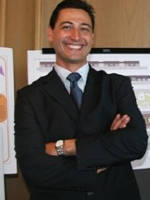
Illac Diaz and his NGO Liter of Light has already helped over 382,000 Filipinos, and 690,000 people throughout the world to get out of energy poverty.
Who he is: This social entrepreneur helped launch Design Against the Elements, an international contest on environment-friendly and resilient urban housing, in March. A former commercial model, he is also one of the Ten Outstanding Young Persons of the World in 2006, a World Economic Forum’s Young Global Leader awardee in 2008 and the only Filipino who made it to CNNgo.com’s "Hot List: 135 People to Watch" in 2009.
Eco-warrior tactic: From creating award-winning projects like affordable urban housing for seamen with his team at the Massachusetts Institute of Technology, Diaz now helps lead the international green urban housing contest, Design Against the Elements. The contest encourages its about 3,000 architect participants to create high-rise buildings that can be duplicated. In line with the project, Diaz brought together over 40 local artists for the song, "Stand Up," which calls for people to be ready against climate change.
He says: "If we think ahead of time, we can start realizing that we have to do something proactive. The pattern of weather has been crazy and there’s nothing to stop it unless we do something ourselves."
4. Anna Meloto-Wilk

Eco-warrior tactic: Anna’s passion for the environment started in 2005 when she and her husband Dylan made a conscious effort to use cloth diapers instead of disposable ones that take 500 years to biodegrade. While Dylan, a Gawad Kalinga volunteer, set up a network of Gawad Kalinga volunteers in the U.S. in 2007, Anna noticed a growing trend of more affordable natural and homegrown products. When her sister Camille followed them to the U.S., they researched on how to recreate this phenomenon in the Philippines. They collaborated with a natural formulator to create the body care line, Human Nature, made from mostly natural and locally grown materials. Without the "high cost of advertising and costly retail stores," the products are relatively cheap. They launched the line on November 2008 and have recently sold their one-millionth product after just 16 months of operation.
She says: "Selling our one-millionth product... proves that businesses can be highly successful while actively loving our country, the poor and the environment."
5. Krie Reyes-Lopez and Candy Reyes

Krie Lopez (left) and Candy Reyes (right)
Who they are: Looks like green consciousness runs in the family. Krie Reyes-Lopez is the brain behind Messy Bessy, a local line of environment-friendly cleaning products, while her sister Candy Reyes leads the Pedala Bike Messengers, a pollution-free delivery service.
Eco-warrior tactic: Because of a lack of local alternatives to cleaning products, Lopez created Messy Bessy after a rigorous hunt for suppliers and chemists. Launched in 2007, the non-toxic, natural and biodegradable cleaning agents became bazaar hits, and are now available in malls, organic stores and markets. The bestsellers include the first products she made herself: the Minty Orange Surface Cleaner and Eucalyptus All-Purpose Scrub. Lopez also formed HOUSE (Helping Ourselves Through Sustainable Enterprises), which helps disadvantaged kids like the formerly abused girls who reside in Virlanie Foundation’s Elizabeth House. These girls are welcome to work for Messy Bessy.
Meanwhile, Lopez’ sister Candy Reyes, a UP Mountaineer, thought Messy Bessy’s delivery service should be just as eco-conscious as the brand so she came up with Pedala Bike Messengers. Aside from leaving almost no carbon footprints, the courier service prides its same-day pickup and delivery option. The riders range from athletes to business owners and former couriers, serving big and small business, and eco-conscious groups and individuals.
Reyes says: "I just can’t sit idly and not do anything for the environment when I can feel the effects of its degradation every day. Pedala lets me do my share and allows me to give others a chance to help save the planet too, one delivery at a time. My hope for now is simply to just have more bikes on our streets."
Lopez says: "I think people should start understanding that environmental consciousness is more than just something cool to have; it’s really simply the commonsensical way to go, nothing more."
6. Chit Juan, Jeannie Javelosa and Reena Francisco

Who they are: Restaurant and cafe expert Reena Francisco, writer-artist Jeannie Javelosa and marketing specialist Chit Juan came together to form ECHOStore (ECHO stands for Environment & Community Hope Organization), a line of retail stores that carry organic and locally sourced products.
Eco-warrior tactic: Espousing sustainable lifestyle, the trio put up ECHOstore to connect those that can provide and those that hunt for healthier and eco-friendly alternatives. It brings products from the provinces like wild honey from Ifugao to Manila, and at the same time, helps provide income for indigenous and marginalized communities. Their products range �from food and supplements to body care products and fashion accessories.
Under ECHOstore are yoga wellness program ECHOyoga, product design and development program ECHOdesign Lab, and mentoring program ECHOteach, among others.
Francisco says: "Environmental apathy in this day and age is borne out of simple ignorance. With political will of a strong and intelligent leadership in the Philippines, we can still reverse any damage that occurred in our land... If everyone does their share, I believe the Philippines can be a nature haven someday."
Juan says: "I think we are positively moving towards a more eco-friendly future. The awareness for going green has started to pick up and I know the Philippines will soon be one of the top green places in the world!"
Javelosa says: "[In five years,] I see a people taking responsibility in the little acts of daily life to bring green awareness to actions both personal and collaborative. I see a responsible government trying its best to inspire the people toward ecologically sound living since there would be no other direction to take as Mother Earth will speak even louder than she does now."
7. Ann Wizer
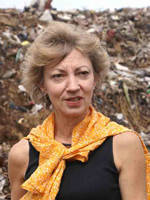


Who she is: Founder of the non-government organization, Invisible, which makes must-haves out of trash. She says: "I have chosen to work with debris. If you listen, trash speaks of our values; each object and substance speaks of its origin."
Eco-warrior tactic: Manila-based artist and environmentalist Ann Wizer leads Invisible, an organization that teaches marginalized women to crochet and knit accessories like jewelry and bags from plastic, computer wires and other undesirables. The finished products are sold locally and even abroad through the Invisible Institute’s recent partnership with international accessories designer Rafe Totengco’s Rafe New York, breathing new life into trash and generating income for the women. The Invisible Sisters is similar to Wizer’s XSProject Foundation in Jakarta that she established in 2004. The foundation buys waste materials from trash pickers and turns the materials into laptop sleeves, document wallets, pencil cases, shoulder bags and more.
8. Chin Chin Gutierrez
 Who she is: Actress, one of TIME Magazine’s Asian Heroes in 2003, and The Outstanding Women in Nation’s Service awardee in 2004.
Eco-warrior tactic: Aside from being a stage, TV and movie actress, Chin Chin Gutierrez is also a staunch environmentalist. She landed the cover of TIME Magazine’s Asian Heroes Special Issue in 2003 for her Mother Earth Foundation’s workshops, tree-planting sessions and cleanups. In 2004, she appeared in a vegetarian advertisement for PETA (People for the Ethical Treatment of Animals) with the tagline "Try to Relate to who is on your Plate." She also gives environmental lectures to the youth, non-government units, civic leaders and government officials.
Gutierrez on skeptics: "Siguro I wouldn’t be given the recognition [as one of the Asian heroes in 2003] ng TIME magazine kung ganun-ganun lang ako. Huwag na nating dagdagan pa ’yung hirap ng advocacy, kasi mahirap na maging malabo ’yung cause. Kasi people would think na napakababaw ’pag hinaluan ng mga ganyang kuwento. Ang pinag-uusapan dito, buhay na ng tao."
9. Dale Diaz, Francis Mendoza and Andrew Sarinas
Who they are: Associates of Environmental Ventures Marketing Inc. (EVMI), which gets rid of waste the natural way by using microorganisms.
8. Chin Chin Gutierrez
Eco-warrior tactic: Aside from being a stage, TV and movie actress, Chin Chin Gutierrez is also a staunch environmentalist. She landed the cover of TIME Magazine’s Asian Heroes Special Issue in 2003 for her Mother Earth Foundation’s workshops, tree-planting sessions and cleanups. In 2004, she appeared in a vegetarian advertisement for PETA (People for the Ethical Treatment of Animals) with the tagline "Try to Relate to who is on your Plate." She also gives environmental lectures to the youth, non-government units, civic leaders and government officials.
Gutierrez on skeptics: "Siguro I wouldn’t be given the recognition [as one of the Asian heroes in 2003] ng TIME magazine kung ganun-ganun lang ako. Huwag na nating dagdagan pa ’yung hirap ng advocacy, kasi mahirap na maging malabo ’yung cause. Kasi people would think na napakababaw ’pag hinaluan ng mga ganyang kuwento. Ang pinag-uusapan dito, buhay na ng tao."
9. Dale Diaz, Francis Mendoza and Andrew Sarinas
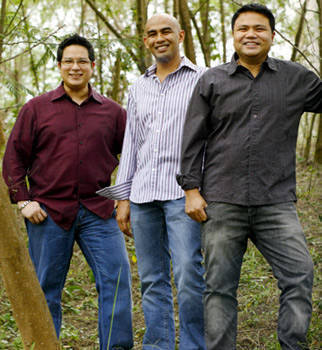
Andrew Sarinas, Dale Diaz and Francis Mendoza
Eco-warrior tactic: To put it simply, the enterprising trio "deploy microbes in powder or liquid form that ’eat and digest’ waste," Town & Country wrote in their May 2009 issue. No harmful chemicals, just natural and healthy disposal. In their early days in 2000, the company was hard-pressed for clients since microbial cleaning agents were far from the norm then. Diaz recalled how they offered a water company a free demonstration: "We literally emptied pails and pails of bacteria down [their] main line. It worked though it took months for the company to call us back and sign us on as partners in its other businesses’ cleanup jobs."
EVMI now takes care of the waste of Alabang Town Center, Market! Market!, Greenhills Shopping Center, Petron, Pancake House, San Miguel Pure Foods and Enchanted Kingdom, among others according to their website.
Mendoza says: "We took up the challenge because we somehow knew that this was the way to go. And I guess we were right. More and more companies are now aware of how bacteria--which always had a negative connotation--help clean the environment safely and naturally," he told Town & Country.
Sarinas says: "Why not make [wastewater] potable? A lot of people, we guess, still have this diri factor. Where do you think water from La Mesa Dam comes from? When the water is treated properly, one can actually drink it. Hopefully, ten years down the line, this would be realized," he told Town & Country.
EVMI now takes care of the waste of Alabang Town Center, Market! Market!, Greenhills Shopping Center, Petron, Pancake House, San Miguel Pure Foods and Enchanted Kingdom, among others according to their website.
Mendoza says: "We took up the challenge because we somehow knew that this was the way to go. And I guess we were right. More and more companies are now aware of how bacteria--which always had a negative connotation--help clean the environment safely and naturally," he told Town & Country.
Sarinas says: "Why not make [wastewater] potable? A lot of people, we guess, still have this diri factor. Where do you think water from La Mesa Dam comes from? When the water is treated properly, one can actually drink it. Hopefully, ten years down the line, this would be realized," he told Town & Country.
10. Odette Alcantara
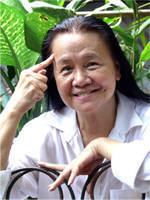
Alcantara was fearless and unstoppable in her advocacy. Environmentalist Leonor "Inday" Berroya told Inquirer.net how Alcantara "[stopped] motorists spewing noxious fumes and [lectured] them," while painter Ivi Avellano Cosio recalled an instance when Alcantara cursed and told off utilities staff who said a pile of burning garbage is not their responsibility, not caring about the armed guard with the staff.
In memory of an eco-warrior: So known was she as an environmental advocate that when she passed away in 2009 due to aneurysm, a circulating text message read: "In lieu of flowers, Tita Odette would most likely prefer donations of saplings and seedlings."
Her motto: "L-A-H-A-T: Lupa, Araw, Hangin, Ako, Tubig. Lahat magkaugnay."
Jurgenne Primavera’s photo by W. (Japoi) Cequina, courtesy of FemaleNetwork.com. Anna Wilk’s photo courtesy of Human Nature. Krie Lopez’ photo by Style Bible Digital. Candy Reyes’ photo by Kai Huang for Preview. Chit Juan, Jeannie Javelosa and Reena Francisco’s photo from ECHOstore’s website. Ann Wizer’s photo from XSProject.com.au. Chin Chin Gutierrez’ photo by Noel Orsal of PEP.ph. Dale Diaz, Francis Mendoza and Andrew Sarinas photo by Lilen Uy for Town & Country.Odette Alcantara’s photo by Ramon Flores for GMANews.tv. ~
ANNEX 3-C Meet our country’s environmental heroes
AUG 29, 2016 1:06 PM PHT
GWEN DE LA CRUZ
As we celebrate the National Heroes Day, here are some of the stories of our environmental heroes, those who sacrificed their lives to protect the Philippines' environmentMANILA, Philippines – While heroes can be found anywhere, not everyone becomes famous.
There are those who quietly do their job with excellence, honesty, and integrity, and are still considered heroes. Sometimes, because of their dedication, they even risk their lives. And a lot of them are serving in government.
With a known environment activist at the helm of the Department of Environment and Natural Resources (DENR), the agency has been making headlines for its fight against illegal environmental practices such as the back-to-back shutdown of mining operations in different parts of the country. She has also urged the DENR officials to “inspire people and be proactive.“
As we celebrate the National Heroes Day, here are some of the stories of our environmental heroes: those who sacrificed their lives to protect the country’s environment.
National Heroes Day. Celebrated as early as 1931, the holiday honors and remembers all Philippine national heroes. Here are a few facts related to this occasion.
Melania Dirain, The Forest Specialist
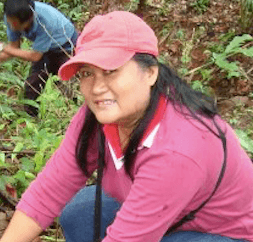 As a forest specialist, part of Dirain’s job was the enforcement of foreign protection laws, including policies against illegal logging.
Just a month after she assumed her post as officer in charge of Community Environment and Natural Resources Office (CENRO) in Sanchez-Mira, Cagayan, she apprehended illegal loggers and confiscated a number of illegal forest products already.
Because of this, Dirain received death threats for months, but she still continued on her crusade.
On February 7, 2012, Dirain was shot to death while talking to an office messenger. A report on the Philippine Daily Inquirer said Dirain was talking to Isaias Cereniado inside her office, when a man barged in and shot 5 five times in the chest. Her 3 sons suddenly became orphans (she was a widow; her husband died a few years before).
That same year, Dirain was given the Dangal ng Bayan award by the Civil Service Commission. She was also given the “Bayani ng Kalikasan” award by the Center for Environmental Concerns.
According to Rare, a partner international conservation organization of the DENR, Dirain “pioneered the use of cell phones to anonymously report illegal forest activities.”
Jojo Malinao, The Forest Guard
Malinao was a forest guard at the Makiling Forest Reserve in Laguna. His job included diligently patrolling the forest and protecting it against destructive activities such as timber poaching, illegal occupancy, kaingin (slash-and-burn agriculture), and littering. He also served as a witness in cases involving these illegal practices.
Because of this, Dirain received death threats for months, but she still continued on her crusade.
On February 7, 2012, Dirain was shot to death while talking to an office messenger. A report on the Philippine Daily Inquirer said Dirain was talking to Isaias Cereniado inside her office, when a man barged in and shot 5 five times in the chest. Her 3 sons suddenly became orphans (she was a widow; her husband died a few years before).
That same year, Dirain was given the Dangal ng Bayan award by the Civil Service Commission. She was also given the “Bayani ng Kalikasan” award by the Center for Environmental Concerns.
According to Rare, a partner international conservation organization of the DENR, Dirain “pioneered the use of cell phones to anonymously report illegal forest activities.”
Jojo Malinao, The Forest Guard
Malinao was a forest guard at the Makiling Forest Reserve in Laguna. His job included diligently patrolling the forest and protecting it against destructive activities such as timber poaching, illegal occupancy, kaingin (slash-and-burn agriculture), and littering. He also served as a witness in cases involving these illegal practices.
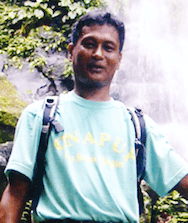
On the day of his death on May 9, 2011, he testified during the hearing of Armando Javier and Napoleon Oliveros, who were both charged with violation of the Revised Forestry Code of the Philippines, according to a report from the Inquirer.
After the hearing, he went to a tarpaulin shop in Bay, Laguna, where he was shot to death by a man on a motorcycle.
According to testaments of those close to him, he was once offered P100,000 ($2,153) for bribe but rejected it and said, “Patayin na lang nila ako.” (They can kill me instead.)
Logendrin Aranca, The Forest Ranger and Bernabe Malijao, The Tree Maker
Aranca, a Forest Ranger, and Malijao, a Tree Marker, were both tasked to man a checkpoint along the main highway going to Real, Infanta, and General Nakar towns in the province of Quezon.
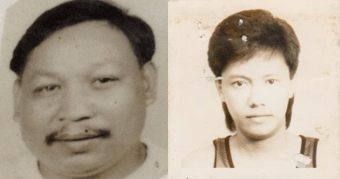
In the evening of August 22, 1995, a resident of Barangay Maragondon in Real, Quezon, whose passenger jeepney was loaded with Narra lumber, requested for a clearance pass. The two, however, denied the request because of lack of transport documents. The resident then rode on his jeepney again and drove through the barricade.
Onboard a motorcycle, Aranca and Malijao followed the jeepney for 4 to 5 kilometers. When they reached Barangay Paagahan in Mabitac, Laguna, the two overtook the jeepney, but unfortunately, the jeepney rammed the rear end of the motorcycle.
Aranca and Malijao fell on the ground, their bodies crossed on top of each other. The driver put the car in reverse and ran over the bodies of the two men.
The resident later surrendered to the police and was jailed for double murder.
Wilfredo Bayucot, The Forest Ranger
Onboard a motorcycle, Aranca and Malijao followed the jeepney for 4 to 5 kilometers. When they reached Barangay Paagahan in Mabitac, Laguna, the two overtook the jeepney, but unfortunately, the jeepney rammed the rear end of the motorcycle.
Aranca and Malijao fell on the ground, their bodies crossed on top of each other. The driver put the car in reverse and ran over the bodies of the two men.
The resident later surrendered to the police and was jailed for double murder.
Wilfredo Bayucot, The Forest Ranger
Bayucot, a forest ranger, was the team leader of the monitoring station of Bayugan, Agusan del Sur.
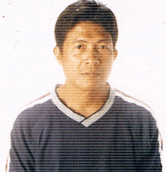
In the evening of March 23, 2003, during his duty, Bayucot flagged down an Isuzu Elf truck loaded with Gmelina lumber. When the car didn’t stop, Bayucot followed by riding on a motorcycle driven by a scaler named Marslou Bonita.
The driver of the truck then deliberately bumped Bayucot’s motorcycle, causing him and the driver to fall off the motorcycle. Bayucot died 3 days later.
Isidro de la Peña, The Forester
De la Peña is a forester in DENR’s Region XI office.
In 2003, de la Peña, along with a DENR staff member and a coast guard officer, apprehended the owners of 4 container vans at Davao City’s Sasa Wharf that were already being readied to be loaded to a vessel. The van, carrying illegally cut lumber, did not have the necessary documents.
The driver of the truck then deliberately bumped Bayucot’s motorcycle, causing him and the driver to fall off the motorcycle. Bayucot died 3 days later.
Isidro de la Peña, The Forester
De la Peña is a forester in DENR’s Region XI office.
In 2003, de la Peña, along with a DENR staff member and a coast guard officer, apprehended the owners of 4 container vans at Davao City’s Sasa Wharf that were already being readied to be loaded to a vessel. The van, carrying illegally cut lumber, did not have the necessary documents.
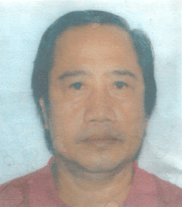
De la Peña was sued for robbery instead. With the case dismissed later on, he revealed to one of his team members that “someone called him up and threatened him”. He responded by saying “Gawin ninyo, wala naman akong kasalanan.” (Do it. I am innocent.)
Almost a year after the incident, on September 28, 2004, de la Peña was shot to death 3 times at the intersection of Balusong and McArthur Hi-way in Matina, Davao City. His team members then received anonymous death threats like, “You will be the next.”
Jaime Diez, The Tree Maker
Diez is a tree maker at DENR – CENRO in Bayugan, Agusan Del Sur.
During his stint, he was responsible for the confiscation of about 6,695 pieces of lumber and 951 pieces of mixed dipterocarp logs at the Ojot Monitoring Station in 2011, with an estimated value of over P2.4 million (approximately $51,600 in the current exchange rate).
Almost a year after the incident, on September 28, 2004, de la Peña was shot to death 3 times at the intersection of Balusong and McArthur Hi-way in Matina, Davao City. His team members then received anonymous death threats like, “You will be the next.”
Jaime Diez, The Tree Maker
Diez is a tree maker at DENR – CENRO in Bayugan, Agusan Del Sur.
During his stint, he was responsible for the confiscation of about 6,695 pieces of lumber and 951 pieces of mixed dipterocarp logs at the Ojot Monitoring Station in 2011, with an estimated value of over P2.4 million (approximately $51,600 in the current exchange rate).
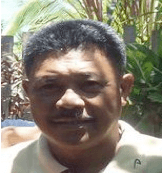
Because of this, Diez received death threats until he was gunned down inside his bedroom, beside his wife, on February 22, 2012 – just 15 days after Melania Dirain was also killed. Meanwhile, the gunman was able to escape. His wife and friends, however, continued to receive death threats after the shooting incident.
Opportunities for families left behind
In June 2016, the Environmental Heroes Foundation Incorporated gave 5 of the slain employees the Environmental Heroes award. The families they left behind were given livelihood assistance worth P300,000 ($6,457).
EHFI is a non-profit organization established to promote the welfare of DENR officials who lost their lives or are permanently disabled while on duty, in the course of implementing environmental laws and policies.
In 2013, the orphaned children of the awardees were also offered scholarship program by the DENR.
During its 111th anniversary, the Civil Service Commission generated P300,000 ($6,457) from a fun run it organized. The proceeds from the event were donated to the families of the victims as well.
According to DENR, the awardees were killed during missions against suspected illegal loggers operating in so-called illegal logging “hotspots” identified by the agency. – Rappler.com
Sources: Civil Service Commission and Department of Environment and Natural Resources